How to Acquire Training Data for Chatbot?

A chatbot is a piece of software that has been programmed to conduct a conversation. We can think of chatbots as Natural Language Processing systems that can respond to human communication. This communication can be via different modes like text, voice, or a combination of the two.

A chatbot is an AI-powered software that can effectively communicate with people in a lucid and intelligent manner. A chatbot stimulates communication through messaging applications, websites, mobile apps, or smartphone assistants like Ok Google or Siri. Thus, a chatbot represents the closest interface of communication between a man and a machine. 

Importance of chatbot

The world has undergone a revolution in the sphere of communication. It is pertinent to mention that to meet customers’ required demands, the manpower available is insufficient. This is where chatbots enter the market. By virtue of their intelligible communicating capability, they are able to deliver customer satisfaction that would otherwise not have been possible. In this way, chatbots serve the dual benefits of customer engagement and operational efficiency.

The main purpose of a chatbot is to reduce the workload that the industries are burdened with currently. In the current times, the need for a chatbot is most vital. This is because a chatbot is available all the time irrespective of local time and geographic location. It should also be mentioned that a chatbot is less prone to errors and delivers commendable customer satisfaction round the clock.

What is Chatbot Training Data?

A chatbot needs data for two main reasons: to know what people are saying to it, and to know what to say back. An effective chatbot requires a massive amount of training data in order to quickly resolve user requests without human intervention. However, the main obstacle to the development of chatbots is obtaining realistic and task-oriented dialog data to train these machine learning-based systems.

Fundamentally, a chatbot turns raw data into a conversation. Consider a simple customer service bot. The chatbot needs a rough idea of the type of questions people are going to ask it, and then it needs to know what the answers to those questions should be. It takes data from previous questions, perhaps from email chains or live-chat transcripts, and from previous correct answers, maybe from website FAQs or email replies. All of this data, in this case, is training data.

Open source data

The best chatbots need a massive amount of training data to be useful. Just think about the number of conversations you have every day and how each of those differs in context. In an ideal world, a chatbot would need to account for all those conversational variations. Even if you have a lot of your own data, there are a few open source datasets that are free to use, thus allowing you to add to your knowledge base. Some examples of open source training data include:

  • The WikiQA Corpus – a publicly available set of question and sentence pairs. It uses Bing query logs and links to Wikipedia pages.
  • Yahoo Language Data – Curated question and answer datasets from Yahoo Answers
  • Ubuntu Dialogue Corpus. Around 1 million two-person conversations extracted from chat logs used to receive technical support
  • Twitter Support – over 3 million tweets and replies from the biggest brands on Twitter
  • CoNLL 2003 dataset – for training named entity recognition models

There are hundreds of examples like these that can be incorporated into your training data to optimize it as best as possible. 

Collecting your own data

Unique data are valuable assets for a chatbot. Whilst open source training data is useful as a starting point, you need to ensure your chatbot learns quickly. One method is by creating your own “chatbot”. Enough data needs to be collected from real chatbot usage to create an effective chatbot, however, the chatbot has to be effective in the first place before people actually start to use it.

It’s not only chat data that can be loaded into the bot. Chatbots need a lot of specific training data to learn how to respond effectively to different human interactions. So, to create an effective chatbot, you first need to collect and annotate information, which can come from your company’s FAQ web pages, customer service tickets and chat scripts, call logs, help email accounts, and other written sources. You can also get information about chatbot training directly from the personal knowledge of the sales representatives. These data can give an added edge to any open source training data by providing a business context.

Labeling Data

In most cases, human intervention is required to create labels for chatbot user intents. Data annotation will give chatbots the capabilities to react to a question accurately, whether it is vocalized or typed.

For example, somebody would label “Hi, Hello, Hey, Howdy, Hallo, and Good morning” as Greetings so that the chatbot can deliver an appropriate response for each of those collectively and negate gaps in the data. 

Labeling can be a full-time job as new words need to be added into categories once picked up by a chatbot conversation. If somebody decided to use “Good afternoon”, it would need to be manually added to the greetings label for the chatbot to recognize it as a greeting in the future. Chatbots need intent classification, entity extraction, relationship extractions, syntactic analysis, sentiment analysis, and sometimes even translation.

TagX for Chatbot Training

To make the Chatbot smarter and more helpful, it is important to feed the AI algorithm with more accurate and high-grade training data sets. TagX has significant experience in gathering, classifying, and processing different types and quality of chatbot training data sets to make such self-propelled applications more effective. We ensure to provide the best virtual customer service with just a few seconds of interaction. We provide you with exceptional, relevant data sets to train your chatbots for them to solve customer queries and take appropriate actions as and when required.
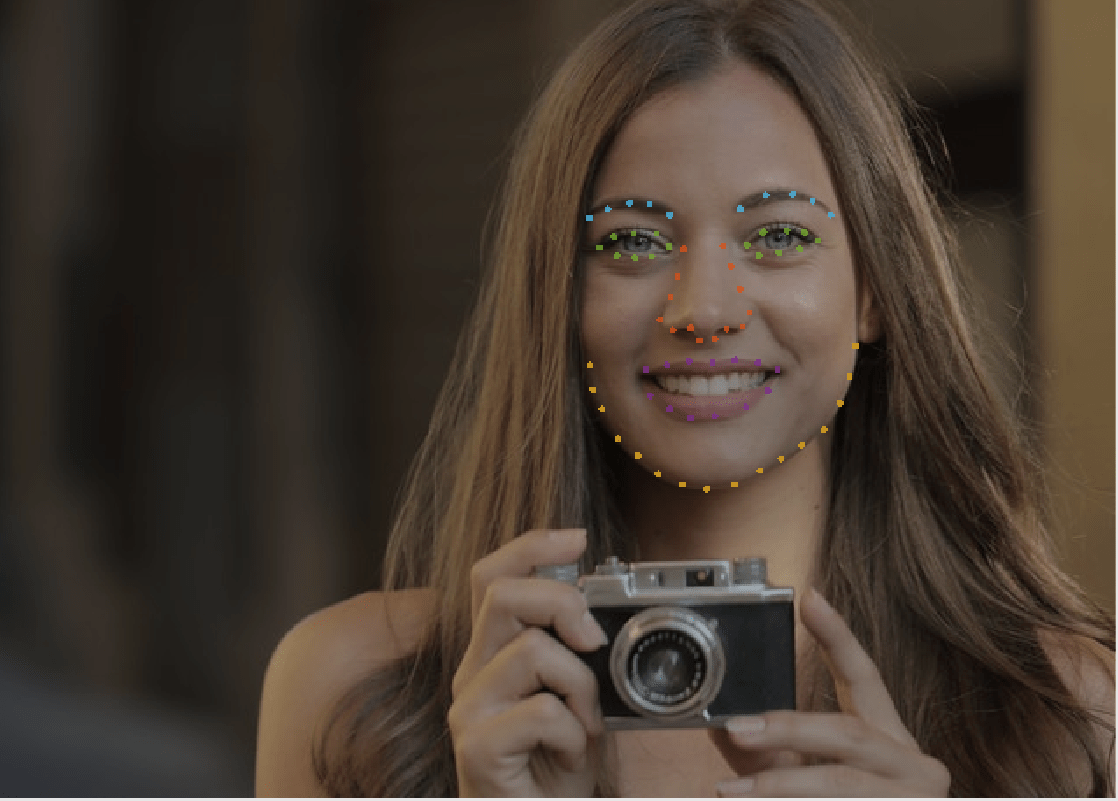

Facial Recognition: Execution and how Data Annotation is useful for it?

Facial recognition is a way of recognizing a human face through technology. A facial recognition system uses biometrics to map facial features from a photograph or video. It compares the information with a database of known faces to find a match. 

Most people can recognize about 5,000 faces, and it takes a human 0.2 seconds to recognize a specific one. We also interpret facial expressions and detect emotions automatically. In other words, we’re naturally good at facial recognition and analysis. But, in recent years, Computer Vision  has been catching up and in some cases outperforming humans in facial recognition.

Advances in CV and Machine Learning have created solutions that can handle tasks more efficiently and accurately than humans.Powering all these advances are numerous large datasets of faces, with different features and focuses. Sifting through the datasets to find the best fit for a given project can take time and effort.

How Facial Recognition Algorithm Works

Facial recognition is a complex task that requires numerous steps and complex engineering to complete. To distill the process, here is the basic idea of how the facial recognition algorithm usually works.

  1. Your face is detected and a picture of it is captured from a photo or video.
  2. The software reads your facial features. Key factors that play a role in the detection process can differ from each other based on what mapping technique the database and algorithm use. Commonly, those are either vectors or points of interests, which map a face based on pointers (one-dimensional arrays) or based on a person’s unique facial features respectively. 2D and 3D masks are utilized for this process. It’s common to think that key points are used for best facial recognition software but in reality they are not descriptive or exhaustive enough to be a good face identifier for this task.
  3. The algorithm verifies your face by encoding it into a facial signature (a formula, strain of numbers, etc.) and comparing it with databases of known faces, looking whether there is a match. To improve the accuracy of a match, sequences of images rather than a single image are sent.
  4. Assessment is made. If your face is a match to data in the system, further action may be taken depending on functions of facial algorithm software.

Data Annotation for Facial Recognition

Use of artificial intelligence and machine learning technologies has made the facial recognition process carried out in real-time. There are two processes that matter the most in the development of an AI. These are data collection and data labeling. Both high quality data and secure data annotation solutions have a dramatic impact on technology development. When images in the dataset are not high quality, not diverse enough or have too many errors, even the best technology falls short. Additionally, when dealing with large amounts of sensitive data, its usage, access or even a potential breach  all are serious issues that must be accounted for.

When you acquire quality face images, you’ve completed only 50% of the task. Your facial recognition systems would still give you pointless results or no results at all when you feed acquired image datasets into them. To initiate the training process, you need to get your face image annotated. There are several facial recognition data points that have to be marked, gestures that have to be labelled, emotions and expressions that have to be annotated and more.

Video Annotation

Computer vision models for security cameras must have the capacity to process and identify faces in video footage. Annotating video is a daunting task, even for larger technology companies. The multiplicative nature of video frames means that precise annotating hours of video can be extremely time consuming and labour intensive. This can lead to bottlenecks in development and can mean that valuable expertise and leadership are diverted from the main purpose of the project.

Landmark Point Annotation

Recognize the facial features, expressions and emotions with facial landmark annotation. Detecting the human gestures and facial postures by landmarking annotations helps to find out the actual density and measurement of the object within a particular area, thereby enabling machines to understand human expressions. This is not only a tool that assists complex non-verbal communication but also enables the business to understand behavioral complexities.

Key Point Annotation 

Using the key point landmark annotation the gestures or humans with precise labeling from one point to another point on the faces can be done. The movement trajectory can be estimated from each point in motion making machines recognize human faces or expressions. TagX annotates with an advanced level of accuracy to develop the right facial recognition applications.

TagX Annotation Services

At TagX, we do all this with precision through our facial landmark recognition techniques. All intricate details and aspects of facial recognition are annotated for accuracy by our own in-house veterans, who have been into the AI spectrum for years.

How Image Annotation is empowering Medical AI

The value of machine learning in healthcare is its ability to process huge data sets beyond the scope of human capability, and then reliably convert analysis of that data into clinical insights that aid physicians in planning and providing care, ultimately leading to better outcomes, lower costs of care, and increased patient satisfaction.

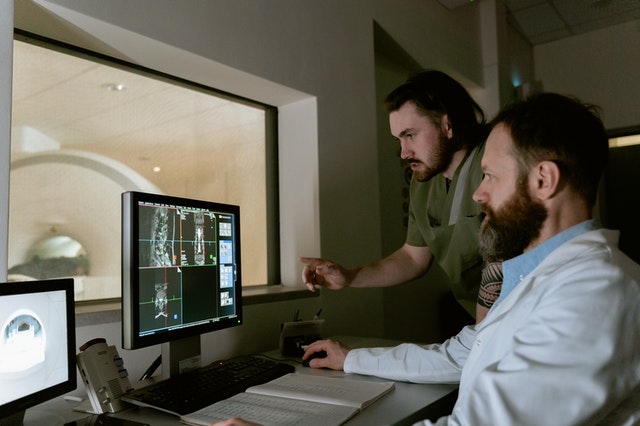
If your ultimate goal is to train machine learning models, there are few differences between annotating a medical image versus a regular PNG or JPEG. Radiologists annotate or markup medical images on a daily basis. This can be done in DICOM viewers, which contain basic annotation capabilities such as bounding boxes, arrows, and sometimes polygons. Machine learning may sometimes leverage these labels, however their format is often inconsistent with the needs of ML research, such as lack of instance IDs, attributes, a labeling queue, or the correct formats for deep learning frameworks like Pytorch or TensorFlow.

Medical Image Annotation

Medical image annotation is the bread and butter of all machine learning development in the healthcare sector. Precisely annotated images are required to train models with accuracy, and an enormous amount of such data is needed for AI solutions to make assessments and predictions with confidence. Without the dedicated work of the thousands of human beings laboring to perform the time-consuming, repetitive tasks of data annotation, it would be impossible to develop the advanced algorithms that may someday be able to diagnose and predict a wide-ranging variety of pathologies.

In the medical imaging field, annotation is used to draw attention (sometimes using boxes, circles, or arrows) to regions of interest. In the related digital imaging field, the term annotation describes adding metadata to an image in order to train a computer model to recognize certain features. Typically, a medical image annotator performs one of two types of annotation. The first kind, segmentation, involves classifying single pixels. The second kind is classifying a whole image within a dataset. Images are manipulated and encoded in the standard Digital Imaging and Communications in Medicine (DICOM) format. Another widely used format is NIfTI, which produces a 3D image (as opposed to the single slices format of DICOM). Depending on the reader, this format can be manipulated as well.

With the ever-increasing amount of patient data generated in hospitals and the need to support a patient diagnosis with this data, computerized automatic and semiautomatic algorithms are a promising option in the clinical field . An initial step in the development of such systems for diagnosis aid is to have manually annotated datasets that are used to train and implement machine-learning methods to mimic a human annotator. The manual segmentation of the patients’ 3D volumes is commonly used for radiology imaging in order to separate various structures in the images and allow processing tissue of the structures separately. Manual segmentation, on the other hand, demands an intensive and time-consuming labour from the radiologists.

Types of Documents Annotated through Medical Image Annotation:

There is no shortage of areas where computer vision could bring groundbreaking innovation to medical imaging: CT, MRI, ultrasound, X-rays, and more are just a few of the use cases.

X-Rays

The role of X-rays is to identify if there is any abnormalities or damage to a human organ or body part. Computer vision can be trained to classify scan results just like a radiologist would do and pinpoint all potential problems in a single take.

MRI

Problems in softer tissues, like joints and the circulatory system, are better highlighted by magnetic resonance imaging (MRI). Training a computer vision system to identify clogged blood vessels and cerebral aneurysms can help save those patients who would be under the radar if the images were analyzed by the naked eye.

Ultrasound

Using computer vision during pregnancy and for other routine check-ups could help future mothers see if the pregnancy is unfolding naturally or there are any health concerns to take into consideration. Relying on extensive data sets that combine years of medical knowledge, computer vision-equipped ultrasound systems can show more experience than a single physician would.

CT scans

The advantage of using computer vision here is that the entire process can be automated with increased precision, since the machine could identify even those details that are invisible to the human eye. This method is used to detect tumours, internal bleeding, and other life-threatening conditions

Final Thoughts

As more data is available, we have better information to provide patients. Predictive algorithms and machine learning can give us a better predictive model of mortality that doctors can use to educate patients. As larger datasets begin to run machine learning, we can improve care in more specific ways for each region. And considering rare diseases with low data volumes, it should be possible to merge regional data into national sets to scale the volume needed for machine learning.

To annotate the medical image dataset for AI in healthcare, TagX provides a highly-accurate medical image annotation service. It has the ability to accurately annotate a large number of radiological images.

Potential of AI and Machine learning in healthcare

Healthcare businesses are under a lot of strain in this data-driven age. Investments in smart solutions for better decision-making are being driven by the desire to increase quality of care and patient experiences while lowering healthcare delivery costs.

AI offers a number of advantages over traditional analytics and clinical decision-making techniques.  Learning algorithms can become more precise and accurate as they interact with training data, allowing humans to gain unprecedented insights into diagnostics, care processes, treatment variability, and patient outcome

AI-powered robots and digital assistants with real-time monitoring and analysis have enabled doctors to provide more effective and personalized treatment.The deep-learning algorithms of machine learning can trim the time it takes to review patient and medical data, leading to faster diagnosis and speedier patient recovery.

Use-Cases of Healthcare AI

Here are few applications of machine learning in healthcare, to show how different spectrums of medical can benefit from machine learning

Pharmaceuticals

Natural language processing (NLP) and deep learning of structured and unstructured text can help you uncover insights and improve your medication discovery, repurposing, and targeting efforts. Find out what millions of pages of anonymized electronic health records, clinical research, trials, patient forums, social media data, and other sources have to say about your health.

Biotechnology

Companies can Reduce clinical trial costs, obtain useful insights, and improve medication targeting, identification, and design by utilising machine learning and predictive modelling. Machine learning algorithms can be used by biotech companies to evaluate large datasets, manage clinical trial datasets, and even do virtual screening of billions of molecules.

Medical Device Vendors

Medical device, instrument, and medical IoT product vendors can utilise AI to fine-tune sales and marketing activities, increase renewals, improve sales team effectiveness, produce more effective messaging based on data analysis, and design better goods using machine learning insights.

Hospitals

Machine learning can help you better allocate resources like ICU beds and manage inpatient and outpatient care. Hospitals may construct machine learning models that forecast patient inflows by the day or even by the hour, improving staffing efficiency, using a combination of local demographic data, past patient data, health event data, and even environmental elements.

Here we have explained the advantages of incorporating machine learning to healthcare:

  1. Early diagnosis and treatment – Medical AI can quickly identify medical abnormalities in visual data, such as CT and MRI scans, that it has been trained to recognize, reducing the time it takes to diagnose illness. Speed is one of the biggest advantages AI offers. AI can analyze visual data in a mere fraction of the time it takes humans to.
  1. Increased Precision – Medical AI can power more personalized and preventative insights. A well trained medical AI solution utilizes the right data to make real-time decisions and create predictive models that can spot problems before medical professionals can, to help doctors make smarter decisions tailored to the unique needs of every patient.
  1. Reduce the risk of human error – Humans are imperfect creatures, and even the best of us are prone to making errors. Fortunately, many of these issues can be eliminated by automating routine workflows.With the right data sets, AI can help mitigate the problem of human error, which is currently a leading cause of mortality. A well-trained machine learning platform can spot things people can’t. Also, it enables faster and more informed decision-making to drive better outcomes. Indeed, you might think of AI as the best second opinion you’ve ever had.
  1. Empower faster medical research – In medical research, AI is used to test and analyze patterns in massive datasets. For example, it can trawl through vast repositories of medical literature and images and apply this wealth of past knowledge to better predict opportunities for developing tomorrow’s drugs.

Wrapping Up

Leveraging AI for clinical decision support, risk scoring, and early alerting is one of the most promising areas of development for this revolutionary approach to data analysis. By powering a new generation of tools and systems that make clinicians more aware of nuances, more efficient when delivering care, and more likely to get ahead of developing problems, AI will usher in a new era of clinical quality and exciting breakthroughs in patient care.

Health informatics professionals stand at the entryway of opportunity, playing a key role in enabling machine learning’s integration into healthcare and medical processes. Their in-depth knowledge of technology and how it can be applied to improve patient care and outcomes offers enormous value to an evolving healthcare industry increasingly reliant on data.

Significance of Training Data for Self-Driving Cars

Training a new driver is straightforward and makes them practice until they can master basic skills well enough to pass a driver’s license exam. But there are no such tests for Self Driving Cars, leaving it up to developers to decide when their technology is safe enough to deploy.

This means that for a vehicle to be truly capable of driving without human control or even with limited human intervention, autonomous systems must essentially be taught to understand the stimuli presented in real time, requiring many different neural networks to work together, performing many different perception tasks that our brain is doing seamlessly.

The process of generating these many datasets is human labor intensive process and the human involvement is crucial in guiding the machine through the many cases and corners every Autonomous vehicle has thousands of humans working on the backend to annotate and decipher hundreds of thousands of images with high complexity and 99.5% accuracy, but this rate of accuracy can only be ensured through rigorous testing and validation.

Collection of Training Data for Self Driving Cars

Collecting this data requires using data other innovators make available or doing it yourself and scaling the process. Larger autonomous car developers deploy fleets of test vehicles to capture data. Unfortunately, collecting all this data in-house using a limited fleet of test vehicles isn’t sufficient. Test vehicles typically operate in limited geographies, such as a small group of cities, to start. For self-driving cars to become more widely available, their AI systems must be trained using globalized data sets. This includes paying attention to factors like differences in rules, road signs, area wildlife, unusual obstacles, and weather conditions.

Self Driving vehicles begin and end with data from the moment a vehicle’s sensors capture an image, a sound, or even a tactile sensation, a complex process of recognition, action determination and response occurs. And the ability for a vehicle to simply obtain this incoming information capturing sights, sounds and feelings on the road  is not enough. All that data must be recognized, verified, and validated in a manner that is fast enough and smart enough to ensure that all safety and technical requirements are met.

Pixel-Perfect Data Annotation for Training Self Driving Cars

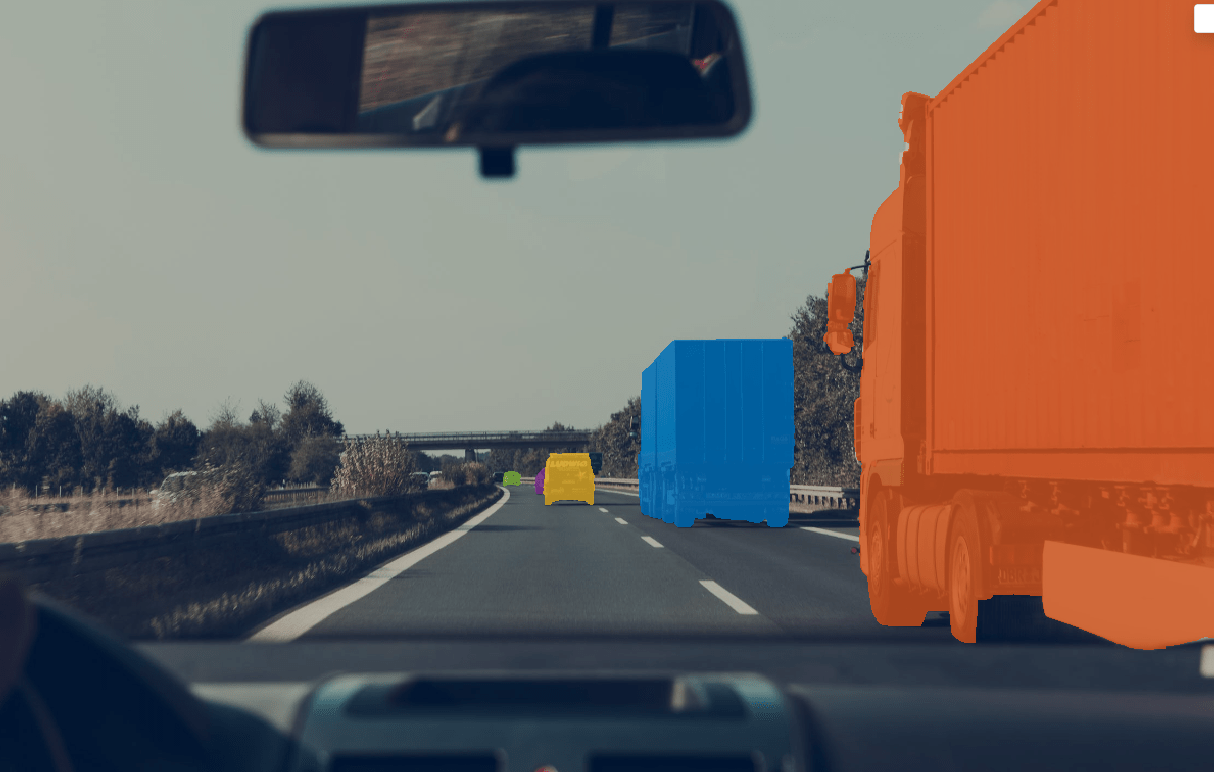
Annotation is the process of labeling the object of interest in the image or video to help AI or Machine Learning models understand and recognize the objects detected by sensors. 

In the Self Driving development process, a high volume of data is acquired from the test fleet through the cameras, ultrasonic sensors, radar, LiDAR, and GPS, which is then ingested from vehicle to the data lake. This ingested data is labeled and processed to build a testing suite for simulation, validation and verification of ADAS models. In order to get autonomous vehicles quickly on public roads, huge training data is required, and the current shortage of it is the biggest challenge. 

Types of Annotations needed for Smart Training

For powering the AI behind Self Driving Cars, multiple types of annotations are required. These include but are not limited to:  

  • Bounding boxes 
  • Semantic segmentation 
  • Object tracking 
  • Object detection 
  • Video classification 
  • Sensor fusion 
  • Point cloud segmentation

These annotations feed the machine learning models processing training data from the multiple systems. Cameras record 2-D and 3-D images and videos. Radar is used for long, medium, and short-range distances using radio waves. Light detection and ranging (LiDAR) technology is used to map distance to surrounding objects. To properly train the multiple models and neural networks, a variety of annotations are required to identify and contextual things like road lines, traffic signals, road signs, objects in and near the road, depth and distance, pedestrians, and all the other relevant information on the road.

This annotated data assists in training and validating the perception and prediction models with precision. For autonomous vehicles, ground truth labeling helps in annotating urban scenarios, highway environments, road markings and sign boards, and different weather conditions that enables to efficiently train and detect moving objects.  Manual labeling of these huge datasets requires significant resources, time and money. Several automation software tools and labeling apps that have evolved recently provide frameworks to create algorithms to automate the labeling process, ensuring the same precision and safety. 

TagX – Data Annotation Service Provider

At TagX, we combine technology with human care to provide image annotations and video annotations with pixel-level accuracy. Our data labelers maintain quality while processing & labeling the image data which can be used efficiently for various AI and ML initiatives.

Since data annotation is very important for the overall success of your AI projects, you should carefully choose your service provider. Having a diverse pool of accredited professionals, access to the most advanced tools, cutting-edge technologies, and proven operational techniques, we constantly strive to improve the quality of our client’s AI algorithm predictions.

AI Trends in Retail: How Data Annotation is aiding its development

Artificial Intelligence boosts productivity, saves time and increases efficiency when applied across industry. In retail, the story is no different. AI is already being used by savvy retailers to improve productivity and profitability. Retail business owners are investing in cutting-edge technologies, including Artificial Intelligence, robotics, data analytics, and logistics automation, becoming more customer-centric and responsive to demands in the industry.

The Retail Industry today is more fragmented and competitive than ever before. The aim of the AI technologies seems to be to enhance the shopping experience by providing convenience or increasing engagement. Brands and business leaders need to be aware of the trends shaping the future of retail and the changing priorities of consumers. Transparency, purpose, sustainability and inclusivity are among the most important concerns retail businesses need to address, publicly, to secure their future success. 

Use Cases of AI in Retail

Let’s take a look at some of the practical applications of AI in retail and the data annotation techniques behind them.

Autonomous Checkout

The system is making use of a combination of computer vision ,affordable ceiling-based cameras and precise in-store navigation maps to detect the actions performed by each customer entered. Whether in retail locations or worksites, users can grab a selection of items and walk away, while the system takes care of recording the transaction. 

Autonomous checkout technology will reduce labor costs, improve customer experience and improve profit margins for retailers.Customers can have their face scanned by a facial recognition software before entering the store or are required to swipe a card before entering. By understanding the interactions of customers and seeing the movement of products it is  enabling a checkout-less experience.

Virtual Fitting Rooms

Virtual mirrors incorporate computer vision and augmented reality technology to allow users to try on different outfits in different sizes and colors without having to change and use the fitting room. A customer scans the code of a clothing item and the virtual mirror displays the image of the person in the outfit.Virtual mirrors use gesture recognition algorithms to recognize user commands and they also feature a virtual cart. 

Once a buyer short lists an item for purchase, it is added to the virtual basket for later payment and checkout.Virtual fitting rooms allow customers to see what they would look like in any item of clothing.  These trial rooms are not just perfect only for the apparel brands, but the cosmetic and beauty companies can also deploy them so that their customers can try the beauty products without actually applying them on their skin.

Chatbots and Shopping Assistance

Chatbots are programmes that use artificial intelligence to communicate with customers via chat, text, or voice. Retailers can use AI-powered chatbots to efficiently engage and serve their customers. Retailers may now answer a significant number of enquiries with the help of chatbots, whether they are in-store, online, or even before they enter the store. They’re set up to quickly respond to questions, make product recommendations, and provide support.

Additionally, some AI conversational systems collect data and provide insights on clients’ purchasing habits and product preferences. As a result, when customers receive customised attention and fast assistance, they are more likely to become attached to and loyal to the company.

Customer’s Tracking and Analysis

Decision-makers in the retail industry are expected to rely heavily on AI technologies. This technology can assist shops in determining their consumers’ requests and needs, allowing them to become more customer-centric. Retailers may make well-informed business decisions about the quantity of goods to order based on customer behaviour using data obtained through the AI-driven analytics platform. It would not only improve efficiency but also save the company time and money.

Using AI algorithms, retail businesses can run targeted marketing campaigns based on customers’ region, preferences, gender, and purchasing habits. It will help in improving customer loyalty and retention as a personalized experience is a great way to show them care.

Data Annotation for Retail AI

Image annotation for retail has many purposes. One way image annotation and image tagging helps offline retailers is when it improves the app’s image search functions or when it is able to improve inventory management to keep store shelves stocked with the products that the customers want.Retail applications are well suited to Bounding Box annotations which are cheap, additionally there are usually many bounding boxes per image which also lowers the price.All the items placed in the shelves are annotated for recognition of which item is present and what is picked. It is also used for managing stock of the items.

Experienced image annotation teams annotate images of shelves, prices, brands, and products so companies can track shelf management, identify items that have been misplaced, and quickly conduct price checking. Image annotation is used to detect various pictorial content such as specific features of a product, various objects, or other image elements.

At TagX, we combine technology with human care to provide image annotations and video annotations with pixel-level accuracy. Our data labelers maintain quality while processing & labeling the image data which can be used efficiently for various AI and ML initiatives.

Importance of Product Data Entry for Ecommerce. Why to Outsource?

When you run your business on an eCommerce platform, you have a lot of data to manage. Neglecting the task of correctly processing your data will only yield marginal results in terms of your eCommerce success. This means you’ll miss out on the chance to grow your online business to new heights.

For this purpose, data entry solutions are important.  It’s important to keep the website updated at all times and maintain an effective product data management system to give a boost to your e-commerce company and ensure that it stays ahead in the market.

For clients to notice the products offered on the e-commerce website, they must be appropriately classified and the correct information must be entered. To capture the attention of the buyer surfing your website, the product must present the appropriate characteristics, descriptions, photographs, reviews, and so on. Accurate data entry is of utmost importance to get all the product details in place. 

Importance of Product Data Entry Services

The importance of product data entry in the success of e-commerce business has been discussed below:

  • To give the e-commerce website a streamlined appearance, all of the products and services supplied by the e-commerce organization must be listed online.
  • Customers benefit from bulk product uploading services since they can quickly determine which product is best for them after reviewing the information.
  • It also aids in establishing comparisons between different types of products and selecting the best choice because information about various product aspects is clearly stated. Category, subcategory, and other options can be highly beneficial.
  • Customers can also benefit from image editing and improvement methods connected to products, which can assist them in making the best purchasing selections possible based on the information provided.
  • It is critical to present product data in an appealing manner by using the appropriate specifications, photos, descriptions, testimonials, and so on.

Why Should You Outsource Product Data Entry?

Running an e-Commerce business requires passion and focus. As a business owner or operations manager, it’s necessary for you to concentrate on marketing your products and growing your sales. Yet, you can’t simply ignore the other important non-core tasks such as updating your product list through product data entry.  

Having in-house employees for product data entry is always a costly affair as you will have to hire many people to streamline the product data entry process. This will cost you a significant amount of time and money.

More specifically, outsourcing your Ecommerce data entry services to experts will give you the time and energy to focus on other aspects of your business while working on your data management. This is the key behind a seamless navigation system within your Ecommerce store and a user-friendly experience. 

TagX Data Entry Services

By outsourcing product data entry tasks to TagX, you can leverage a pool of talent and the latest software and tools, meaning you will get unmatched product data entry services. By outsourcing product data entry to TagX ,you will have more time and resources to focus on your core business activities.

What is Text Annotation in Machine Learning ? Types of Text Annotation

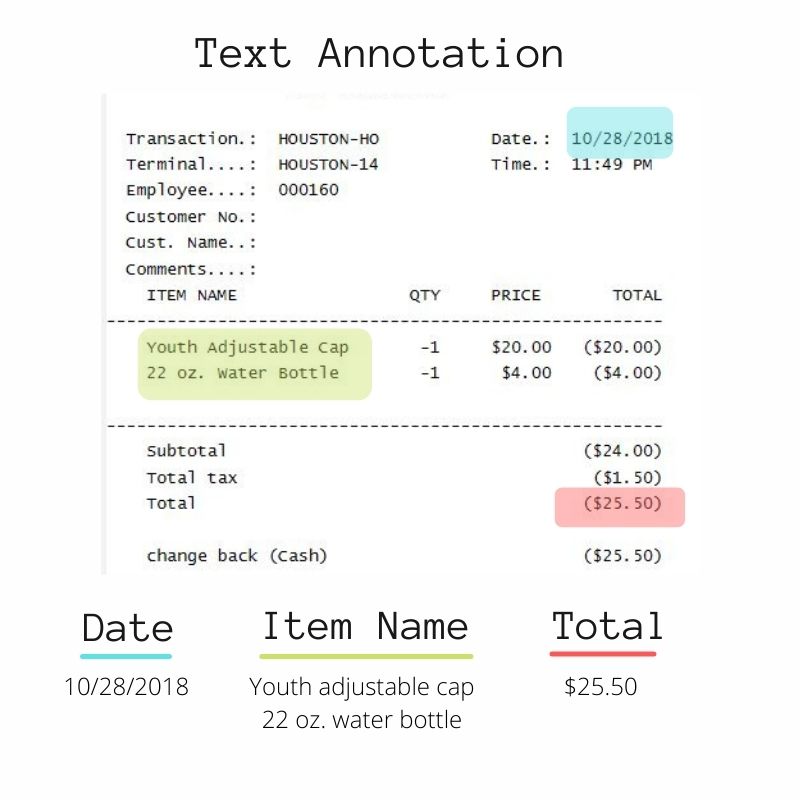
Text annotation is the machine learning process of assigning meaning to blocks of text: whether they are short phrases, longer sentences or full paragraphs. This is done by providing AI models with additional information in the form of definitions, meaning and intent to supplement the text as written. 

The texts are annotated with metadata and highlighted with specific colors and shades by highly skilled annotators making sure each text is read carefully in order to train the NLP machine learning algorithm accurately.

Why is Text Annotation Important? 

The importance of text annotation in NLP is due to the diversity of human languages. Machines, no matter how intelligent they become, still have a lot to learn about context and deeper meaning. It’s an annotation that tells them what they need to know.

Chatbots are among the most well-known implementations of natural language processing today, and there are hundreds of examples of bots that have gone wrong. Failures of chatbots can be amusing. Poorly trained chatbots, particularly those in customer support, can harm a company’s reputation, user experience, and, ultimately, client loyalty. 

While tools exist for automatic text annotation, some of the highest quality annotations come from human annotators. From being able to understand complex sentiments to expertly annotating highly technical subjects, human annotators produce superior results.

What are the types of Text Annotation?

Datasets with text annotations usually contain highlighted or underlined key pieces of text, along with notes around its margins. By annotating text, you can ensure that the target reader, in this case a computer, can better understand key elements of the data.

The process of annotating text involves any action that deliberately interacts with digital contextual data.  So for those who need to build text datasets, here’s an introduction to different types of text annotation methods:

Named Entity Recognition

Named Entity Recognition is the act of locating and labeling mentions of named entities within a piece of text data.This includes identification of entities in a paragraph(like a person, organization, date, location, time, etc.), and further classifying them into categories according to the need.

Part-of-speech tagging

Part-of-speech tagging is the task that involves marking up words in a sentence as nouns, verbs, adjectives, adverbs, and other descriptors.This is where the functional elements of speech within the text data is annotated. 

Summarization

Summarization is the task that includes text shortening by identifying the important parts and creating a summary. It involves Creating a brief description that includes the most important and relevant information contained in the text.

Sentiment analysis

Sentiment analysis is the task that implies a broad range of subjective analysis to identify positive or negative feelings in a sentence, the sentiment of a customer review, judging mood via written text or voice analysis, and other similar tasks.

Text classification

Text classification is the task that involves assigning tags/categories to text according to the content. Text classifiers can be used to structure, organize, and categorize any text. Placing text into organized groups and labeling it, based on features of interest.This is often used for labelling topics, detecting spam, analyzing intent and emotional sentiment. 

Keyphrase Tagging

This is a procedure for locating keyphrases or keywords in text. Also known as keyword extraction, this is often used to improve search-related functions for databases, ecommerce platforms, self-serve help sections of websites and so on.

TagX Text Annotation

TagX offers Text annotation services for machine learning. Having a diverse pool of accredited professionals, access to the most advanced tools, cutting-edge technologies, and proven operational techniques, we constantly strive to improve the quality of our client’s AI algorithm predictions.

With the perfect blend of experience and skills, our outsourced data annotation services consistently deliver structured, highest-quality, and large volumes of data streams within the desired time and budget. As one of the leading providers of data labeling services, we have worked with clients across different industry verticals such as Satellite Imagery, Insurance, Logistics, Retail, and more.

Image And Video Annotation for LiDAR Data

What is Lidar Data?

Lidar (light detection and ranging) is an optical remote-sensing technique that uses laser light to densely sample the surface of the earth, producing highly accurate x,y,z measurements.Lidar is an active optical sensor that transmits laser beams toward a target while moving through specific survey routes. Lidar can see through objects, such as walls or trees.

Two types of lidar are topographic and bathymetric. Topographic lidar typically uses a near-infrared laser to map the land, while bathymetric lidar uses water-penetrating green light to also measure seafloor and riverbed elevations.

Today Lidar is being used for computer vision to discover lost cities, train autonomous vehicles, track climate change, and much more.

One of the most common uses for Lidar is tracking the speed of vehicles. Lidar is useful because it is accurate, fast, and can be used in any location where the structure and shape of the earth’s surface must be determined.

Lidar Data Annotation

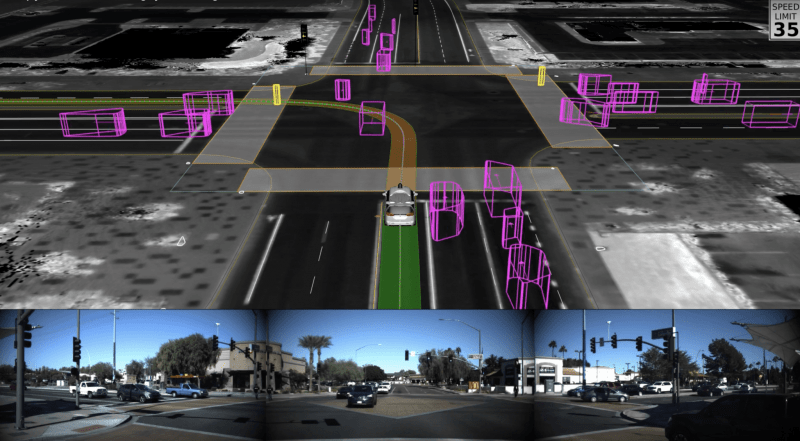
Lidar Annotation is performed to train self-driving cars. Lidar annotation is very similar to image labeling in its essence but different in practice for a simple reason: the point cloud is a 3D representation on a flat screen. In addition, humans have to deal with a huge amount of points (in the order of millions) which are not contained by well represented and defined surfaces or boundaries. So, even for the human brain, it’s not trivial to understand which point belongs to which object, and if you zoom into the point cloud image, this difficulty becomes clear. Lidar data annotation is usually performed using the same structures of classes that guide the image labeling practices, such as bounding boxes.

Annotating Lidar point cloud data is challenging due to the following issues: 

1) A Lidar point cloud is usually sparse and has low resolution, making it difficult for human annotators to recognize objects

2) Compared to annotation on 2D images, the operation of drawing 3D bounding boxes or even point-wise labels on Lidar point clouds is more complex and time-consuming. 

3) Lidar data are usually collected in sequences, so consecutive frames are highly correlated, leading to repeated annotations. 

Bounding Box Annotation

Drawing 3-D bounding boxes to annotate and/or measure many points on an external surface of an object. These typically are generated using 3-D laser scanners, Radar sensors, and Lidar sensors.These are used to detect and monitor objects with greater precision, including single points, to gather information such as scale, position, speed, yaw, pitch, and class.

Semantic Segmentation

Lidar point cloud segmentation is a technique for classifying an object with additional attributes that can be detected by any perception model for learning. 3D point cloud annotation services help self-driving cars differentiate between various types of lanes in a 3D point cloud map so that they can annotate the roads for safer driving with more accurate visibility using 3D orientation.

The task of manually segmenting every single point in the scene is massive and requires a lot of attention to detail. Semantic segmented data provides autonomous vehicles with a deeper and finer interpretation of their surroundings.

Wrapping Up

Lidar data must be appropriately labelled to be helpful for computer vision, and more especially, supervised machine learning, which is a massive operation that can be difficult to scale. The difficulty for AI engineers is converting enormous amounts of unstructured data into structured data that can be utilised to train machine learning models. That requires hours and hours of labeling data to prepare it for training machines to interpret and understand the visual world.

This calls for an annotation partner who understands managing the “rhythm” of such a complex workflow. We at TagX have been involved in multiple projects where we have reduced the handling time of such micro tasks by orders of magnitude!

At TagX, we understand that annotating data for computer vision models requires a strategic combination of people, process, and technology. In fact, it’s our specialty. If your organization works with Lidar technology, our professionally managed teams of data analysts can help. 

Why Machine Learning needs Data?

Machine learning is a type of artificial intelligence (AI) that trains computers to think like humans do: by learning from and improving on previous experiences. Machine learning can automate almost any operation that can be accomplished using a data-defined pattern or set of rules.

So, what is the significance of machine learning? It enables organisations to automate operations that were previously only possible for humans to complete, such as answering customer service calls, bookkeeping, and screening resumes. Machine learning can also handle more complex problems and questions like ,think of  image detection for self-driving cars, predicting natural disaster locations and timelines, and understanding the potential interaction of drugs with medical conditions before clinical trials. That’s why machine learning is important.

Why is data important for machine learning?

We’ve discussed why machine learning is vital, and now it’s time to look at the function data plays. Machine learning data analysis uses algorithms to improve itself over time, but good data is required for these models to function well.

The development of a machine learning algorithm depends on large volumes of data, from which the learning process draws many entities, relationships, and clusters. To broaden and enrich the correlations made by the algorithm, machine learning needs data from diverse sources, in diverse formats, about diverse business processes.

For the most comprehensive learning experience, you should provide diverse training data , integrated from multiple sources and concerning various business entities, collected across multiple time frames, to make algorithmic assessments more real-world, accurate, and successful in production. Once in production, a machine learning algorithm continues to read large, diverse data sets to keep its model up-to-date and growing.

What is a dataset in machine learning?

To understand what a dataset is, we must first discuss the components of a dataset. A single row of data is called an instance. Datasets are a collection of instances that all share a common attribute. Machine learning models will generally contain a few different datasets, each used to fulfill various roles in the system.

Machine learning models require two types of datasets: training and test data. Training set is the one on which we train and fit our model basically to fit the parameters whereas test data is used only to assess performance of the model. Training data’s output is available to model whereas testing data is the unseen data for which predictions have to be made.

For machine learning models to understand how to perform various actions, training datasets must first be fed into the machine learning algorithm, followed by validation datasets (or testing datasets) to ensure that the model is interpreting this data accurately.Once you feed these training and validation sets into the system, subsequent datasets can then be used to sculpt your machine learning model going forward. The more data you provide to the ML system, the faster that model can learn and improve.

Wrapping Up

Machine learning is a booming technology because it benefits every type of business across every industry. The applications are limitless. From healthcare to financial services, transportation to cyber security, and marketing to government, machine learning can help every type of business adapt and move forward in an agile manner. And the key factor in driving this tech is data. TagX provides a professional, managed data collection and annotation service that meets your demands for accuracy, flexibility and affordability.

Design a site like this with WordPress.com
Get started