Role of AI and Data Annotation for Space Exploration

Space exploration has long sparked the interest of scientists and governments all over the world since it contains the secret to mankind’s origins as well as many other marvels of the universe.

Imagine how easy it would be for scientists and explorers to attain their goals and how it would affect our lives if we combined the ideas of these two gigantic phrases, AI and Space Exploration, keeping in mind recent breakthroughs in the field of machine learning and artificial intelligence.

In space exploration, AI has shown enormous promise in areas such as global navigation, earth observation, and communications back and forth. Machine learning algorithms have already been utilized in spacecraft monitoring, autonomous navigation, control systems, and intelligently detecting things in the route.

Artificial Intelligence for Space Applications

Artificial intelligence (AI) is leading the way in bringing us closer to the stars. This has various advantages in our everyday life. Space data is incredibly useful for a variety of purposes, including transportation and navigation. Artificial intelligence-enabled robots are assisting us in collecting and processing this vital data so that it may be used in the appropriate places.

Earth Observation

Satellite imaging combined with artificial intelligence may be used to monitor a variety of environments, from urban to hazardous. This can aid in bettering urban planning and locating the greatest development sites. It can also assist us in finding new routes, allowing us to travel more quickly and efficiently.

Satellites can also monitor regions of particular concern, such as deforestation. The information gathered by this technology can aid researchers in monitoring and care for them. Satellites can also be used to monitor dangerous locations, such as nuclear power plants, without the need for people to enter.

Data collected by space technology is structured with Data Annotation techniques and processed by AI machines is fed back to the industries that require it, allowing them to proceed accordingly.

Satellite Monitoring 

Satellites and spacecraft, like any other complex system, necessitate extensive system monitoring. From minor faults to collisions with other orbiting objects, the list of potential issues includes a wide range of possibilities, from the most foreseeable to the most implausible. Scientists utilize AI systems that continuously analyze the functioning of various sensors to keep track of the state of artificial satellites. Such systems are capable of not only informing ground control of any problems but also of resolving them on their own.

SpaceX, for example, has fitted its satellites with a sensor and mechanism system that can track the device’s position and modify it to prevent colliding with other objects.

Spacecraft, probes, and even rovers are all using artificial intelligence to navigate. Experts claim that the technology utilized to manage these gadgets is quite similar to the systems that assure autonomous car movement. Artificial intelligence also uses integrated data from a system of sensors and maps to track numerous characteristics outside of our globe.

Communication

Communication between Earth and space, in addition to maintaining spacecraft operating, can be difficult. There may be numerous communications obstacles that a satellite must overcome depending on the state of the atmosphere, interference from other signals, and the environment. Artificial intelligence is now being utilized to assist in the control of satellite communication in order to overcome any transmission issues.

These AI-enabled systems can figure out how much power and what frequencies are required to send data back to Earth or to other satellites. The satellite, which has AI aboard, is constantly doing this so that signals can pass through as it travels through space.

AI-Based Assistants and Robots

Scientists are working on artificial intelligence-based assistants to support astronauts on missions to the Moon, Mars, and beyond. These assistants are designed to anticipate and understand the crew’s needs, as well as understand astronauts’ emotions and mental health and take appropriate action in the event of an emergency. So, how do they accomplish this? Sentiment analysis is the solution.

Sentiment Analysis is a branch of Natural Language Processing (NLP) that aims to recognise and extract opinions from a given text in places like blogs, reviews, social media, forums, and news. Robots, on the other hand, can be more useful when it comes to physical assistance, such as assisting with spacecraft piloting, docking, and handling harsh situations that are dangerous to people. The majority of it may seem speculative, but astronauts will benefit much from it.

Data Annotation for Space AI

Satellite imagery, which is commonly utilized in remote sensing, provides an unprecedented technique of capturing the Earth’s surface. The satellite’s images are then analyzed using a variety of Computer Vision techniques, including Data Annotation, in which every portion of the image is detected and essential features retrieved. This allows scientists to create predictive models for specific remote sensing applications, such as detecting and preventing natural disasters.

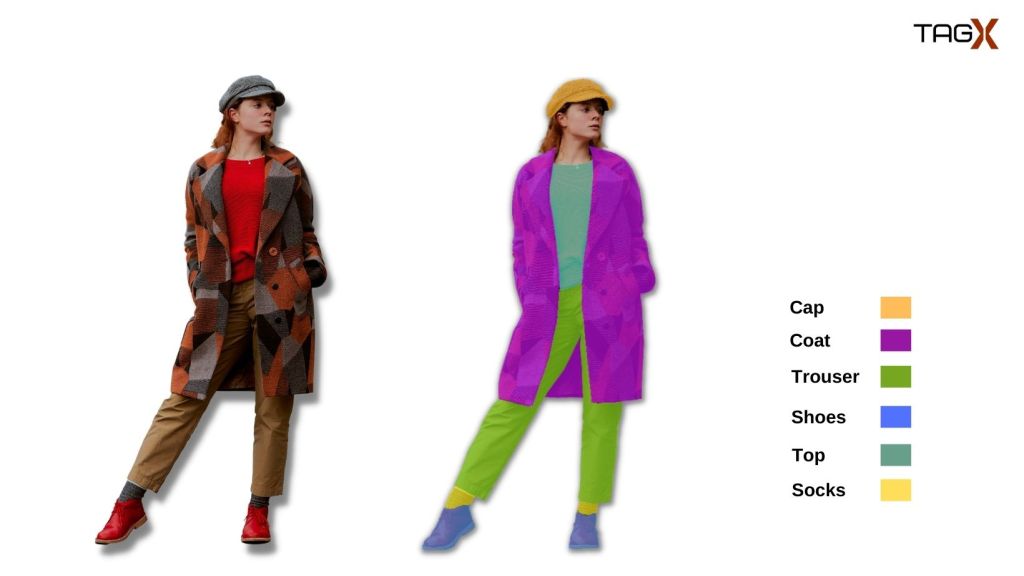
Semantic Segmentation of satellite

Although, like other applications of AI, nothing can be concrete and secure with AI; however, the technology of artificial intelligence is showing clear potential in exploring the interstellar space with innovative machines and projects. With each innovation, technology is coming closer to providing newer insights and proving to be an advantage for humans. 

While all AI technologies require training datasets, the machines cannot learn from raw data in its original form. This is why raw datasets need to be prepared with various data annotation methods. Since this is a very time-consuming process, companies developing AI products often outsource this work to third-party service providers who can annotate millions of images and videos, like TagX

TagX provides you with high-quality training data by integrating our human-assisted approach with machine-learning assistance. Our text, image, audio, and video annotations will give you the courage to scale your AI and ML models. Regardless of your data annotation criteria, our managed service team is ready to support you in both deploying and maintaining your AI and ML projects.

Impact of AI and Data Annotation in Fashion Industry

Fashion has always been at the forefront of innovation from the invention of the sewing machine to the rise of e-commerce. Like tech, fashion is forward-looking and cyclical.

Fashion technology is defined as any cutting-edge technology that develops cutting-edge tools for the fashion industry, whether to boost production or consumption.

Depending on the technology’s function, it could be used by designers, manufacturers, merchants, and customers. As new technologies become available, we should expect fashion tech to grow more mainstream.

Impact of AI In Fashion Industry

The issues and concerns that persist in the traditional garment ecosystem highlight the need to use AI in fashion to automate, innovate, and reinvent business activities like trend spotting, cloth design, manufacturing, transportation, retailing, and selling. Here are some prime ways that artificial intelligence is transforming the future of fashion.

Apparel designing

Technology is being used by fashion firms of all sizes and specialties to better understand their clients than ever before. Fashion firms are utilizing technology to better understand client wants and produce better garments thanks to more sophisticated data collection.

Fashion design that is AI-powered is based on the customer’s selected colors, textures, and other stylistic preferences. Before brands can rely on AI-only designers, further research and development are required. However, artificial intelligence is already assisting brands in the creation and iteration of their designs. The application of artificial intelligence is shaping the way we will get dressed, from 3D avatars to closet consultants.

Size Recommendations

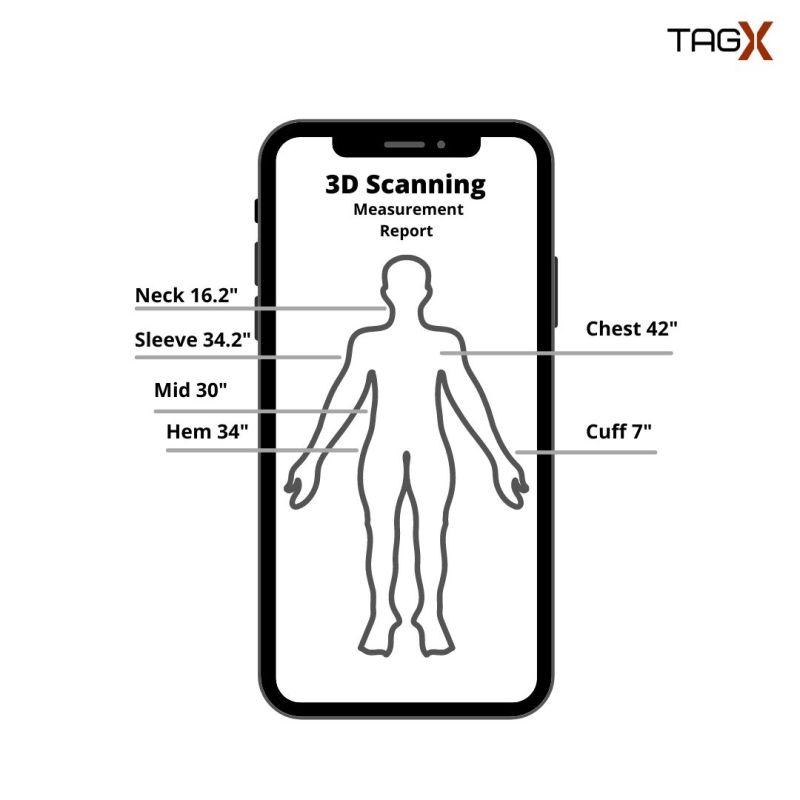
In the fashion business, 3D scanning is already being utilized to correctly analyze body proportions, provide sizing recommendations, and sell goods in a more focused manner. This is due to the fact that clothing size specifications and accompanying measures vary greatly from one brand to the next. As a result, buyers frequently order and return multiple sizes of the same item of apparel, reducing earnings for online sellers. As a result, the fashion industry is increasingly resorting to solutions that advise buyers on the proper size from the start, resulting in fewer returns.

The body’s measurements are precisely replicated by the 3D avatar. As a result, it provides correct and individualized fit assistance automatically, which is crucial for improving the online shopping experience and lowering product return rates. Size recommendation uses AI-powered technology to match consumers’ body shapes to garment SKUs, allowing them to buy apparel in the size that best fits them.

Manufacturing & supply chain  process

Fashion brands are now able to identify fast-changing fashion trends and get the latest fashion accessories to store shelves faster than the “traditional” fashion shop, thanks to AI and machine learning capabilities.

Intelligent forecasting systems are another area where businesses should consider employing AI to reduce inventory and shipping expenses. For example, computers can be taught to take different behaviors based on the best feasible decision in a given situation via reinforcement learning. Today, AI can assist in estimating approximate product amounts to order and analyzing inventories in stores based on historical sales data.

Virtual Mirrors

Virtual mirrors incorporate computer vision and augmented reality technology to allow users to try on different outfits in different sizes and colors without having to change and use the fitting room. A customer scans the code of a clothing item and the virtual mirror displays the image of the person in the outfit. Virtual mirrors use gesture recognition algorithms to recognize user commands and they also feature a virtual cart. 

Coupled with augmented reality, image recognition (AI) technology can be used to analyze pieces of clothing and automatically generate an image of the garment on a person of any size, shape, or wearing any kind of shoes. Some companies are already experimenting with smart fitting rooms to allow customers in-store to immediately view themselves in the clothes they pick, and swap those clothes for different styles, without even changing. 

Personalized shopping 

One of the biggest ways it can help drive growth is through leveraging information about customers and thus creating a personalized shopping experience. AI can help computers identify images and recommend those products online which the customer is more likely to buy. 

Through AI-powered personal stylist apps, interested customers are allowed to browse clothes online to click pictures of their clothes. By offering these images as inputs, the app will suggest the perfect style in accordance with the customer’s body type, complexion and style while also maintaining the current fashion trends. Computer vision-based AI models can make this a reality with the support of high-quality annotation. 

Visual Product Discovery

Visual search, another AI in fashion retail trends, makes it easier than ever for shoppers to find and purchase the things they want. Most buyers simply snap and submit a photo of the goods they want, and AI recognizes the captured object, or at least similar products, across a variety of websites and merchants.

People occasionally come upon something unusual, but when they go online to look for it later, they are unable to locate it. Fashion sellers should make sure that their product images are high-quality and up-to-date in order to take advantage of visual search and make their products more discoverable.

Data Annotation for Fashion AI

While AI will not be able to completely replace people, it will present a huge potential to leverage insight into customer preferences in order to align supply and demand, deliver a personalized customer experience, and push all the way to the supply chain in order to generate superior products.

Furthermore, high-quality machine learning training data is necessary to improve AI performance so that more and more data may be fed into the model for more exact predictions in real-life settings. Another problem for AI startups is generating relevant training data.

However, data-labeling firms like TagX are working around the clock to accommodate the demand for such information and to assist AI firms in developing more advanced systems for the fashion and retail industries.

TagX is working with industry innovators to create training datasets and annotations for fashion AI. Using our knowledge, expertise, and proprietary annotation tools, we can fulfill the demands of any computer vision project.

For thousands of individual clothing items require the assistance of controlled teams of professional annotators for accurate tagging. TagX can ensure that your information captures the complex picture of today’s fashion choices by using labeling techniques like Bounding box annotation, polygon annotation, semantic segmentation, etc.

Machine Learning Model: Types ,Data Requirement and Preparation

Machine learning is a type of artificial intelligence that trains computers to think as humans do: by learning from and improving on previous experiences. Machine learning can automate almost any operation that can be accomplished using a data-defined pattern or set of rules.

Machine Learning is a branch of study that focuses on teaching computer programs and algorithms to improve at a specific task. Insights extracted from data are used by machines. Machines must learn how to do things and anticipate in a world where machines perform the majority of the work. This is where artificial intelligence (AI) comes in. It teaches machines to learn on their own and predict outcomes based on prior knowledge.

Importance of Machine learning

It enables organizations to automate operations that were previously only possible for humans to complete, such as answering customer service calls, bookkeeping, and screening resumes. Image identification for self-driving cars, anticipating natural disaster sites and timeframes and analyzing the potential interaction of medications with medical conditions before clinical trials are all examples of how machine learning can scale to handle greater challenges and technical questions. This is why machine learning is so crucial.

Types of Machine Learning Models

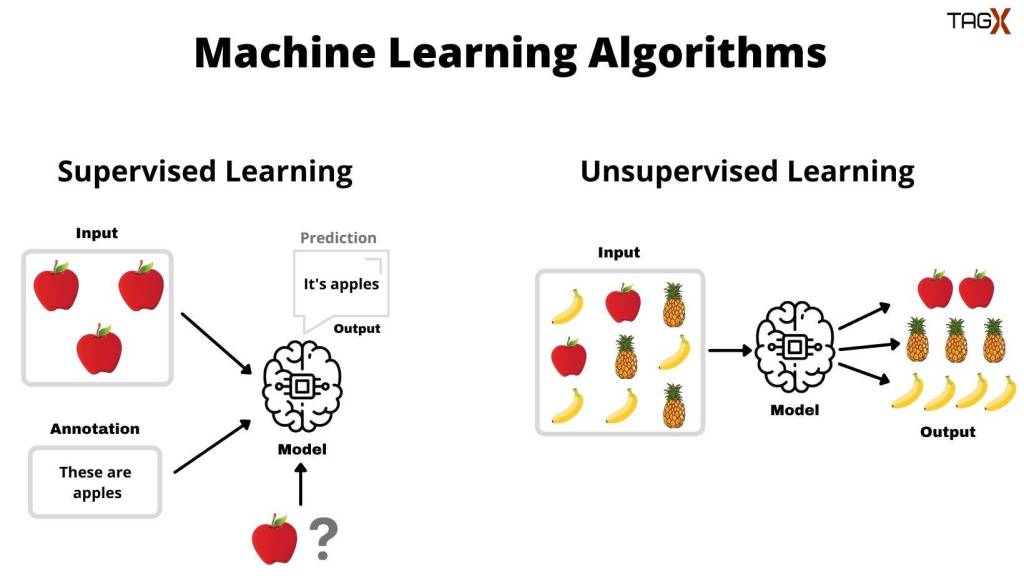
Machine learning uses two types of techniques: supervised learning, which trains a model on known input and output data so that it can predict future outputs, and unsupervised learning, which finds hidden patterns or intrinsic structures in input data

Supervised Learning

In supervised learning, we train machine learning models by giving them a set of inputs (training data) and expected outputs or labels. 

This approach basically teaches machines by example. During training for supervised learning, systems are exposed to large amounts of labeled data, for example, images of handwritten figures annotated to indicate which letter or number they correspond to. 

However, training these systems usually necessitates a large quantity of annotated data, with some systems requiring millions of instances to master a task. As a result, the datasets that are utilized to train these systems can be rather large. Outsourcing or crowd-working services are frequently employed to complete the time-consuming task of annotating the datasets used in training. If you have known data for the outcome you’re trying to anticipate, use supervised learning.

Data Requirement – Supervised learning model needs structured data for training. Once the data is collected from multiple sources across multiple time frames and concerning various business entities the data then requires Annotations. Data Annotation is performed to attach labels to the data to make the machine recognize each entity with a label. Thus Data annotation is a crucial step for supervised learning. It is very important to choose the classes for Annotations wisely based on the outcome we are expecting from the model.

Unsupervised Learning

In contrast, unsupervised learning tasks algorithms identifying patterns in data, trying to spot similarities that split that data into categories. The model’s goal is to find the underlying structure within the data without any guidance. These techniques are mostly used in exploratory data analysis and data mining, where the goal is to discover new knowledge about underlying data rather than improve and predict existing knowledge. 

Airbnb, for example, might group together houses for rent by neighborhood, while Google News might group together stories on related topics each day. Unsupervised learning algorithms don’t look for data that can be grouped by similarities or anomalies that stand out; instead, they look for data that can be grouped by similarities or anomalies that stick out.

Data Requirement – Unsupervised learning draws conclusions on unlabeled data. The output is just based on the collection of perceptions. The model is handed a dataset without explicit instructions on what to do with it. There are no labels attached or metadata provided with the data. The training dataset is a collection of examples without a specific desired outcome or correct answer. The neural network then attempts to automatically find structure in the data by extracting useful features and analyzing its structure.

Data Preparation for Machine Learning

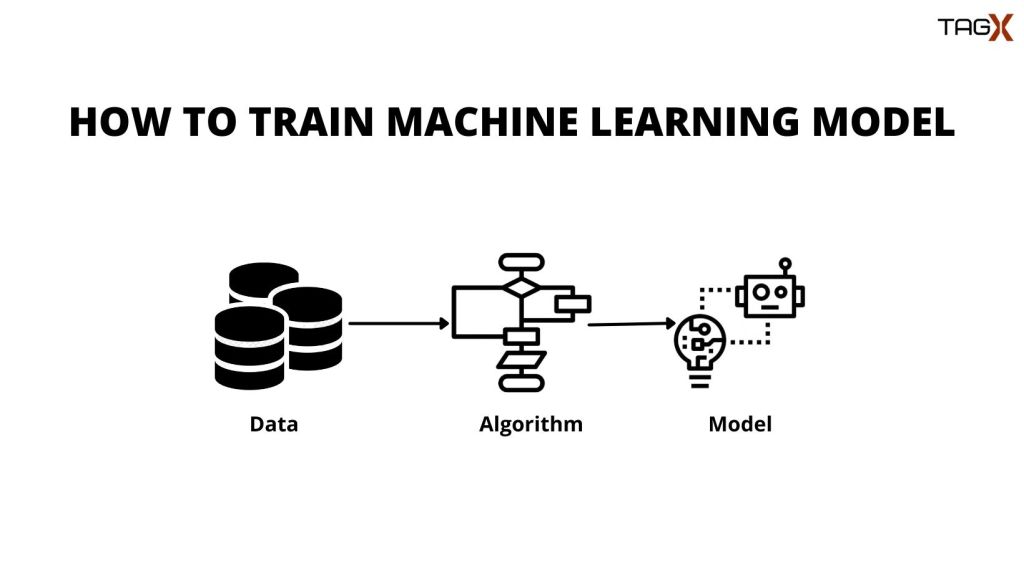
ML depends heavily on data. The thing is, all datasets are flawed. That’s why data preparation is such an important step in the machine learning process. In a nutshell, data preparation is a set of procedures that helps make your dataset more suitable for machine learning. In broader terms, the data preparation also includes establishing the right data collection mechanism. And these procedures consume most of the time spent on machine learning. Sometimes it takes months before the first algorithm is built.

  1. Data Collection– The first stage in AI development is Data acquisition. Here’s where companies collect and aggregate data. There are a few requirements to take into consideration when you collect the data: it should be high-quality, relevant, comprehensive, and big. When collecting data, it’s important to first define exactly how the system will be applied and make sure that the data we use to train the model is a good representation of the data it will handle when released to the market.
  1. Data Processing–  When you’ve collected your data that is relevant to your goals and ticks all the important boxes on the requirements list, it’s time to make it manageable, as well as make sure that it will cover every possible case your model will have to deal with in the future. This means your human experts will need to improve the data by:
    • cleaning it
    • removing duplicate values present
    • reformatting it to fit the desired file formats
    • anonymizing if applicable
    • making it normalized and uniform
  1. Data Annotation– It is simply the process of labeling or annotation making the object of interest detectable or recognizable while feeding into algorithms. Annotation is a complex process that deserves separate attention. If you want your model to train well, it’s important for the labels assigned to your data to be consistent and of high quality.

Wrapping Up

Machine learning uses algorithms to parse data, learn from that data, and make informative decisions based on what it has learned. The above information has certainly helped you in deciding if you will use supervised or unsupervised learning and your data preparation workflow. 

TagX is dedicatedly involved in data collection and classification with labeling and image tagging or annotations to make such data recognizable for machines or computer vision to train AI models. Whether you have a one-time project or need data on an ongoing basis, our experienced project managers ensure that the whole process runs smoothly.

Significance of Data Annotation for ADAS applications

Vehicle safety is one of the major areas in which automakers are making considerable investments. Automobile manufacturers have created a number of technologies that can aid in the prevention of traffic accidents over the years. Advanced Driver Assistance Systems are technologies that automate, facilitate, and improve vehicular systems to assist drivers in safe and better driving (ADAS).

What is ADAS Technology?

Advanced driver assistance systems (ADAS) are technological safety measures that help drivers prevent on-road incidents by alerting them to potential risks. This allows the driver to quickly regain control of their vehicle, boosting their capacity to react to road hazards.

Most vehicles nowadays come with standard safety measures pre-installed. Lane Departure Warning Systems and Blind Spot Warning Systems are examples of systems that employ microcontrollers, sensors, and cameras to relay signals of reflected objects ahead, to the side, and to the rear of the vehicle.

Advantages of ADAS include:

  • Automated safety system adaptation and enhancement to improve driving among the general public. ADAS is designed to help drivers avoid collisions by employing technology to warn them about potential risks or take control of the vehicle to prevent them.
  • Navigational alerts, such as automated lighting, adaptive cruise control, and pedestrian accident avoidance mitigation (PCAM), alert drivers to potential threats like cars in blind spots, lane departures, and more.
  • Sensors may be able to self-calibrate in the future to focus on the systems’ inherent safety and dependability.

Data Annotation for ADAS systems

The installation of cameras in the vehicle necessitates the development of a new AI function that uses sensor fusion to recognize and process objects. Sensor fusion combines enormous volumes of data with the help of image recognition software, ultrasonic sensors, lidar, and radar, similar to how the human brain processes information. This technology is capable of reacting physically faster than a human driver. It can evaluate a streaming video in real-time, recognize what it’s showing, and decide how to respond.

Data annotation allows machine learning models for automated vehicles to locate themselves within the large context of the road system. This technique enables the following critical functionalities:

  • Lane detection

Lane detection systems alert if the vehicle starts deviating from its lane. This is a core capability for all autonomous vehicles because it keeps them centered in the correct part of the lane. It also gives computer vision models information on where to move next when navigating across multi-lane highways. Lane detection is reliant on polyline annotation to accurately delineate the road markings that are relevant to AI models.

  • Avoiding Collision

Forward Collision warning systems are in-vehicle electronic systems that notify the drivers in case of forwarding collision with any other vehicle or object in the roadway. Annotation for obstacles, vehicles, pedestrians, etc is thus crucial for vehicle safety. It can help autonomous vehicles to avoid collisions and obstacles by keeping them safe in designated lanes. Deviating from properly marked areas of the road runs the risk of collisions with median strips or vehicles in stopping lanes.

  • Traffic Sign Recognition 

Missing out any traffic sign can be a cause of a serious road accident. The real-time traffic sign recognition systems not only help drivers to follow the traffic signals but help them follow the traffic rules. Traffic sign recognition systems in a vehicle are equipped with forward-facing cameras to detect the on-road signs. Real-time feeds from the front cameras with image annotation, computer vision and image recognition algorithms help this system to recognize the traffic signs and display them on the infotainment system to be addressed by the driver.

  • Parking Assistance Systems

Parking assistance systems are one of the most commonly used ADAS systems. Parking assistance systems generally use ultrasonic sensors, which are fixed on the front and rear bumpers of the vehicle to detect the obstacles while parking and trigger alarm. Data of these sensors are annotated to train them for assistance. The rear cam is also integrated with the system to provide visual assistance while parking. The system senses the distance between the vehicle and the obstacle

TagX Data Annotation Services

Since data annotation is very important for the overall success of your Automation systems, you should carefully choose your service provider. TagX offers data annotation services for ADAS and autonomous driving applications. Having a diverse pool of accredited professionals, access to the most advanced tools, cutting-edge technologies, and proven operational techniques, we constantly strive to improve the quality of our client’s AI algorithm predictions.

We have experts in the field who understand data and its allied concerns like no other. We could be your ideal partners as we bring to the table competencies like commitment, confidentiality, flexibility, and ownership to each project or collaboration. So, regardless of the type of data you intend to get annotations for, you could find that veteran team in us to meet your demands and goals. Get your AI models optimized for learning with us.

Data Annotation to enable AI in Construction and mining

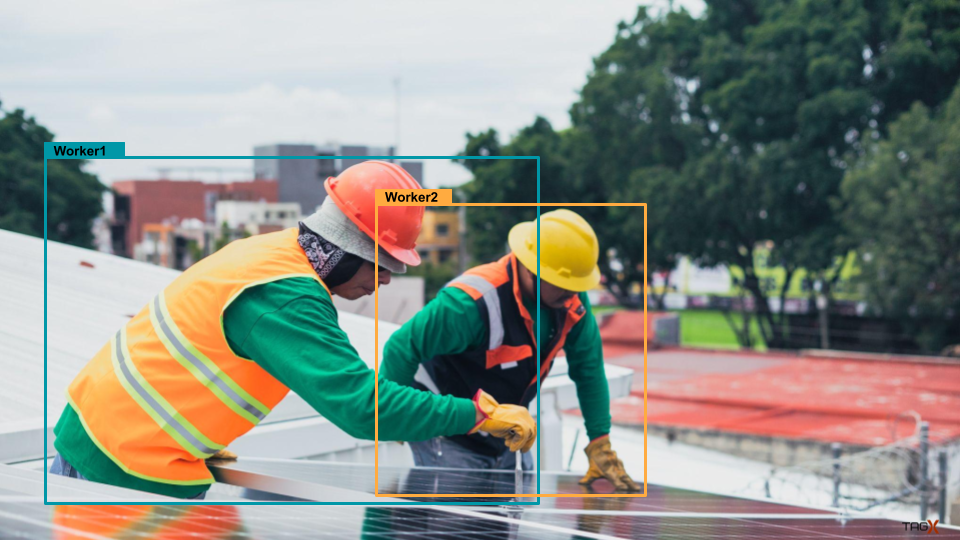
Workers at construction and mining sites deal with a variety of duties that necessitate surveillance and supervision on a daily basis. They must also ensure that their construction tasks are carried out safely on site. While artificial intelligence and augmented reality are altering the business, computer vision and data annotation have the potential to fix some of the industry’s current problems and revitalize the sector. Some of the major issues in construction and mining include struck‐by accidents, continuous monitoring of unsafe conditions, quality and defect inspection, monitoring of site activities, and more.

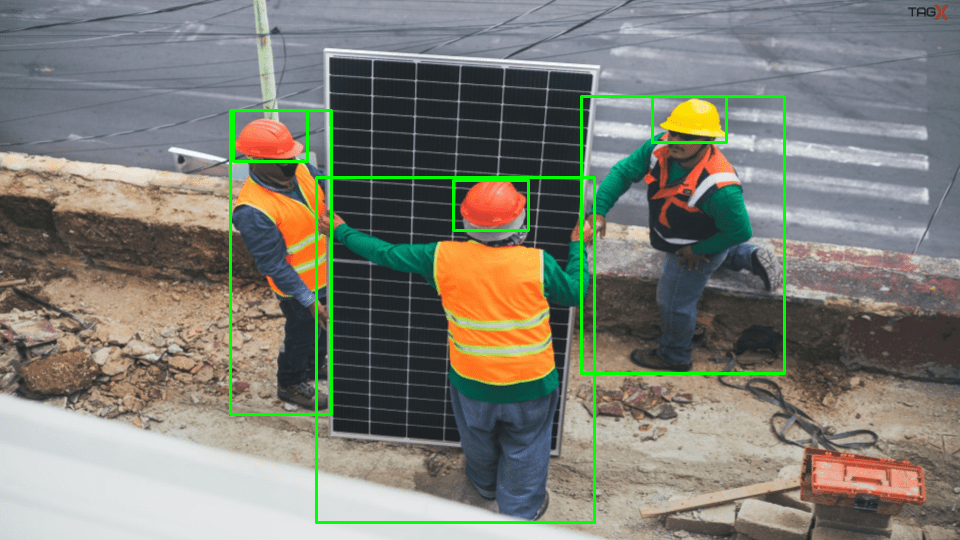
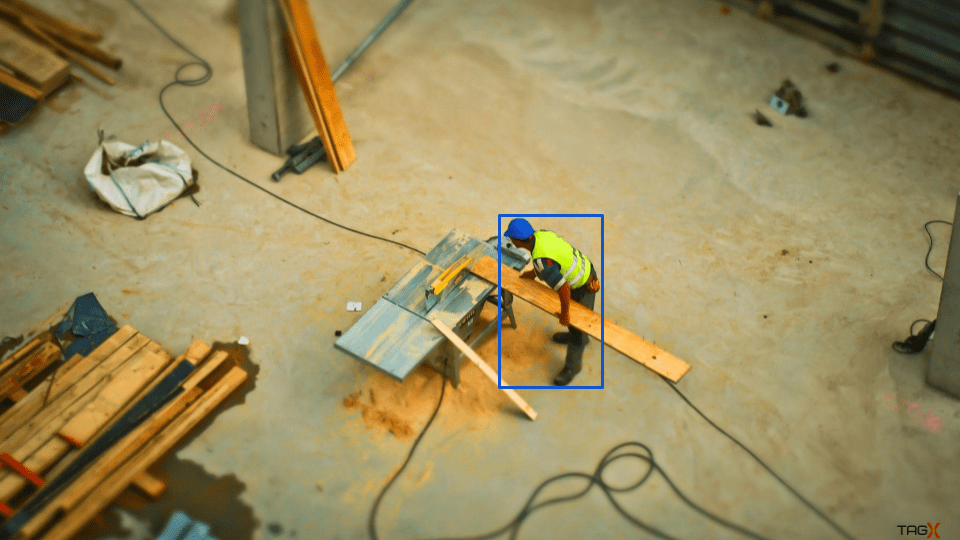
Computer vision has enormous potential in the construction and mining industries. It can examine video footage from worksites in real-time, identify poor craftmanship, divergence from standardized work plans, and compare work done against BIM standards, thanks to its object identification and recognition capability. In terms of safety, it can monitor security camera footage and detect hardhats, high visibility vests, work goggles, shoes, and even special protection belts required for workers working at high altitudes. In case it observes the absence of protective gear, PPE compliance breach, or an impending threat, the system can also alert site managers to take action to save lives.

The quality of live stream video footage from construction and mining sites can be examined to find obvious flaws or problems. This early detection of flaws and quality issues can help projects save time, money, and resources. Following that, computer vision can assist in the creation of 3D-built models for progress monitoring, mapping, autonomous robotics, and presentations. This can aid in the planning and execution of construction projects.

Companies can also deploy drones, equipping them with LIDAR and HD cameras for workers and inventory monitoring. By annotating and analyzing the data collected from the drone, managers can track and transform these analytics into valuable insights to optimize the ongoing processes. For instance, computer vision can be leveraged to create spaghetti diagrams, identifying worker movement trajectories. This enables checking for longer travel paths, movement bottlenecks and optimize onsite material storage. Thus reducing the idle time and saving additional delay costs. This can also address the under-utilization of resources, lack of insights on activity, optimal coordination, and real-time intelligence.

Safety of Workers Onsite

Mining engineers and workers can use computer vision to assist reduce accidents and injuries on the job. We can identify failures that will not only damage productivity but also be hazardous or fatal to any workers nearby if enough high-quality data is collected and annotated.

We can utilize Computer Vision and data annotation to forecast other potential dangers in addition to failures by examining patterns in events. This is extremely beneficial because the environment in mining can have a significant impact on equipment functioning and lifespan, which varies substantially based on location.

However, AI can be used for more than only predicting when equipment will fail or which threats would arise. We can also monitor the health and performance of the equipment on a regular basis, which is critical for avoiding unexpected breakdowns and worker hazards.

Reducing Material wastage

Material management is a crucial component of project management since it accounts for the bulk of cost input in building and mining. Improper material management throughout a project might result in significant and needless expenses. Cement, for example, is frequently lost on building sites due to inefficient storage and handling. Workers, in particular, tend to use only resources that are proximate to their work area, resulting in the waste of additional materials kept on higher levels.

With computer vision, you can reduce the amount of material wasted. Tracking items stored on-site can be made easier by annotating data. This will not only assist you in improving project performance by identifying underutilized materials, but it will also assist you in reducing material waste and achieving better cost control over time.

Monitoring using Autonomous vehicles

Companies can undertake remote inspections of their premises and assets using autonomous vehicles or drones. The construction and mining industries have jumped ahead with a raft of technologies now available to make them more efficient, safer, and autonomous, thanks to a slew of new technologies that have emerged in the last ten years, including autonomous vehicles, trains, aircraft, and even autonomous mines.

This allows them to map shallow and deep features at higher resolutions than before, allowing them to have a better grasp of an area’s geology and completely evaluate it before drilling any needless deep holes. Operators have been able to minimize normal site visits by half by utilizing autonomous vehicles to inspect well sites.

Looking Forward

Automation, as well as the application of AI and Machine Learning, may clearly help businesses save money, boost efficiency, and reap a variety of other benefits. What’s holding us back is a lack of excellent data and a vast quantity of it. Companies need high-quality labelled data for training in order to implement these algorithms.

TagX offers data annotation services for machine learning. Having a diverse pool of accredited professionals, access to the most advanced tools, cutting-edge technologies, and proven operational techniques, we constantly strive to improve the quality of our client’s AI algorithm predictions.

Companies are working on scaling the use of AI in mining and construction and with Computer vision becoming a huge industry we can start seeing more use of AI in the mining and construction industry. One that is completely changing from what we’ve traditionally known it to be. TagX can provide services to help you through the process of implementing such systems into your business.

AI and Data Annotation Use cases for Sports

As we approach 2021, we can observe how far the world of sports has progressed. While statistics have always played an important role in sports, artificial intelligence (AI) has had a huge impact on audience engagement, game strategy, and the way games are played today. We can see that data analytics and artificial intelligence are being employed extensively in sports.

The application of AI in sports has become a common sight in the last few years. And considering the positive impact brought by the precision of technology into sports, there is not an iota of doubt that it will continue to flourish in this domain.

In this article, we will discuss some of the new AI applications in sport and Gaming, as well as how smart annotation techniques are helping to support these advancements. Some of the applications are:

AI Augmented Coaching 

Before, during, and after the game, AI continues to have a big impact on coaches’ strategic decisions. AI platforms measure a forward pass, a penalty kick, LBW in cricket, and a variety of other comparable movements in many sports using wearable sensors and high-speed cameras. Coaches can use this information to better prepare their players for competition. This data-driven analysis of players along with the quantitative and qualitative variables helps coaches to develop better training programs for their teams.

Player Performance Improvement 

AI is also being employed to improve player performance. Apps like HomeCourt combine computer vision and machine learning to evaluate basketball players’ abilities, providing them with a useful tool for improvement. The tracking of these athletes’ performance indicators is not only reliable, but it also aids the players in determining the areas in which they have the greatest potential to excel and the areas that still need improvement.

AI in Sports Journalism 

Artificial intelligence can completely transform journalism by exploiting the potential of Natural Language Processing (NLP). Sports journalism is being heavily influenced by automated journalism, which is about to enter the market. Sports data is being used by AI to provide digestible information on various sporting events. For instance, software like Wordsmith is capable of processing sporting events to provide summaries of the major events of the day.

Virtual Reality for Sports  

Virtual reality has given sports and gamification a new level, as followers may now compete digitally against one other from all over the world using virtual reality headsets. A virtual platform powered by AI technology creates a realistic experience in a virtual environment that is comparable to watching the game live. Also, with the emergence of 5G, such experiences will get more interactive and the sports industry will be changed forever.

Broadcasting and Streaming 

AI has a significant impact on how spectators experience sports, in addition to altering the world of sports for coaches and athletes. AI algorithms can be used to choose the best camera viewpoint to present on viewers’ displays, provide subtitles for live events in several languages based on the viewer’s location, and also enabling broadcasters to utilize monetization opportunities through advertisements.

AI in Match Predictions 

Match results can be predicted using machine learning. Where vast data is available, such as in soccer or cricket, a model result can be developed to anticipate impending clashes. One of the most practical implementations of this may be seen in the Great Learning students’ project on ‘IPL Cricket Match Outcome Prediction using AI Techniques.

Power of Data Annotation behind AI for Sports

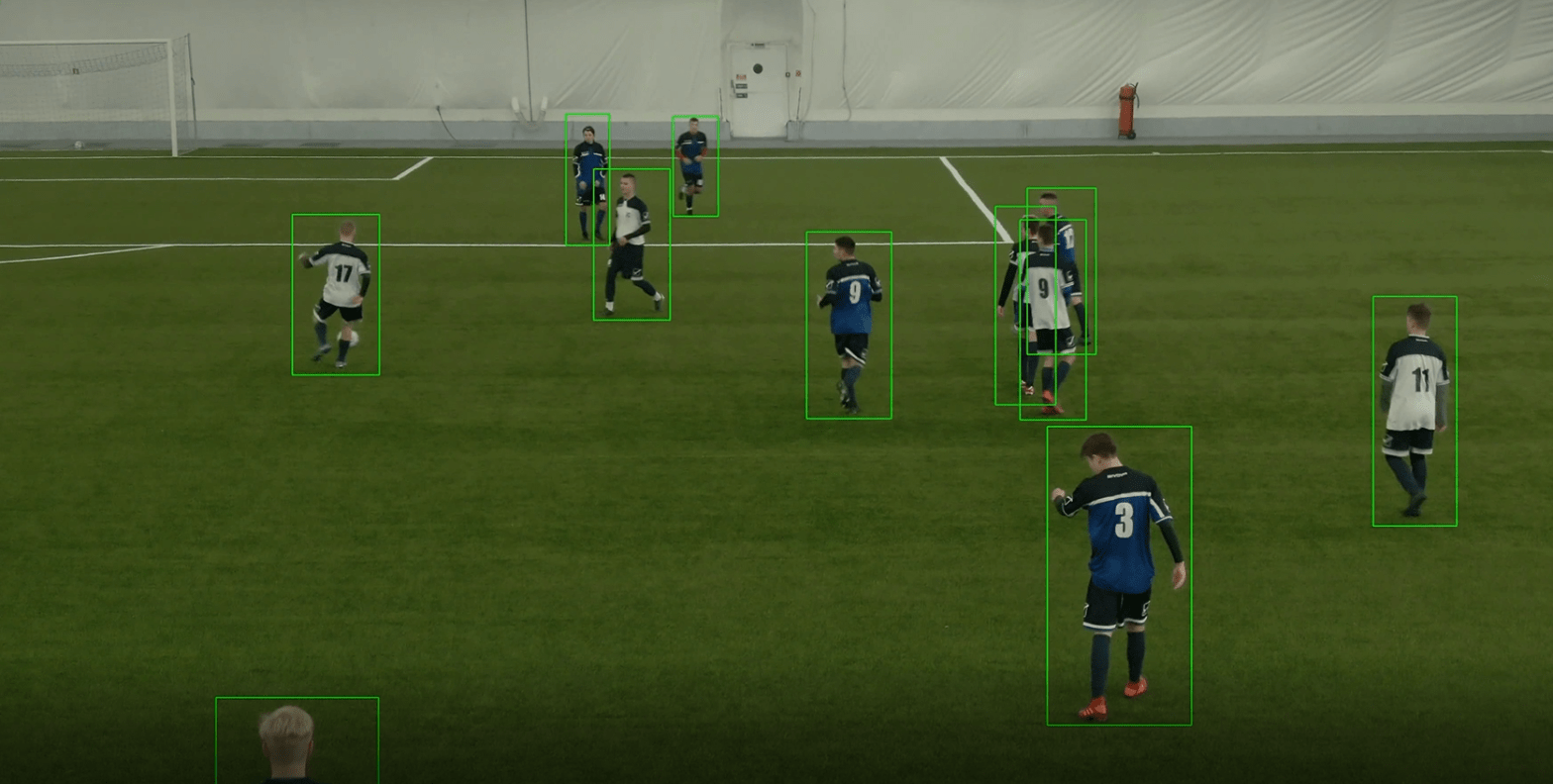
Image and video annotation are helping to launch a range of AI systems in the world of sport and fitness. Implementation of AI in Sports generally demands Annotation Videos of Game footages where we need to annotate players, field, ball, playing net, etc.

TagX makes use of proprietary annotation tools to label video data accurately and efficiently. Smart, scalable video annotation is the raw material for the development of exciting AI use cases. TagX offers a comprehensive range of sports annotation services designed to deliver maximum impact to sports and gaming clients.

Player Tracking using Bounding Boxes– This involves annotating players from images or video footage using bounding boxes to process quality training data used for training real-time tracking modules on fields. This type of annotation is usually performed for analysis of games like basketball, football, volleyball, etc.

Key point Annotation– Using key points and polylines, models require to annotate various poses of players used for action identification.

Semantic segmentation– With Semantic or instance segmentation services, Annotation can help you segment, players from game footage and drive meaningful insights for your model from it.

Annotation Validation– After performing Quality annotation, you can validate the model-generated annotations. This involves validating your data and correcting anomalies arising in it accordingly

Artificial intelligence in sports makes refereeing, analyzing, highlighting, and satisfying fans easier to grasp and more efficient in the long run.  Sports data analytics have become a huge part of the industry. TagX annotation experts have helped companies uncover valuable information from sports events like soccer, cricket, rugby, and even greyhound racing. Get your AI models optimized for learning with us.

What is Training Data for Machine Learning?

One of the most intriguing technologies on the globe is the machine learning algorithm, which solves problems without requiring precise instructions. To work, machine learning algorithms necessitate a large amount of data. It’s difficult to determine what causes an algorithm to perform poorly when working with millions or even billions of photos or records.

With a faulty data gathering method in place, machine learning may be worthless or even detrimental, regardless of the quantity of data and data science talent available. The problem is that the ideal dataset is unlikely to exist. However, there are a few things that firms can do to ensure that their future data science and machine learning activities provide the best outcomes.

What is a training dataset?

A training dataset is required for neural networks and other artificial intelligence algorithms to act as a baseline for subsequent application and use. This dataset serves as the foundation for the program’s ever-expanding library of data. Before the model can analyze and learn from the training dataset, it must be appropriately labeled.

Why is Dataset Collection Important?

Collecting data allows you to capture a record of past events so that we can use data analysis to find recurring patterns. From those patterns, you build predictive models using machine learning algorithms that look for trends and predict future changes. Predictive models are only as good as the data from which they are built, so good data collection practices are crucial to developing high-performing models.

The data need to be error-free (garbage in, garbage out) and contain relevant information for the task at hand. On average, 80% of the time that team spent in AI or Data Sciences projects is about preparing data. Preparing data includes, but is not limited to:

  1. Identify Data required
  2. Identify the availability of data, and location of them
  3. Profiling the data
  4. Source the data
  5. Integrating the data
  6. Cleanse the data
  7. prepare the data for learning

Creating Machine Learning Datasets

Let’s imagine we were training someone to recognize the difference between a cat and a dog. We’d show them thousands of pictures of cats and dogs, all different types and breeds. But how would we test them to ensure all those images had sunk in? If we showed them the images they’d already seen, they might be able to recognize them from memory. So we’d need to show them a new set of images, to prove that they could apply their knowledge to new conditions and give the right answer without assistance.

So we need to create three different datasets when training our machine learning model, for training, validation, and testing.

The Training Data

Naturally, we want the model to be as adaptable as possible by the end of the training, thus the training set should include a diverse mix of photos and records. But keep in mind that the model doesn’t have to be perfect at the end of the training. All we have to do now is keep the margin of error to a bare minimum.

At this point, it’s worth introducing the ‘cost function’, a concept widely used among machine learning developers. The cost function is a measure of the variability between the model’s predictions and the ‘right answer’. This data set is used by machine learning engineers to develop your algorithm and more than 70% of your total data used in the project. 

Validation Data

It’s time to start the validation stage once we’re satisfied with our cost function and ready to move on from the training. This is similar to a practice exam in that it exposes the model to fresh and unique data without putting it under any pressure to pass or fail.

Using the validation results, we can make any necessary tweaks to the model, or choose between different versions. A model which is 100% accurate at the training stage but only 50% at validation is less likely to be chosen than one which is 80% accurate at both stages, as this second option is better able to face unusual circumstances. Although we don’t need to give the model as much data at the validation stage as it received during training, all the data has to be fresh. If we recycle images the model has been trained with, it defeats the whole object.

Testing Data

We hear you asking, “Why do we need a third stage?” Isn’t the validation stage itself a sufficient test? If the validation stage is long and thorough enough, the model may end up overfitting the data. It might be able to figure out the answer to every query. As a result, we’ll require a third data set with the sole purpose of defining the model’s performance once and for all. We might as well start over if we get a negative outcome on this set.

Again, the test set must be completely fresh, with no repetition from the validation set or the original training set. There are no specific rules on how to divide up your three machine learning datasets. Unsurprisingly, though, the majority of data is usually used for training between 80 and 95%. Ultimately, however, it’s up to each individual team to find their own ratio by trial and error.

TagX your trusted partner

TagX data collection and annotation in Artificial intelligence/machine learning is not only about how data are collected, the quality of the data is also important. There are many factors in Data Quality

  1. data quality requirements
  2. data rules
  3. data policies

If you think there is an opportunity in your organization to take advantage of TagX Data collection and annotation for AI/ML training, explore it and apply it.

How Computer Vision is accelerating Automation in Manufacturing

Computer Vision has become the most popular and benefited several industries over the past decade, especially in the manufacturing industry. Technology is making a significant impact at every stage of the manufacturing process, from using computer vision in warehouses to modern robotics in R&D labs.

These technological advances in the manufacturing field have helped to reduce production defects, improve product quality, increase flexibility, reduce time and cost, and achieve higher productivity.

In this article, I would like to give you an overview of some of the best uses cases of Computer vision in the manufacturing industry.

Predictive Maintenance

In the worst-case situation, parts or equipment malfunction, and production is halted. Any company that relies on physical components should think about keeping the appropriate machinery or equipment in good working order. Predictive maintenance is described as the process of determining when asset management is required utilizing machine learning and IoT. This allows the manufacturer to optimize the lifetime of the equipment and reduce performance.

By utilizing time-series data, machine learning algorithms fine-tunes the Predictive Maintenance system to analyze failure patterns and predict possible issues. When sensors track such parameters as moisture, temperature, or density, these data are collected and processed by a machine learning algorithm. There are several machine learning models that are able to predict equipment failure. 

Reading Text and Barcodes

Recognizing and reading barcodes and text is not an easy task to do each and every day. To solve this problem, future factories will witness the growth of modernized computer vision systems and industrial automation. By implementing a computer vision solution, Printed Circuit Boards (PCB) manufacturers can drive the savings of business.

Industries are incorporating Optical Character Recognition (OCR) technology to make real-time data in the image machine useful and readable. Hardware or Software vendors are implementing advanced text recognition technologies increasingly such as Optical Mark Recognition (OMR), Intelligent Character Recognition (ICR), and Barcode Recognition (OBR), and other image processing technologies to enhance the functionality of existing computer vision systems.

Safety and Security Standards

Employees in the manufacturing business labor in extremely hazardous conditions, putting them at a substantially higher risk of harm. Failure to follow safety and security guidelines can result in serious injury or even death. Even though manufacturing companies have cameras installed to monitor employee movement in the plant to ensure safety standards, it is largely a manual monitoring process where an employee must sit and constantly monitor the video stream. The manual processes are error-prone and this error could result in serious consequences.

An AI-powered computer vision can be an appropriate solution. This application constantly monitors the manufacturing site right from the entry point, into the site, and exit point. Even if there is a minor violation in compliance, the system reports to a respective manager and alerts the employees too. This way, manufacturing companies can ensure their employees adhere to safety and security standards.

Packaging Standards

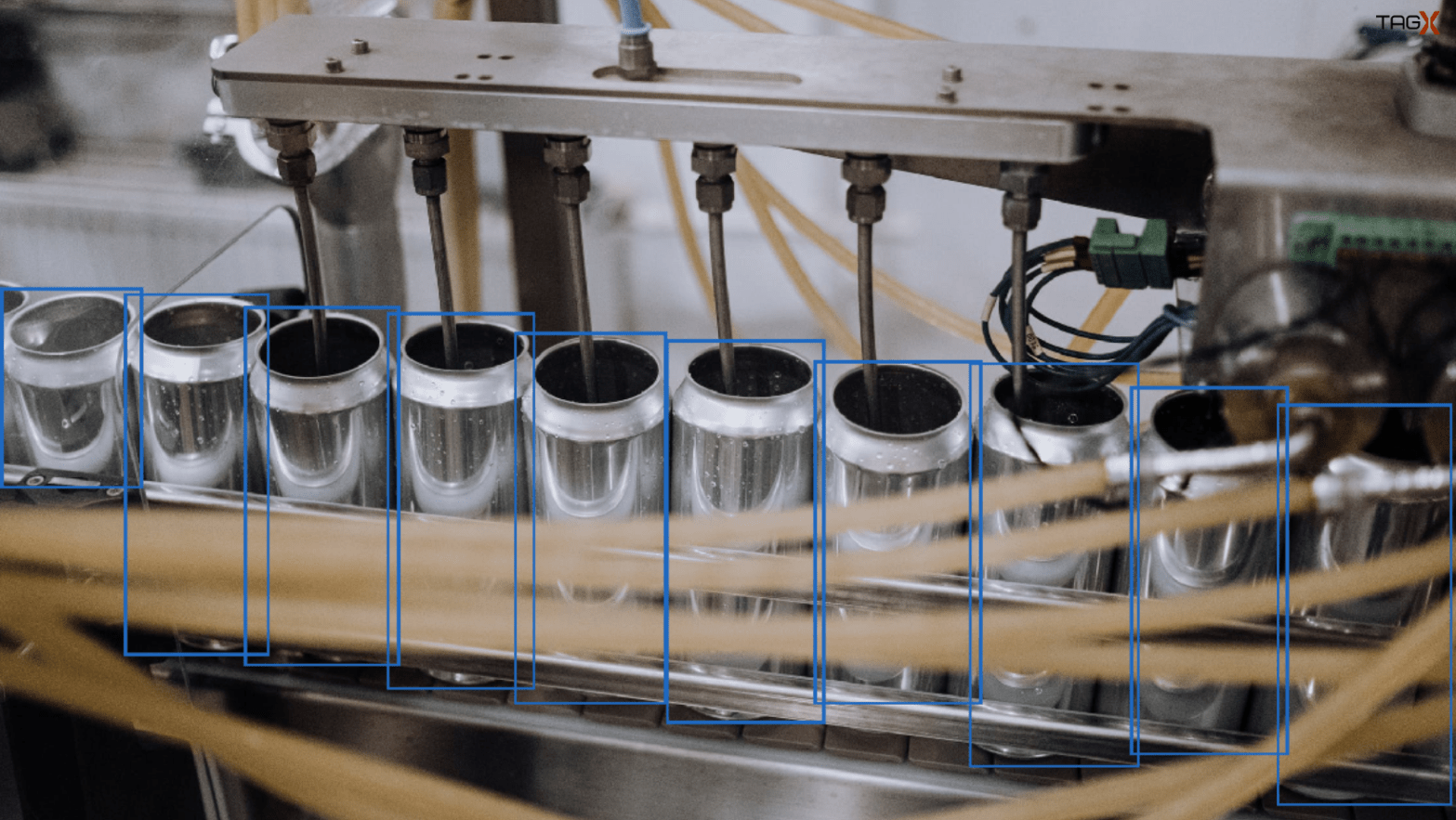
Counting the number of manufactured components before packaging them in a container is significant in some manufacturing organizations. Manually completing this operation can result in numerous problems. Pharmaceutical and retail products are more prone to this issue. Using a computer vision system to count the number of pieces during the packing process ensures that packaging standards are maintained.

Once the items are properly packed, another use case for computer vision is inspecting any damage on the packaging itself. It’s important that products get to customers safely and in one piece. Damaged packaging risks damage to the product inside. Computer vision systems can proactively divert any damaged packaging before leaving the plant.

Defect Detection

If you are running the production line, you want to produce flawless components or products! Computer vision is the technology that helps businesses acquire this. Productions lines often fail to achieve 100% accuracy while detecting the present or potential defects in the manufacturing processes. These defects can cause a loss to the manufacturers and customers. It can also increase customer dissatisfaction that can prove fatal for the business.

Machine vision is helping manufacturing units to prevent such situations by detecting the macro and micro level defects in the production line. Making investments in computer vision-based defects detection systems can help industries to make their production lines free from any kinds of defects. AI-based computer vision systems can help with cameras and algorithms that can prevent any mishappenings due to defects.

The Way Forward

Manufacturing industries from all over the globe are implementing modern technologies in their processes with an open heart. They all are working to make the manufacturing processes free from risks, unnecessary costs, and energy-efficient. Computer vision is capable of much more than we once thought. At the same time, each of these diverse applications is powered by one powerful technique: Data annotation.

Using professional annotation services can provide Manufacturing AI innovators with a variety of distinct benefits. Professional annotation services, such as TagX, rely on their teams of annotators to ensure that datasets are of high quality. Annotation work can be handled by experienced managers, which relieves AI businesses of this load.

Vehicle Damage Assessment: Digitally transformed by Computer Vision and Data Annotation

Machine learning is already being employed across multiple industries to automate the processes that are slowed down by manual, repetitive steps. With advanced algorithms, techniques, and frameworks under the hood, AI tools can accelerate the process of recognizing damaged vehicle parts, assessing damage, making predictions about what kind of repair is needed, and estimating how much it may cost.

Computer Vision for Vehicle Damage Assessment

Computer vision, a technology that processes visual information and interprets data, can paint a fuller and more accurate picture of an auto accident, including the conditions, scene, and what repairs are needed.

When imagery is available, captured through cameras onboard vehicles or via street surveillance, computer vision technology can extract, analyze, and provide insights to aid and speed up the inspection process, benefiting both insurers and the insured. It can determine who is at fault based on precise measurement analysis, road, and traffic conditions. So drivers who aren’t at fault can breathe a sigh of relief.

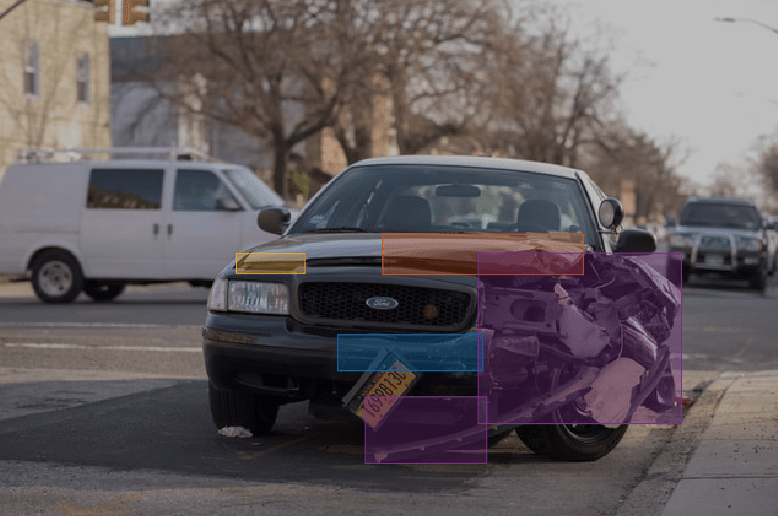
Applying computer vision to vehicle imagery can also help assess damage post-accident. Algorithms trained on volumes of estimate data and photos can determine whether a car is repairable or a total loss and list the parts damaged and to what degree, speeding up the repairs process and reducing the inconvenience for insureds. Soon this capability will be able to generate an initial estimate to further expedite the claims process. Imagine how revolutionary this will be for drivers in accidents. Even before they return home or to the office, their insurer will have been alerted to the loss, approved the initial repair estimate, and booked it into the local auto repair center. 

In the claims process, imagery using computer vision both before and during the accident provides tremendous visual data to analyze the weather, lighting, scene, speed, and traffic. These visuals contain many of the facts required to determine liability and feed into the adjudication of other issues, such as subrogation and injuries. In addition, computer vision also can help quickly decide the inspection path a vehicle should enter, and whether the claims process requires staff or third-party resources. Using technology to solve issues previously requiring someone else’s eyes also helps lower loss adjusting expense.

Data for Vehicle Damage Assessment

While building a solution capable of addressing the enlisted needs, developers need structured Training Data. 

1. Finding a proper dataset

Training machine learning models requires a sufficient data set of relevant images. The more varied the images are, the better the model will be able to classify images appropriately. In the context of car damage assessment, obtaining a substantial amount of images is a challenge, since there is no public database for images depicting damaged vehicles. While it may be possible to come up with a raw data set through web scraping, working with car insurance companies that already have numerous images of broken car parts, may also be a feasible option. 

So, a company needs to evaluate the most optimal way in terms of ROI or time by deciding whether to buy the data set, get it from an industry partner, or build/collect it from scratch. They can also outsource the task of data Collection to third-party vendors like TagX who specialize in Data operations for AI model training. Even having obtained a collection of images, one should ensure the pictures satisfy the demands for size, quality, etc.

2. Preprocessing

Preprocessing image data sets is a crucial step in speeding up and obtaining better training results for models. This activity may span a variety of tasks: applying filters, removing noise, enhancing contrast, downsampling images, etc. With proper preprocessing, photos that are too blurry, too dark, or too bright can also be utilized. This way, photos, where a car is not initially detected or looks ambiguous, can be adjusted to work.

For instance, this can be done with OpenCV, one of the most used machine learning libraries for image preprocessing. It has over 2,500 optimized algorithms for identifying objects and putting pictures together to create a high-resolution image of an entire scene.

3. Data Annotation

In order for this technology to fully realize its potential insurance AI developers need to feed their machine learning algorithms with accurate annotated data. These systems will be required to identify and analyze objects and scenarios in endlessly complex real-world environments. Creating training datasets that reflect this complexity can be overwhelming for many companies, causing lead researchers to lose focus on their core goals. 

Using professional annotation services can provide insurance AI innovators with a variety of distinct benefits. Professional annotation services, such as TagX, rely on their teams of annotators to ensure that datasets are of high quality. Annotation work can be handled by experienced managers, which relieves AI businesses of this load.

The way forward

Insurers need to reimagine their systems, operations, and partnerships to successfully adopt computer vision. It will involve collecting and processing vast amounts of data. Carriers must have the right systems to capture inspections data in the form of pictures, videos, and annotations, and the security in place to safely store, access, and share data among key stakeholders.

By working with partners to access AI, data engineering, and other digital tools, insurers can take advantage of these new technologies as they come to market without waiting for them to become fully plug-and-play. They need to ensure that their claims processes augment new technologies and decide who is going to execute the outcomes.

Turning Data into useful Knowledge for Travel and Tourism

Travel and Tourism is one of the biggest industries today that is rapidly increasing due to people’s demands. Data mining is an important service provided by data entry companies that help businesses to analyze business data and thereby take sensible decisions and improve customer service and satisfaction. Like any other sector, the tourism industry also deals with vast amounts of data. Everyday millions of people travel around the world for business, vacations, sightseeing etc and the information available would include details of the customers, travel agencies, hotels, tourist spots, airlines and so on. This data has to be put to good use for delivering a better travel experience for  customers.

 Information flow in this regard includes:

  • Data from the providers to the tourists: Information such as hotel rooms, tickets, entertainment and dining options and so on.
  • Information about the tourists to the providers.

The second type of data is critical for the tourism business since it reveals information about tourist behaviour that must be properly examined in order to extract useful data. This data would aid in making the best judgments, resulting in increased income and profits. Data mining, or collection and interpretation of valuable data is an indispensable process that should be handled professionally, and this is where an experienced business process outsourcing company can prove invaluable.

Let us see what data mining involves.

  • Data collection: Data is collected and consolidated from a number of appropriate sources.
  • Data cleansing: This is the process of validating that the data collected is reliable and correctly recorded. In this stage, data errors are identified and corrected. Missing data is replaced.
  • Data analysis: This is the most important step, with the analysis usually done using statistical methods or approaches based on machine learning.
  • Interpretation of data: This is a highly challenging stage wherein the results obtained during data analysis are interpreted. The meaningful interpretation of the results should help in taking action and putting the knowledge obtained to practical use.

Once the tourism data is organized and updated systematically, it helps policy makers, travel agencies, retail business executives, government organizations and other related entities to understand the preferences of tourists. Service providers can plan for the required tourism infrastructure such as transportation, accommodation sites and so on. Accurate analysis of the data procured will also help providers to make prudent decisions regarding tour brochure preparation, investments, and scheduling and staffing among other things. Data mining helps immensely in:

  • Analyzing the profiles of the tourists
  • Predicting the expenditures of tourists
  • Understanding the travel pattern of people belonging to different age groups
  • Forecasting the number of tourist arrivals

With the help of data entry firms working in the tourism industry, organisations may simplify their data and find a realistic digital solution. Internal procedures can be sped up by transforming all key paper-based information to electronic format. At the same time, by making data relevant to customers easily accessible, customer service and satisfaction can be considerably improved.

Data Entry for Travel & Tourism

The services cover a wide range of information, and as stated earlier, it is the most critical stage of all. Every detail needs to be typed correctly such as flight number, flight schedule, destination, time of arrival, time of departure, and many more. Having the right data and information is a must for proper coordination of one terminal to another. With TagX, you won’t have a hard time getting all the details that you need, as we are trained to use a software that assigns each detail to its place.

We have to cater to promos and special packages and connection from place to another. Dealing with both domestic and international markets, it is important that it is handled with the proper work ethics and workflow. Connections and accommodations are important since we are dealing with a large customer engagement basis. Every detail and information is critical, and it should be entered correctly.

Time and time again, we have proven that our chances for errors are very slim; which is why we are gaining more customers. Being on point and precision is everything when it comes to the travel and tourism industry. With our professional team, we guarantee that all of your travels are dealt with accordingly. You will have a more organized system, so that every booking will run smoothly.

Design a site like this with WordPress.com
Get started