A Complete Guide to Data Annotation and labeling

What is data annotation?

The human activity of tagging content such as text, images, and videos, so that machine learning models can recognize them and use them to generate predictions, is known as data annotation.

When we label data elements, ML models accurately understand what they are going to process and retain that information to automatically process the available information, based on existing knowledge, to make decisions.

Data annotation refers to the process of attributing, tagging, or labeling data. To summarize, data labeling and data annotation are both concerned with labeling or tagging relevant information/metadata in a dataset so that machines can understand what they are. The dataset can take any form, such as an image, an audio file, video footage, or even text. When we label elements in data, ML models accurately comprehend what they are going to process and retain that information in order to automatically process newer information that is built on existing knowledge in order to make timely decisions.

Why is it important to annotate data?

The importance of data annotation comes from the fact that even the smallest error can be disastrous. In other words, human data annotations will need to manually go through each image and determine whether the annotation quality is high enough to teach algorithms.

Data Labeling vs Annotation: Is There a Difference?

Except for the style and type of content tagging that is used, there is a very thin line between data annotation and data labeling. As a result, depending on the AI model and training process, they are frequently used interchangeably to create ML training data sets.

Types of data annotation

  • Semantic annotation: Semantic annotation is the process of labeling concepts such as people, places, or company names within a text to assist machine learning models in categorizing new concepts in future texts. This is a critical component of AI training for improving chatbots and search relevance.
  • Image annotation: This type of annotation ensures that machines recognise an annotated area as a distinct object, and it frequently makes use of bounding boxes (imaginary boxes drawn on an image) and semantic segmentation (the assignment of meaning to every pixel). These labeled datasets can be used to help self-driving cars or facial recognition software.
  • Video annotation: Video annotation, like image annotation, uses techniques like bounding boxes to recognise movement on a frame-by-frame basis or via a video annotation tool. Data gleaned from video annotation is critical for computer vision models that perform localization and object tracking.
  • Text categorization: Text categorization is the process of assigning categories to sentences or paragraphs within a given document based on their topic.
  • Entity annotation: The process of assisting a machine in comprehending unstructured sentences. There are numerous techniques that can be used to gain a better understanding, such as Named Entity Recognition (NER), which annotates words within a body of text with predetermined categories (e.g., person, place or thing). Another example is entity linking, in which parts of a text (for example, a company and its headquarters) are tagged as related.
  • Timestamps: This is when certain events happen in the video or audio and you need to place a timestamp when this event happened.
  • Intent extraction: Intent extraction is the process of labeling phrases or sentences with intent in order to create a library of different ways people use certain words. “How do I make a reservation?” and “Can I confirm my reservation?” contain the same keyword but have different intent. It’s yet another important tool for teaching chatbot algorithms to make decisions based on customer requests.
  • Phrase chunking: The process of tagging parts of speech with their grammatical definition is known as phrase chunking (e.g., noun or verb).
  • Semantic segmentation: Image segmentation is a more sophisticated type of data labeling. It means dividing our image into various parts, called segments. By dividing the image into segments, we can gain a far deeper understanding of what is happening in the image and how various objects are related.

4 Key Steps in Data Labeling and Data Annotation Process

To categorically train AI models, data labeling is a detailed process that includes the following steps:

  1. Obtaining Data Sets through various strategies, such as in-house, open source, and vendor.
  1. The actual labeling and annotation is the second and most important step in the process. Data sets are labeled based on computer vision, deep learning, and natural language processing capabilities.
  1. The data is sent to the third stage of the process, which is quality assurance, after it has been checked, tagged, labeled, or annotated. As part of deployment, testing and evaluating produced models to determine intelligence.
  1. Obtaining acceptable model quality and then releasing it for widespread use.

Data Annotation Use Cases 

1. Improving the Quality of Search Engine Results for a Wide Range of Users

Users expect comprehensive information from search engines. To do so, their algorithms must process large amounts of labeled datasets in order to provide the correct answer. Take Microsoft’s Bing, for example. Because it serves multiple markets, the vendor must ensure that the search engine’s results are appropriate for the user’s culture, line of business, and other factors.

2. Local Search Evaluation Refinement 

While search engines cater to a global audience, vendors must also ensure that users receive highly concentrated results. Data annotators can assist with this by geotagging information, images, and other content. 

3. Enhancing Social Media Content Relevance 

Social media platforms, like search engines, must provide users with personalized content recommendations. Annotating data can assist developers in classifying and categorizing content for relevance. Consider categorizing which content a user is likely to consume or appreciate based on his or her viewing habits and which he or she would find relevant based on where he or she lives or works.

What is the importance of using data annotation in ML? 

  •  Improved end-user experience 

Data annotation, when done correctly, can significantly improve the quality of automated processes and apps, thereby improving the overall experience with your products. If your websites use chatbots, you will be able to provide timely and automatic assistance to your customers 24 hours a day, seven days a week, without requiring them to speak with a customer support employee who may be unavailable outside of working hours.

Furthermore, virtual assistants like Siri and Alexa have greatly increased the utility of smart devices through voice recognition software.

  •  Improves the accuracy of the output 

Because of the large number of man-hours invested in the process, human-annotated data is usually error-free. Search engines can provide more relevant results based on the preferences of users by annotating data. When an annotation is applied to a social media platform’s algorithm, it is possible to customize the feeds of its users.

In general, annotation improves the quality, speed, and security of computer systems.

What are the main challenges of data annotation?

Cost of data annotation: Data annotation can be done manually or automatically. However, manually annotating data takes a lot of time and effort, and you must also maintain the data’s quality.

Annotation accuracy: Human errors can result in poor data quality, which has a direct impact on the prediction of AI/ML models. According to Gartner’s research, poor data quality costs businesses 15% of their revenue.

Final Thoughts

One of the big factors of artificial intelligence and machine learning development is data annotation. As technology advances, almost every industry will need to use annotations to improve the quality of their systems and stay on top of the latest trends.

Since data annotation is very important for the overall success of your AI projects, you should carefully choose your service provider. TagX offers data annotation services for machine learning. Having a diverse pool of accredited professionals, access to the most advanced tools, cutting-edge technologies, and proven operational techniques, we constantly strive to improve the quality of our client’s AI algorithm predictions. Regardless of the type of data you intend to get annotations for, you could find that veteran team in us to meet your demands and goals. Get your AI models optimized for learning with us.

ECommerce Product Catalog Management Guide

The importance of e-commerce product catalog management cannot be overstated, as it contains every last data about products and inventory. It contains up-to-date product information, such as product specifications, prices, marketing text, and digital assets, among other things. This allows visitors to the website to gain a complete understanding of products and make them accessible, which helps firms stand out from their competitors. As a result, the necessity of product catalog management for the company grows. Merchants will invest in a business if you have a well-maintained catalog. Catalog management has been shown to be a clever means of easing workflow because it is a simple solution for reducing the complexities of corporate processes.

Customers, both B2C and B2B, are used to looking for product information and shopping online these days. As a result, in order to fulfill these client habits, ensure that products are found and available online, and stay competitive, the company needs a well-managed online product catalog. A well-organized and informative e-commerce catalog will also help you establish yourself as an industry leader and foster trust among website users.

What is eCommerce Catalog Management?

eCommerce catalog management is a dynamic process in which products are categorized in a specified way to maintain high-quality data consistency across sales channels.

Catalog management is an important part of establishing an online brand since it allows customers to locate exactly what they’re looking for and feel confident in making a purchase based on the information supplied.

It assists retailers in managing product catalogs for different consumers and tracking inventory across many channels for eCommerce logistics.

Product names, descriptions, hierarchy, price, source, and other associated information can all be found in an online catalog. Color, style, pattern, neckline, sleeve, length, and fit are all granular features that must be exact within those categories in order for shoppers to be led to the correct product.

Challenges for E-commerce Product Catalog Management

Stakeholder Management

The involvement of stakeholders is critical for the success of a firm. This makes managing and updating product catalogs difficult and time-consuming. For example, if the units of measurement used by suppliers and systems mismatch, frequent manual adjustments are required.

Selecting the Most Appropriate Catalog Management Software

This necessitates a thorough awareness of both the tooling options’ functions and the company’s environment. If internal operating systems such as ERP, PIM, marketing, or e-commerce platforms differ across the globe, finding a scalable catalog management solution can be even more difficult.

Business and Catalogue Growth

The expansion of e-commerce product catalog management is directly related to the growth of the business. Always keep in mind that the company’s product catalog needs to be expanded as it grows. Any discrepancy in catalog structure, such as incorrect product assortment, can result in unanticipated issues during catalog expansion.

Scalability of the Catalog

Ecommerce product collection will expand as business operations expand across multiple locations. Companies must maintain consistency in their catalog structure as their businesses expand. Problems throughout the entire process of managing the product catalog can arise because of a lack of uniformity.

How to Improve eCommerce Product Catalog Management

The quality and consistency of data are impacted by many of the previous challenges we discussed. When customizing data for different sales channels, normalizing data from suppliers, or trying to extend the catalog with new products, maintaining high-quality data can be difficult.

The capacity to maintain data quality is usually determined by how you manage all of the data in one location. To keep track of their inventory, many retailers use Excel or their eCommerce platform. If you have a huge or complex online product catalog, though, these methods likely fall short.

It might be difficult to develop and maintain a consistent standard when managing huge amounts of SKUs in Excel or eCommerce platforms. Misspellings, omitted properties, and incorrect descriptions can all be found in item data.

Excel was not designed to manage eCommerce catalogs. You won’t have all of the tools you’ll need to keep product data up to date. To make mass updates and adjustments, you’ll only have the personnel to rely on, which can easily lead to human mistakes.

An ecommerce platform can manage basic SKUs, but it isn’t designed to manage catalogs. It won’t have more advanced features for importing, processing and publishing data to other sales channels. Additionally, eCommerce solutions do not assist in the integration of product data with advanced inventory management or order fulfillment requirements.

Best Practices for eCommerce Product Catalog Management

Provide relevant information

It should be your goal as an e-commerce business owner to provide accurate product information to your customers. This not only makes it easier for customers to navigate the web store, but it also increases their trust in your services. As a result, it’s critical to provide comprehensive, up-to-date, and accurate information about your products. On the market, there are several catalog management companies that can assist you with your product catalog. You can also include relevant images for your products.

Categorization of products

Another great way to create a well-organized product catalog is to group all of your products into different categories based on their specifications. It also improves your customers’ overall experience while browsing your e-store. Ecommerce product catalog management entails making sure that all product tags, such as size, color, and so on, are mentioned correctly. In addition, you should include some additional, but relevant, specifications in your product description.

The difference between online and offline catalogs

As we all know, the amount of information included in an online and offline catalog differs significantly. An offline catalog typically contains a lot of extra information, whereas an online catalog only provides the user with precise information, which should be worth the catch. If you’re unsure about the difference between the two, it’s best to seek professional catalog management services for your company.

Personalize your product catalog

It is important to keep in mind that your product catalog for B2C has to be different from the one for B2B purposes. This includes pricing, quantities, and various other factors. Hence, personalization during catalog management is crucial. It provides you with custom-made solutions for your business.

Use up-selling techniques

It’s critical to remember that your B2C product catalog must be distinct from your B2B product catalog. Pricing, quantities, and a variety of other factors are all considered. As a result, personalization is critical during catalog management. It provides you with tailor-made business solutions.

Final Thoughts

E-commerce product catalog management is critical for any online business, but it can be stressful at times due to the numerous issues that might occur due to vendor, stakeholder, and customer requirements. Product catalogs are a great method to keep ahead of the competition because they display precise information about products. It’s a great technique to get more customers to visit a website because you’ll have a strong handle on the seller and the customer’s wants. You may successfully run an e-commerce firm while providing useful information to clients by using the above-mentioned challenges and its solution as an e-commerce product catalog.

The Need for Constant Labeling in machine learning

It’s natural to focus on the processes of data preparation, model creation, and deployment of the solution to production while discussing the implementation of machine learning solutions. However, it’s critical for teams to understand that deploying the machine learning model isn’t the end of the process. It can only be thought of as the conclusion of the beginning.

Unlike a standard software application, a machine learning (ML) model’s behavior is not solely determined by its code. In fact, an ML solution’s behavior is significantly influenced by the data it was trained on, and the model’s performance will alter as the data being given to it evolves. We’ve described how monitoring, ongoing labeling, and model retraining can help a machine learning model’s efficiency and accuracy deteriorate.

Challenges of Maintaining an ML model

A standard software product’s behavior is determined by its code, but an ML solution’s behavior is determined by both code and data. As a result, when designing and delivering a normal software product, there is one less aspect to address in the field of post-release monitoring. That’s not to suggest that monitoring isn’t useful in some cases, but the chances of stable functionality in production becoming less dependable if the code isn’t changed are extremely slim.

On the other hand, machine learning models differ significantly in this regard. The model’s reaction is determined by its code as well as the data presented. If the model’s input changes over time, as it almost certainly will, the model will almost certainly not be trained to handle the newer input effectively. As a result, the accuracy of its forecasting ability will deteriorate with time. Monitoring the ML solution is crucial to ensuring that this is detected.

Update Model with changing scenarios

In the maintenance of a machine learning solution, there are several types of drift to consider. When the input to the model changes, for example, data drift happens, affecting the model’s prediction ability. Consider the case where a model is created to detect spam comments in response to videos that have been placed on a website. At first, the model may appear to be very good at spotting spam comments. Those that publish spam comments, on the other hand, may change their strategies over time in order to avoid discovery. The data then drifts, as there now exists input that should be marked as spam but the model is unaware and will not do so. If the model isn’t retrained to evolve with these tactics, a higher percentage of spam comments will go undetected.

When the interpretation of the evidence changes, drift happens. A change in the classification space is an example of this. Consider the case where a model is created and trained to identify whether a picture is of a car, truck, or train. However, after some time, the model is fed images of bicycles. Concept drift has happened in this scenario, and the model will need to be adjusted in order to accurately categorize the new photos.

Both of these types of changes result in a deterioration in the predictive capabilities of the model. Therefore, it’s critical to detect instances of drift as early as possible in order to ensure that the service is powered by the model continues to provide value.‍

Monitoring ML Solution

Priority number one in ensuring model effectiveness over time is monitoring the ML solution. With respect to machine learning, this practice includes tracking metrics involving model behavior to help detect a decline in performance. In the effort to detect potential drift as early as possible, teams can set baselines for model behavior, and when the model begins to stray from that baseline value, they can raise alerts to notify the proper personnel to analyze and remediate the problem.

For instance, let’s consider a machine learning solution that was constructed to detect fraudulent credit card transactions. If the model is typically expected to detect instances of fraud in 0.5% of cases, then this may be a good baseline to set. But what if fraud is detected by the model in 5% of cases all of a sudden? It could be that fraud is occurring with 10x greater frequency, but that probably isn’t the case. Instead, it’s more likely that some new trend in the data has emerged that is impacting the accuracy and effectiveness of the model’s predictive capabilities. Thus, an alert should be raised when the baseline is dramatically exceeded, and then the process of evaluating model performance should commence.

This example shows how companies may keep track of data drift by looking at the distribution of categories applied to production input over time. There is a chance that drift has developed when the frequencies with which classifications are applied are no longer in accordance with what used to happen.

Furthermore, keeping track of the model’s input data and comparing it to the data used to train the model might help identify instances of data drift. When the difference between the training data set and the production input exceeds a certain threshold, the model may need to be retrained to handle major changes in the production input.

This type of monitoring information and its associated alerts provides data engineers, data scientists, and other critical personnel with the level of detail necessary to evaluate the cause of the problem and make the appropriate changes to address it (i.e. re-evaluating the viability of the current model, re-labeling and retraining to regain performance, etc.).‍

Constant Labeling and Model Retraining

Curating high-quality labeled data to train the model is one of the most crucial parts of creating a successful machine learning workflow. The technique of identifying or annotating groups of samples with one or more labels is known as data labeling. Labeling provides the foundation for an ML model to identify common characteristics from similarly tagged data when done for huge amounts of data. This is critical in the creation of a model that can accurately classify data. A supervised model, on the other hand, learns by doing. The labeled training data serves as “examples” for the model to learn from.

The model evaluates the labels against the data to which they are attached, learning the relationship between the two. It then uses what it’s learned about this relationship to classify new data points in the future. Therefore, it is labeled data that enables a machine learning solution to hone the predictive capabilities that can then be leveraged to accurately classify input in a production environment.

But when input data changes and drift occurs, the model’s understanding of the relationship between the input data and the appropriate label will be outdated, and therefore likely incorrect. When evolving data is determined to be the cause of the decay in predictive capabilities, one potential solution is to re-label large quantities of data in a manner that corresponds with the data’s evolution. The ML solution can then be retrained using the newly labeled data, thereby updating its behavior to regain its effectiveness and accuracy.

TagX – your trusted partner

Data labeling, in its typical form, is an arduous and expensive undertaking. As a time-consuming and manual process, it requires individuals with extensive domain expertise and a team of dedicated data labelers. These factors create a bottleneck in the process of producing high-quality labeled training data. And this bottleneck prevents ML teams from refreshing and retraining their models with any level of efficiency. With that said, there is a need to choose a reliable partner for the task of data labeling. TagX stands out in the fast-paced, tech-dominated industry with its people-first culture. We offer data collection, annotation, and evaluation services to power the most cutting-edge AI solutions. We can handle complex, large-scale data labeling projects whether you’re developing computer vision or natural language processing (NLP) applications. While impossible to prevent, the decay of a model due to changing data can be remediated by constant data labeling by TagX’s team and model retraining.

How AI is reforming Traditional Claim Processing?

The most significant advantage of using machine learning (ML) in the insurance sector is that it simplifies data sets. Machine learning (ML) may be applied successfully to structured, semi-structured, and unstructured datasets. Through increased predictive accuracy, machine learning may be used to precisely identify risk, claims, and customer actions across the value chain. Machine learning has numerous potential applications in insurance, ranging from sensitive risk appetite and premium leakage to expenditure management, subrogation, processes, and fraud detection. Machine learning is not a new technology; it has been used for several decades. Learning is classified into three types: supervised learning, unsupervised learning, and reinforcement learning. Since the previous few decades, the majority of insurers have used Supervised Learning to assess risk by using known parameters in dissimilar combinations to achieve the desired output.

In today’s world, insurers are driven to engage in unsupervised learning, and their predetermined goals are obvious. If any changes are made to the variables, the method detects them and attempts to update them in accordance with the aims. For example, due to traffic, the GPS dynamically suggests alternate routes based on traffic circumstances. Learning is also used in the insurance business for usage-based insurance. Globally, the volume of insurance claims data is increasing at an exponential rate. The data contains a wide range of information in the form of continuous or discrete numbers, short texts, lengthy paragraphs, and, of course, images.

Consider the following scenario: a claimant was involved in an accident. An adjuster goes to the scene of the accident to collect the first notice of loss data, which includes basic information about the accident such as vehicle speed, vehicle type, and claim type in a structured format. The adjuster then photographs the accident scene and takes notes about the accident using shorthand and notations. This information is submitted to the insurance company, where it is combined with external data such as the cost of the parts, the current value of the vehicle, and the driver’s history, and the claim payout is calculated. If done manually, the entire process could take a few days to a few weeks, depending on adjuster allocation, the speed with which reports are filed, and the complexity of the insurance claim.

Most of the insurance industries have started using machine learning algorithms to get more insight from the first notice of loss data instantly when the adjuster collects them. Still, nearly 95% of them do not include the image data and process only the tabular and text data.

To gain accurate insights, it makes sense to include the entire range of data for analysis. However, it is seen that insurance companies initially focus on numbers while developing some logic or machine learning model. To give their models an edge, they need to include unstructured data and images along with the numbers.

The variety of issues that we may address in the insurance business

The gathering of datasets for insurance claims processing is primarily determined by the use case or problem that we are attempting to address. Some potential image data use cases in the insurance business include:

  • Using satellite surveillance photographs to detect fraud in property insurance
  • Using accident photographs to estimate vehicle damage
  • Using satellite photos, assess potential dangers to homes such as spotting trees near roofs or broken roofs.
  • Creating a 3D model of any property based on photographs for deep analysis.
  • Medical image analysis in the area of health insurance.
  • Using the accident images to validate the claim description.
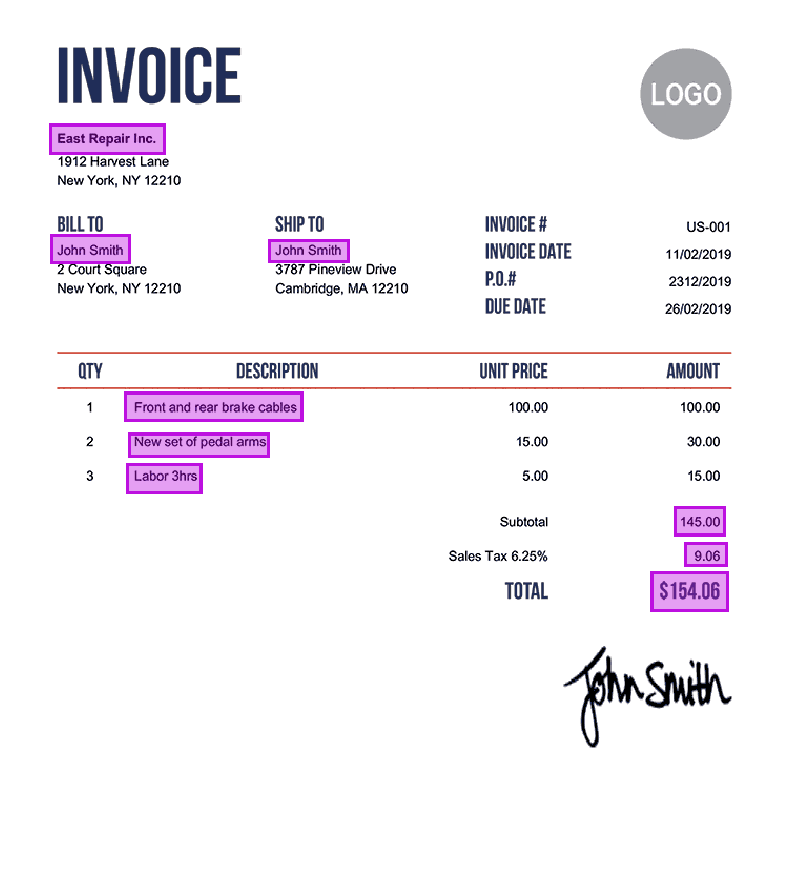
  • Using OCR to convert paper-based application documents to digital.
  • Crop field assessment using satellite or drone images for crop insurance.

Some of the most frequent application scenarios are listed above. Computer vision can also be used for a variety of other applications, depending on the requirements and dataset.

Once a specific use case or group of use cases has been determined and the necessary dataset has been collected, the focus should shift to selecting appropriate computer vision algorithms. The obtained dataset can be used to apply computer vision techniques to specific application cases.

Why Claims Processing Automation?

Why are insurance businesses having such a hard time with digitization and automation in the first place? Aside from the usual reasons such as employee opposition to change or a lack of budget and technological resources, there is one important reason: insurance operations are often too variable and unstructured to be effectively incorporated into the digital workflow.

Claims data, for example, comes in a variety of formats (photos, handwritten papers, voice memos) and is exchanged through a variety of channels (email, document attachments, phone calls, chats), making it extremely difficult to obtain and evaluate accurately without the assistance of an investigator. Decision-making is frequently more complex than an off-the-shelf system can handle, necessitating a grasp of the context of each situation.

So, does this imply that the insurance sector will never be totally automated and that human participants will be required at every stage of the process? Clearly not. To imitate human perception and judgment, more advanced technologies such as AI, Machine Learning, and ML-based robotic process automation would be required.

Role of RPA, Artificial Intelligence, and Machine Learning in Automating Claims 

Creating a hassle-free and innovative claims journey for customers requires a blend of AI and integration of other digital technologies. A clear understanding of these elements and the digital operating model can help the claims personnel in taking the right decisions. However, there are various steps involved in settling a claim and each one of them accounts for preventing fraud, taking data-driven decisions, optimizing cost, reducing the settlement time, and much more. Here is a brief description of the ultimate claims journey:  

FNOL Using AI-powered RPA to automate the FNOL process dramatically enhances the claims experience for customers. Intelligent software bots can readily extract appropriate details from uncategorized documents pouring in from various sources and feed the data into suitable systems as a claim is being submitted.

Assessment Coverage Check These days, insurers rely significantly on artificial intelligence (AI) algorithms to forecast exact outcomes. Organizations are empowering claims professionals to increase their productivity by facilitating damage assessment, finding billing anomalies, enhancing fraud detection, and recognizing lapsed policies with the use of ML or AI-driven models.

Investigation – At this stage, machine learning (ML) is used to provide systems with the ability to learn and grow from experience without the need for additional programming. Key loss or incident information is automatically matched with trained conditions such as the source of loss, state law, damage kind, and so on. This phase entails the examination of huge, labeled data sets.

Evaluation With all of the necessary data gathered in the preceding stages, AI-driven evaluation aids in the creation of an end-to-end digital customer journey. All activities, including cost predictions, legal expenditure calculations, vendor selection, medical management, and adjuster charges, are calculated and considered during the claims estimation journey. As a result, the handlers will have the next best step in making sensible, error-free decisions.

Settlement Finally, AI triages claims based on the outcome and delivers the claim request to the task inbox for processing. Following that, the claims request is passed around for underwriting work, which is dependent on its complexity. The customer is informed of the decision in the end.  

What role does image data analysis play in the insurance industry?

Before getting to the use cases where computer vision algorithms impact insurance Industries and insurance claims, let us first get to know all possible types of image datasets which can be used. Machine learning models are useless unless you train them with valid data, so the first step before planning to build any analytical algorithms is to check the available dataset.

Previously, the world was reliant on image data from digital cameras or smartphones, but now there are other media that offer a different perspective:

  • Drone images: Aerial view images captured by camera drones.
  • CCTV cameras: Feed recorded from surveillance cameras.
  • Satellite Images: Images from several satellites available through both government and a third-party platform like DigitalGlobe, NASA, or Planet.

The following are some useful techniques:

  • Image recognition/classification
  • Object localization
  • Image generation
  • Image reconstruction
  • 3D model generation
  • Caption generation

There are several fundamental methods that are used in image preprocessing and model building:

Tagging: Tagging is the process of finding out a particular object in the images. We match this object to a particular class that we want the model to find. This process is different for each and every technique. For a classification problem, images have to be separated based on the classes, whereas for a localization problem, objects in the image have to be annotated.

Image normalization: Changing the pixel intensity for making the pixel distribution for low deviations.

Channel selection: This won’t be needed in a normal image with RGB band channels. However, images taken from satellites and at times, by drones would have more channels like alpha or depth intensities.

Image augmentation: Most of the time, the dataset collected by the adjuster may not be enough for the model to be accurate. In those cases, it is best to augment the images by transforming them based on several instantiations like the angle of rotation, depth, texture, and other aspects.

Conclusion

Insurers need to reimagine their systems, operations, and partnerships to successfully adopt Automation and artificial intelligence. It will involve collecting and processing vast amounts of data. Carriers must have the right systems to capture inspections data in the form of pictures, videos, and annotations, and the security in place to safely store, access, and share data among key stakeholders.

The use of AI in insurance claims is only possible if the model is well-trained with annotated images and videos with a huge amount and variety of training data sets. This is to detect the level of damage for accurate claims. TagX provides training data for AI in insurance with precisely annotated Data that help Computer Vision to train the machine learning algorithms. By working with partners to access AI, data engineering, and other digital tools, insurers can take advantage of these new technologies as they come to market without waiting for them to become fully plug-and-play. They need to ensure that their claims processes augment new technologies and decide who is going to execute the outcomes.

A Guide to Human Pose Estimation for AI

Human pose estimation and tracking is a computer vision task that includes detecting, associating, and tracking semantic key points. Examples of semantic key points are “right shoulders,” “left knees,” or the “left brake lights of vehicles.”

The performance of semantic keypoint tracking in live video footage requires high computational resources which has been limiting the accuracy of pose estimation. With the latest advances, new applications with real-time requirements become possible, such as self-driving cars and last-mile delivery robots.

Today, the most powerful image processing models are based on convolutional neural networks (CNNs). Hence, state-of-the-art methods are typically based on designing the CNN architecture tailored particularly for human pose inference.

Importance of Pose Estimation

In traditional object detection, people are only perceived as a bounding box (a square). By performing pose detection and pose tracking, computers can develop an understanding of human body language. However, conventional pose tracking methods are neither fast enough nor robust enough for occlusions to be viable.

High-performing real-time pose detection and tracking will drive some of the biggest trends in computer vision. For example, tracking the human pose in real-time will enable computers to develop a finer-grained and more natural understanding of human behavior.

This will have a big impact on various fields, for example, in autonomous driving. Today, the majority of self-driving car accidents are caused by “robotic” driving, where the self-driving vehicle conducts an allowed but unexpected stop and a human driver crashes into the self-driving car. With real-time human pose detection and tracking, the computers are able to understand and predict pedestrian behavior much better – allowing more natural driving.

What is Human Pose Estimation?

The goal of human pose estimation is to predict the positions of human body parts and joints in images or videos. Because pose motions are frequently driven by specific human actions, knowing a human’s body pose is critical for action recognition.

2D Pose Estimation – 2D pose estimation is based on the detection and analysis of X, Y coordinates of human body joints from an RGB image.

3D Pose Estimation – 3D pose estimation is based on the detection and analysis of X, Y, Z coordinates of human body joints from an RGB image. 

Human body modeling

The location of human body parts is used to build a human body representation (such as a body skeleton pose) from visual input data in human pose estimation. As a result, human body modeling is an essential component of human pose estimation. It represents features and key points extracted from visual input data. A model-based approach is typically used to describe and infer human body poses, as well as render 2D or 3D poses.

Most methods employ an N-joints rigid kinematic model, in which the human body is represented as an entity with joints and limbs, containing information about body kinematic structure and body shape.

There are three types of models for human body modeling:

  • The kinematic model, also known as the skeleton-based model, is used for both 2D and 3D pose estimation. To represent the human body structure, this flexible and intuitive human body model includes a set of joint positions and limb orientations. As a result, skeleton pose estimation models are employed to capture the relationships between various body parts. Kinematic models, on the other hand, are limited in their ability to represent texture or shape information.
  • A planar model, also known as a contour-based model, is used for 2D pose estimation. Planar models are used to depict the appearance and shape of the human body. Typically, body parts are represented by a series of rectangles that approximate the contours of the human body. The Active Shape Model (ASM) is a popular example of how principal component analysis can be used to capture the full human body graph and silhouette deformations.
  • A volumetric model is used for 3D pose estimation. There are several popular 3D human body models that are used for deep learning-based 3D human pose estimation and recovering 3D human mesh. For example, GHUM and GHUML(ite) are fully trainable end-to-end deep learning pipelines trained on a high-resolution dataset of full-body scans of over 60’000 human configurations to model statistical and articulated 3D human body shapes and pose.
The main difficulties

Human pose estimation is a difficult task because the body’s appearance joins change dynamically due to various types of clothing, arbitrary occlusion, occlusions due to viewing angle, and background contexts. Pose estimation must be resistant to challenging real-world variations such as lighting and weather.

As a result, it is difficult for image processing models to identify fine-grained joint coordinates. It is especially difficult to track small and barely visible joints.

Head pose estimation

A common computer vision problem is estimating a person’s head pose. Head pose estimation has a variety of applications, including assisting in gaze estimation, modeling attention, fitting 3D models to video, and performing face alignment.

Traditionally, the head pose is computed by using key points from the target face and solving the 2D to 3D correspondence problem with a mean human head model.

The ability to recover the 3D pose of the head is a byproduct of keypoint-based facial expression analysis, which is based on the extraction of 2D facial keypoints using deep learning methods. These methods are resistant to occlusions and extreme pose changes.

Animal pose estimation

The majority of cutting-edge methods concentrate on human body pose detection and tracking. However, some models were created to be used with animals and automobiles (object pose estimation).

Animal pose estimation is complicated by a lack of labeled data (images must be manually annotated) and a high number of self-occlusions. As a result, animal datasets are typically small and include only a few animal species.

Estimating the pose of multiple animals is also a difficult computer vision problem due to frequent interactions that cause occlusions and make assigning detected key points to the correct individual difficult. It’s also difficult to have very similar-looking animals interact more closely than humans normally would.

Transfer learning techniques have been developed to address these issues by re-applying methods from humans to animals. Multi-animal pose estimation and tracking with DeepLabCut, a cutting-edge, popular open-source pose estimation toolbox for animals and humans, is one example.

Video person pose tracking

Multi-frame human pose estimation in complex situations is difficult and requires a lot of computing power. While human joints detectors perform well in static images, they frequently fall short when applied to video sequences for real-time pose tracking.

Handling motion blur, video defocus, pose occlusions, and the inability to capture temporal dependency among video frames are the most difficult challenges.

When modeling spatial contexts with traditional recurrent neural networks (RNN), empirical difficulties arise, particularly when dealing with pose occlusions. DCPose, a cutting-edge multi-frame human pose estimation framework, takes advantage of abundant temporal cues between video frames to facilitate keypoint detection.

 
  1. Human Activity Estimation
  2. Robot Training
  3. Motion capture and augmented reality
  4. Motion Capture for Consoles
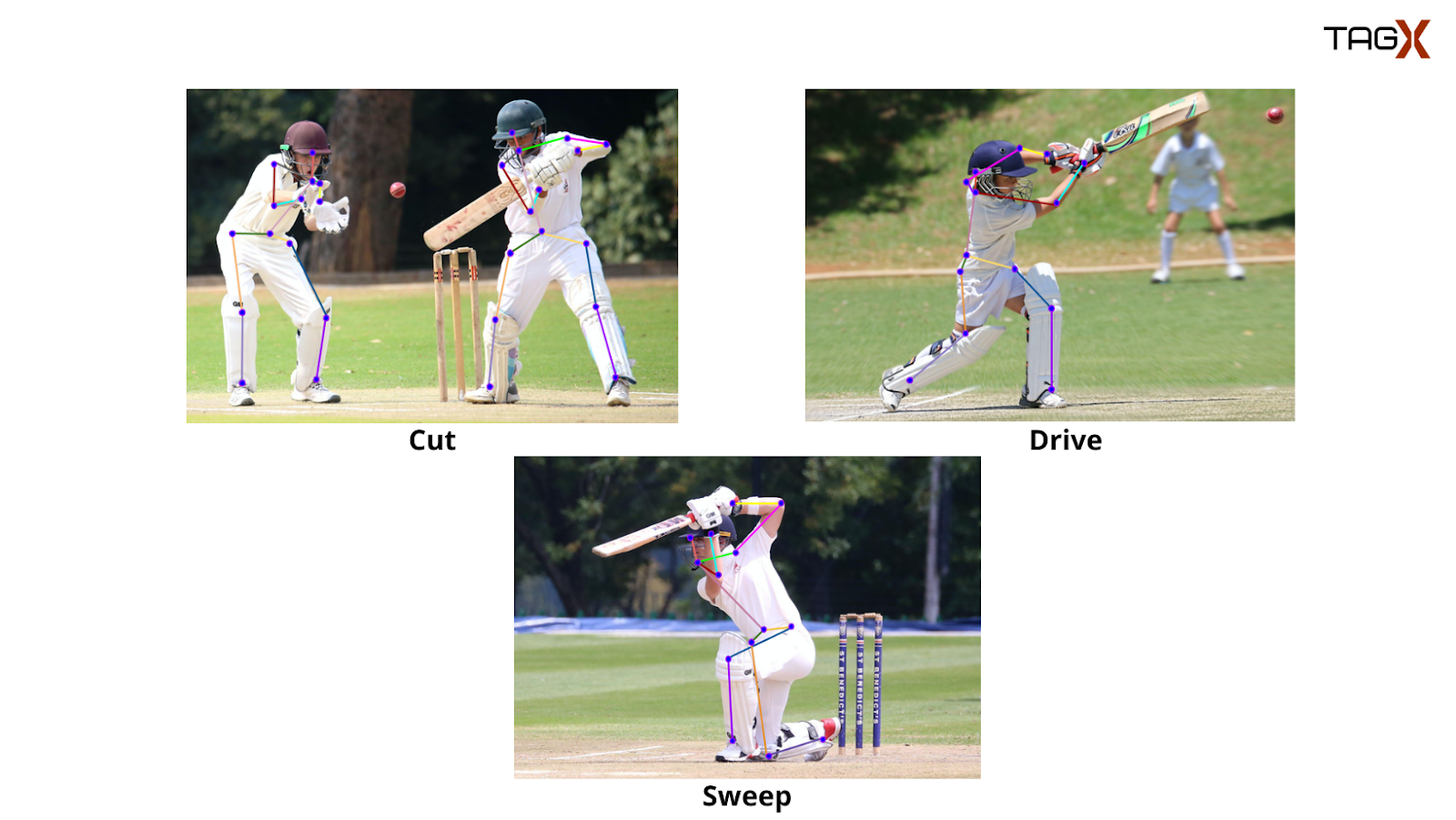
  5. Athlete pose detection
Human Activity Estimation

Tracking and measuring a human activity and movement is a fairly obvious application of pose estimation. DensePose, PoseNet, and OpenPose architectures are frequently used for activity, gesture, and gait recognition.

Robot Training

Rather than manually programming robots to follow trajectories, robots can be programmed to follow the trajectories of a human pose skeleton performing an action. By simply demonstrating certain actions, a human instructor can effectively teach the robot those actions. The robot can then calculate how to move its articulators to accomplish the same task.

Motion Capture for Consoles

Pose estimation has an interesting application in tracking the motion of human subjects for interactive gaming. Kinect, for example, popularly used 3D pose estimation (using IR sensor data) to track the motion of human players and use it to render the actions of virtual characters.

Motion Capture and Augmented Reality

CGI applications are an interesting application of human pose estimation. Graphics, styles, fancy enhancements, equipment, and artwork can be superimposed on the person if their human pose can be estimated. By tracking the variations of this human pose, the rendered graphics can “naturally fit” the person as they move.

Animoji is a good visual example of what is possible. Even though the above only tracks the structure of a face, the concept can be extrapolated to the key points of a person. The same ideas can be used to create Augmented Reality (AR) elements that can mimic a person’s movements.

Athlete pose detection

Pose detection can assist players in fine-tuning their technique and achieving better results. Apart from that, pose detection can be used to analyze and learn about the opponent’s strengths and weaknesses, which is extremely useful for professional athletes and their trainers.

 
Conclusion

Great progress has been made in the field of human pose estimation, allowing us to better serve the wide variety of applications that it is capable of. Furthermore, research in related fields such as Pose Tracking can significantly improve its productive use in a variety of fields. 3D pose estimation is one of the most fascinating and difficult tasks in computer vision. Today, technology provides a plethora of options for meeting the growing demand in the sports industry. It aids athletes in improving their techniques, avoiding injury, and increasing their endurance. And in the future, it has the potential to bring a lot more to the table. 

TagX is dedicatedly involved in data collection and classification with labeling and image tagging or annotations to make such data recognizable for machines or computer vision to train AI models. Whether you have a one-time project or need data on an ongoing basis, our experienced project managers ensure that the whole process runs smoothly.

Human In the Loop for Machine Learning

The majority of machine learning models rely on human-created data. But the interaction between humans and machines does not end there; the most powerful systems are designed to allow both sides to interact continuously via a mechanism known as “Human in the loop” (HITL).

HUMAN-IN-THE-LOOP (HITL) machine learning necessitates human inspecting, validating, or changing some aspect of the AI development process. This philosophy extends to those who collect, label and perform quality control (QC) on data for machine learning.

We are confident that AI will not fire its most trusted employees anytime soon. In reality, AI systems supplement and augment human capabilities rather than replace them. The nature of our work may change in the coming years as a result of AI. The fundamental principle, however, is the elimination of mundane tasks and increased efficiency for tasks that require human input.

Recent advancements in the field of artificial intelligence (AI) have given rise to techniques such as active learning and cooperative learning. Data is the foundation of any machine learning algorithm, and these datasets are typically unlabeled (e.g. Images). During the training stage, a human must manually label this dataset (the output, such as a cat or dog). This data is then used to train the machine learning model, which is known as supervised learning. The algorithms in this technique learn from labeled data to predict previously unseen cases. Using what we already know, we can go deeper and develop more sophisticated techniques to uncover other insights and features in the training dataset, resulting in more accurate and automated results.

Human and machine expertise are combined during the testing and evaluation phase by allowing the human to correct any incorrect results that have been produced. In this case, the human will specifically correct the labels that the machine was unable to detect with high accuracy (i.e. classified a dog for a cat). When the machine is overly confident about a wrong prediction, the human takes the same approach. The algorithm’s performance will improve with each iteration, paving the way for automated lifelong learning by reducing the need for future human intervention. When such work is completed, the results are forwarded to a domain expert who makes decisions that have a greater impact.

Machine learning with a human-in-the-loop

When you have a large enough dataset, an algorithm can make accurate decisions based on it. However, the machine must first learn how to properly identify relevant criteria and thus arrive at the correct conclusion. Here is where human intelligence comes into play: Machine learning with human-in-the-loop (HITL) combines human and machine intelligence to form a continuous circle in which the algorithm is trained, tested, and tuned. With each loop, the machine becomes smarter, more confident, and more accurate.

Machine learning can’t function without human input. The algorithm cannot learn everything necessary to reach the correct conclusion on its own. For example, without human explanation, a model does not understand what is shown in an image. This means that, especially in the case of unstructured data, data labeling must be the first step toward developing a reliable algorithm. The algorithm is unable to comprehend unstructured data that has not been properly labeled, such as images, audio, video, and social media posts. As a result, along the way, the human-in-the-loop approach is required. Specific instructions must be followed when labeling the data sets.

What benefit does HITL offer to Machine Learning applications?

1. Many times data are incomplete and unambiguous. Humans annotate/label raw data to provide meaningful context so that machine learning models can learn to produce desired results, identify patterns, and make correct decisions.

2. Humans check the models for over-fitting. They teach the model about extreme cases or unexpected scenarios.

3. Humans evaluate if the algorithm is overconfident or low in confidence to determine correct decisions. If the accuracy is low, the machine goes through an active learning cycle wherein humans give feedback for the machine to reach the correct result and increase its predictability.

4. It offers a significant enhancement in transparency as application no longer appears as a Black box with humans involved in each and every step in the process.

5. It incorporates human judgment in the most effective ways and shifts pressure away from building “100% machine perfect ” algorithms to optimal models offering maximum business benefit. This in turn offers more powerful and useful applications.

At the end of the day, AI systems are built to help humans. The value of such systems lies not solely in efficiency or correctness, but also in human preference and agency. The Humans-in-the-loop system puts humans in the decision loop.

Three Stages of Human-in-the-Loop Machine Learning

Training – Data is frequently incomplete or jumbled. Labels are added to raw data by humans to provide meaningful context for machine learning models to learn to produce desired results, identify patterns, and make correct decisions. Data labeling is an important step in the development of AI models because properly labeled datasets provide a foundation for further application and development.

Tuning – At this stage, humans inspect the data for overfitting. While data labeling lays the groundwork for accurate output, overfitting occurs when the model trains the data too well. When the model memorizes the training dataset, it may generalize, rendering it unable to perform against new data. It allows for a margin of error to allow for unpredictability in real-world scenarios.

It is also during the tuning stage that humans teach the model about edge cases or unexpected scenarios. For example, facial recognition provides convenience but is vulnerable to gender and ethnicity bias when datasets are misrepresented.

Testing – Finally, humans assess whether the algorithm is overly confident or lacking in making an incorrect decision. If the accuracy rate is low, the machine enters an active learning cycle in which humans provide feedback to the machine in order for the machine to reach the correct result or increase its predictability.

Final Thoughts

As people’s interest in artificial intelligence and machine learning grows, it’s important to remember that people still play an important role in the process of creating algorithms. The human-in-the-loop concept is one of today’s most valuable. While this implies that you will need to hire people to do some work (which may appear to be the polar opposite of process automation), it is still impossible to obtain a high-performing, sophisticated, and accurate ML model otherwise.

TagX stands out in the fast-paced, tech-dominated industry with its people-first culture. We offer data collection, annotation, and evaluation services to power the most cutting-edge AI solutions. We can handle complex, large-scale data labeling projects whether you’re developing computer vision or natural language processing (NLP) applications.

Optical Character Recognition: Traditional vs AI-powered

OCR stands for Optical Character Recognition. It is a widespread technology to recognize text inside images, such as scanned documents and photos. OCR technology is used to convert virtually any kind of image containing written text (typed, handwritten, or printed) into machine-readable text data.

OCR Technology became popular in the early 1990s while attempting to digitize historic newspapers. Since then the technology has undergone several improvements. Nowadays solutions deliver near to perfect OCR accuracy. 

Probably the most well-known use case for OCR is converting printed paper documents into machine-readable text documents. Once a scanned paper document goes through OCR processing, the text of the document can be edited with word processors like:

  • Microsoft Word
  • Google Docs

Before OCR technology was available, the only option to digitize printed paper documents was by manually re-typing the text. Not only was this massively time-consuming, but it also came with inaccuracy and typing errors.

OCR is often used as a “hidden” technology, powering many well-known systems and services in our daily life. Less known, but as important, use cases for OCR technology include data entry automation, indexing documents for search engines, automatic number plate recognition, as well as assisting blind and visually impaired persons.

OCR technology has proven immensely useful in digitizing historic newspapers and texts that have now been converted into fully searchable formats and has made accessing those earlier texts easier and faster.  OCR tools are undergoing a quiet revolution as ambitious software providers combine them with AI. As a consequence, data capturing software is simultaneously capturing information and comprehending the content. In practice, this means that AI tools can check for mistakes independent of a human user providing streamlined fault management.

OCR Difficulties

Unfortunately, modern companies’ demand is rapidly outpacing this growth, and businesses are beginning to focus on artificial intelligence-driven alternatives to increase efficiency and become more important. Companies are turning to OCS as an AI-driven alternative because simply creating a document template is no longer sufficient.

OCR requires rules and templates to ensure that the technology captures the required data. Because of the lengthy and costly setup process, each change necessitates the creation of a new rule, and OCR necessitates the use of rule templates.

There is also the error stream that can occur if the document lacks flexibility in terms of variability. Because OCR technology cannot be fully automated, more and more rules must be shortened, and there can no longer be as many rules and templates as there were previously.

OCR with AI enhancements:

Because of the advancement of artificial intelligence, modern businesses have increased the level of automation that can be achieved, and OCR has been introduced as a means of automating manual business processes.

While AI-based OCR tools aren’t as flashy as other transformative technologies, they have the potential to be included on corporate balance sheets. AI and OCR have proven to be critical success factors for companies such as Google, Facebook, and Microsoft. Because the Ocr engine must be managed by a human user, using AI to troubleshoot saves employees a significant amount of time and effort.

OCR tools and artificial intelligence are critical components of the future for the sleeping giants in the field of digital transformation. OCR has the potential to assist countless organizations on their path to more efficient and productive workers.

A.I. enables the OCR system to consider all available resources and discover connections and correlations between data structures, resulting in an organic knowledge pool that adapts over time. This “knowledge pool” provides information on the status of data extraction, allowing for a more efficient and accurate extraction process.

If your company is having trouble utilizing the data it collects, the A.I.-powered OCR system is an excellent first step. With machine learning and OCR, you can concentrate on responding to the data collected rather than how it is collected. The software’s dependable data acquisition and transmission provide you with a comprehensive view of the company from top to bottom.

Traditional OCR vs AI 

In this case, there is nothing wrong or right. It is determined by the type of documents to be processed, the available resources, and the system’s needs. OCR is useful in industries where large volumes of a few fixed types of documents must be processed. In other cases, this AI technology can load various types of invoices; the advantage is that you don’t have to manage a lot of things for different types of documents, but it can be difficult to implement at times.

The two technologies can be combined in various ways, such as by combining traditional OCR with artificial intelligence (AI). Both technologies can be used in a variety of ways, combining OCR and AI to process a wide range of documents, combining both benefits while maintaining their respective strengths and weaknesses, such as accuracy and speed.

The intriguing aspect of Gleematic is that everything can be done with the basic system they have developed, a robot that can do all of the human work and carry out the work process in a manner that is very much in line with current needs. With Gleematic, you can spend more time each day filling out recurring invoices for your business.

Wrapping Up

There is a significant difference between understanding a traditional OCR problem and viewing it as an AI-powered IDP problem that can significantly benefit business enhancement. OCR has the potential to be embraced as a disruptive new technology for automating traditional business processes. With the advent of artificial intelligence, modern businesses have raised their expectations of what automation is capable of.

The combination of optical character recognition technology and artificial intelligence is proving to be a winning strategy for both management and data capture. AI-powered OCR tools have proven to be a transformative technology, with a positive impact on businesses that consider adopting them. AI-powered OCR tools are sleeping giants in the larger context of digital transformations and technological advancements. As a result, technologies that reduce costs while maintaining high accuracy and efficiency are always preferred by business and financial infrastructures. Whether you are involved with Traditional OCR or AI-powered, TagX serves both types of automation with its OCR transcription services having an end-to-end data handling process offered by skilled professionals reducing the cost of data entry at various stages.

Process of Data Cleaning for Machine Learning

Data cleaning is one of the most important parts of machine learning. It plays an important role in building a machine learning model. Data quality is a significant aspect to train the ML model. Inaccurate data can have an impact on results. Data quality problems can occur anywhere in information systems.

A technique that helps to convert improper data into meaningful data. Machine Learning is data-driven. With the data cleaning techniques, your Machine Learning model will perform better. So, it is important to process data before use. Without quality data, it is unwise to expect a correct output.

Data cleaning refers to identifying and correcting errors in the dataset that may negatively impact a predictive model. It is used to refer to all kinds of tasks and activities to detect and repair errors in the data. These problems can be solved by using various data cleaning techniques. The process of fixing or removing incorrect, corrupted, incorrectly formatted, duplicate, or incomplete data within a dataset. When combining multiple data sources, there are many opportunities for data to be duplicated or mislabeled.

Why do we need to clean our data?

Data cleaning is a key step before any form of analysis can be made on it.

At times, data needs to be cleaned/ preprocessed before we can extract useful information from it. Most real-life data have so many inconsistencies such as missing values, non-informative features, and so on, as such, there’s a constant need to clean our data before using it for us to get the best from it.

Datasets in pipelines are often collected in small groups and merged before being fed into a model. Merging multiple datasets means that redundancies and duplicates are formed in the data, which then need to be removed. Also, incorrect and poorly collected datasets can often lead to models learning incorrect representations of the data, thereby reducing their decision-making powers.

Data Cleaning fixes these major issues:  

  • Duplication 
  • Irrelevance 
  • Inaccuracy 
  • Inconsistency 
  • Missing data 
  • Lack of standardization
  • Outliers 

Significantly, different types of data will require different types of cleaning. Data cleansing involve a variety of cleaning steps:

Data Cleansing Steps:

Removing Unwanted Observations 

This includes deleting duplicate/ redundant or irrelevant values from the dataset. Duplicate observations most frequently arise during data collection and Irrelevant comments don’t actually fit the specific problem you’re trying to solve. 

Fixing Structural data

The errors that arise during measurement, transfer of data, or other similar situations are called structural errors. Structural errors include typos in the name of features, the same attribute with a different name, mislabeled classes, i.e. separate classes that should really be the same or inconsistent capitalization. 

Managing unwanted outliers

Outliers can cause problems with certain types of models. For example, linear regression models are less robust to outliers than decision tree models. Generally, we should not remove outliers until we have a legitimate reason to remove them. Sometimes, removing them improves performance, sometimes not. So, one must have a good reason to remove the outlier, such as suspicious measurements that are unlikely to be part of real data.

Handling Missing Data

Missing data is a deceptively tricky issue in machine learning. We cannot just ignore or remove the missing observation. They must be handled carefully as they can be an indication of something important. 

So, missing data is always informative and an indication of something important. And we must be aware of our algorithm of missing data by flagging it. By using this technique of flagging and filling, you are essentially allowing the algorithm to estimate the optimal constant for missingness, instead of just filling it in with the mean. 

Benefits of data cleaning

Having clean data will ultimately increase overall productivity and allow for the highest quality information in your decision-making. Benefits include:

  • Removal of errors when multiple sources of data are at play.
  • Fewer errors make for happier clients and less-frustrated employees.
  • Ability to map the different functions and what your data is intended to do.
  • Monitoring errors and better reporting to see where errors are coming from, making it easier to fix incorrect or corrupt data for future applications.
  • Using tools for data cleaning will make for more efficient business practices and quicker decision-making.

Wrapping It All Up

Data Cleaning is a critical process for the success of any machine learning function. For most machine learning projects, most effort is spent on data cleaning, but there are various other methods of refining your dataset and making your ML dataset error-free.

The main purpose of data cleaning machine learning is to find and remove errors along with any duplicate data, to build a reliable dataset. This increases the quality of the training data for analytics and facilitates decision-making. Four different steps in data cleaning to make the data more reliable and to produce good results. After properly completing the Data Cleaning steps, we will have a robust dataset that avoids many of the most common issues. 

TagX provides Data Cleaning and preprocessing services to help enterprises develop custom solutions for face detection, vehicle detection, driver behavior detection, anomaly detection, and chatbots, running on machine learning algorithms.

What are different levels of Autonomous Driving?

A number of today’s new motor vehicles have technology that helps drivers avoid drifting into adjacent lanes or making unsafe lane changes, or that warns drivers of other vehicles behind them when they are backing up, or that brakes automatically if a vehicle ahead of them stops or slows suddenly, among other things. These and other safety technologies use a combination of hardware (sensors, cameras, and radar) and software to help vehicles identify certain safety risks so they can warn the driver to act to avoid a crash.

Advanced driver assistance systems (ADAS) provide feedback to a human driver and/or assist the driver in performing steering, braking, or acceleration functions in order to increase the safety of those in and around the vehicle. ADAS systems span a wide range of functionality in varying degrees of complexity and are paving the way to fully autonomous vehicles.

The world of autonomous driving doesn’t consist of only one single dimension. From no automation whatsoever to a complete autonomous experience, driving can be enhanced by several levels of technology advantages. By allowing technology into the driver seat, the automotive industry is making a bid to reduce accidents on the road, increase driver comfort and powertrain efficiency.

Levels of Autonomous driving

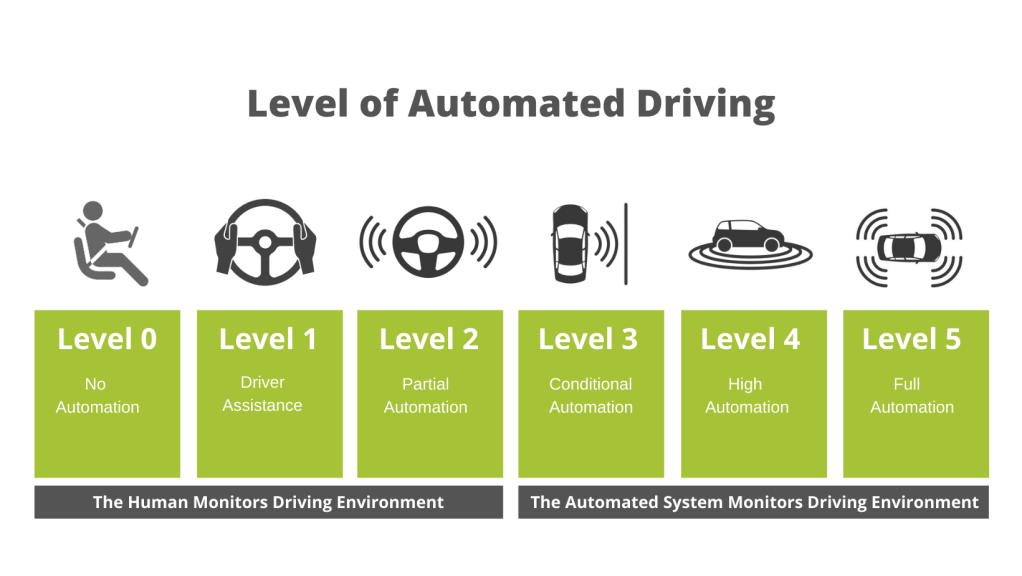
To set agreed-upon standards early in the transition to autonomous vehicles, the Society of Automotive Engineers (SAE) developed a classification system that defines the degree of driving automation a car and its equipment may offer. Ranging from levels zero to five, the driving automation spectrum begins with vehicles without this technology and ends with entirely self-driving vehicles.

As vehicles increasingly assume functions previously managed by the driver, each level of automation necessitates more layers of sensors. A Level 1 vehicle, for example, might just have one radar and one camera. A Level 5 vehicle, which must be able to travel through any environment, will require full 360-degree sensing from numerous sensor types.

According to the Society of Automotive Engineers (SAE), there are six different levels of driving autonomy that make a complete driving experience:

Level 0: No automation

Level 0 relies entirely on the driver to execute all longitudinal and lateral functions, such as acceleration and steering, as the name implies. The act of driving is completely under the control of – and responsibility for – the driver.

Despite the lack of automation, the system will issue certain warnings. These could include lane departure or forward-collision alerts, for example. They are still classified as Level 0 because they simply provide information to the driver through alerts and notifications.

Level 1: driver assistance

The vehicle only controls or intervenes at this level to control the vehicle’s speed or steering, but not both at the same time. While the driver cannot give up control of the vehicle, Level 1 technology can assist with some driving tasks.

Adaptive cruise control is an example of an ADAS function in which the automobile maintains a set speed and safe distance from the car ahead by automatically applying the brakes when traffic slows and returning to its normal speed when traffic clears. Another example is lane keep assist, which returns the vehicle to the center of the lane if it veers off slightly without activating the turn signal.

Level 2: Partial driving automation

As you go to Level 2, the vehicle and the driver share the driving work. The two basic driving functions of lateral and longitudinal control are frequently taken over by the vehicle. This can be accomplished by integrating adaptive cruise control with lane-keeping, for example. In this instance, the driver is permitted to remove their hands off the steering wheel for a brief period of time. However, the driver must maintain constant situational awareness and keep an eye on the surroundings.

GM’s Super Cruise, Mercedes-Benz Drive Pilot, Tesla Autopilot, Volvo’s Pilot Assist, and Nissan ProPilot Assist 2.0 are some of the most renowned examples of carmakers employing Level 2 automation.

A new trend in the automotive industry is Level 2+ systems, which exceed the functionality you would typically find in a Level 2 model. The main difference between the two is a higher degree of automation when maneuvering to enter or exit a highway, change a lane or merge onto one. Taking the example of changing lanes, a Level 2 system would simply stay in the same lane, even when driving behind a very slow vehicle that it is allowed to overtake.

Level 3: Conditional driving automation

At Level 3, the vehicle can accelerate past a slow-moving vehicle, monitoring its surroundings, changing lanes, and controlling the steering, throttle, and braking. All the driver has to do is keep paying attention and be ready to take back control when the vehicle calls for it.

Level 3 automation allows you to take your hands off the wheel and eyes off the road as long as you remain alert. The result is a relaxed driver on certain occasions, like when driving in traffic jams. Most car manufacturers allow such a traffic jam pilot function to operate only on specific controlled-access highways and operate when traffic is relatively slow – below 40 miles per hour.

Level 4: High driving automation

As the vehicle’s capabilities develop, the interaction between humans and machines decreases at Level 4. Changing lanes, turning, and signaling, as well as the steering, stopping, accelerating, and monitoring the environment, are all taken away from the driver.

The vehicle is capable of handling highly complicated driving scenarios without the need for human interaction, such as the rapid emergence of work sites. This is now only permitted in limited, designated conditions, such as on controlled-access highways.

However, a human can still override the system manually. For the driver, this means she may sit back and relax, possibly even read a book, while the car drives responsibly and safely on the highway and possibly even city streets. The car can still ask the driver to take control, but if no response is received, the car will come to a safe stop on its own. The Waymo test car is an example of Level 4 autonomy.

Level 5: Full driving automation

Now we’re getting to the exciting stuff: self-driving cars. Level 5 autonomy involves no human intervention. There is no need for a steering wheel, brakes, or pedals in this vehicle. All driving tasks, including environmental monitoring and detection of complicated driving conditions such as busy pedestrian crossings, are controlled by the autonomous vehicle under all conditions.

This also means that the vehicle can do numerous tasks at once, such as adaptive cruise control, traffic sign recognition, lane departure warning, emergency braking, pedestrian detection, collision avoidance, cross-traffic alert, surround-view, park assist, rear collision warning, or park assistance.

Benefits of Automation

Now that we’ve discussed the different vehicle automation levels let’s look at the benefits of vehicle automation. 

  • Safety – Automated vehicles are far safer than having drivers operate them, and hence have the potential to save lives and prevent injuries to passengers and pedestrians as a result of human mistakes. This is because self-driving cars are better than humans at detecting risks and reacting quickly enough to avoid colliding with other vehicles or pedestrians.

  • Economic Benefits – While autonomous vehicles have the ability to prevent traffic collisions, society will save a large amount of money in terms of lost lives, medical costs, and lost productivity at work. Reducing car accidents will save society a substantial amount of money, with some estimates putting the figure in the billions of dollars.

  • Efficiency – Autonomous vehicles can interact with one another, reducing traffic congestion and the number of time people spends caught in traffic jams. Commuters will save time on their commutes, money on gas, and car emissions will be reduced because they will spend less time on the road.

  • Productivity – Autonomous vehicles will boost commuter productivity by allowing them to spend their commute time on something other than driving. Commuters spend an average of 200 hours per year in their cars. Consider what you could accomplish with all that time if you didn’t have to worry about driving.

Wrapping Up

While fully autonomous driving is still a ways off, automakers are incorporating more advanced safety measures into their vehicles every year, lowering accidents and making drivers more comfortable with the idea of one day taking their hands off the steering wheel.

ADAS (advanced driver assistance systems) and self-driving autonomous vehicles require a large volume of data to train the deep learning or machine learning models that will be deployed in vehicles. The more real-world data that an organization has to train its vehicles, the better the vehicles will perform when facing new environments they have never seen before.  TagX offers data collection and annotation services for the training of ADAS and autonomous driving applications. We have experts in the field who understand data and its allied concerns like no other.  Get your AI models optimized for learning with us.

AI-powered Voice bots: Importance and Training

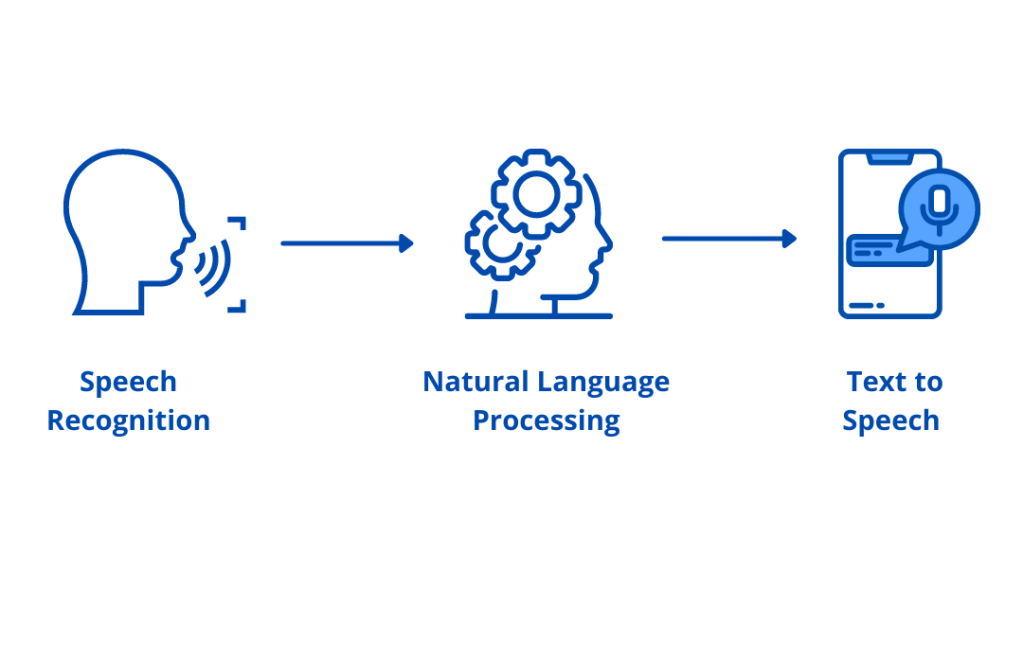
Voice assistants are devices/apps that respond to humans using voice recognition technology, natural language processing, and AI. The device uses technology to synthesis the user’s message, break it down, evaluate it, and respond with a logical response.

Unlike chatbots, voice bots require added speech recognition and speech synthesis abilities. Voice bots have to understand customer requests and determine the query’s intent. This critical factor directly impacts the accuracy of a voice bots response. To achieve this, voice bots synthesize a voice request, convert it into text for processing, and again deliver an accurate vocal response in return all within seconds.

Furthermore, voice bots must be able to access caller or user data to provide more pertinent and personalized responses; this data can includes the caller’s age, gender, purchase history, etc.

Have a deeper look into the article to know about the top reasons why voice bots should be an important part of your business.

Personalization For Customers

In today’s world, everyone is drawn to innovation and wants to use it to make their lives easier, better, and richer. People are impatient, and they connect with a brand with the thought of now or never in mind. They only care about getting things done quickly, or they will switch to another service provider and never return.

A voice bot is the smartest solution for such people to get things done in a more personalized way. Due to their ability to provide timely support, AI voice bots can effectively handle customers. The customer expects a quick and secure answer for everything from trip reservations to online payments, and here is where voice bots can help.

No Human Contact

In the age of intelligence and software revolutions, everything around us is getting virtualized or touch-free. AI voice bots offer new opportunities for personalization and intimate engagement for companies. 

Unlike text-based solutions where the presence of a supporting device is a must, voice bots do not hook on any uncommon hardware devices. The advanced AI-based voice bot solution allows you to speak with a robot without using control buttons. 

24/7 Availability

Machines, do not require rest. Even if your person is unavailable, voice bots can answer your customers’ questions and gather their information in the event of an emergency. And your agent can contact them whenever it is convenient for them.

For most consumers, calling any customer service center is a nightmare because of the long wait times and multiple redirections. Enabling FAQs on IVR, Alexa, or Google Assistant to automate general queries can save a lot of time, and the agent can take over or the call can only be transferred to the agent for important situations.

Boost Customer Insights 

Having voice bots means utilizing a system with great data capabilities that can provide reliable insights to customers automatically. By providing real-time information, voice chatbots establish a seamless connection between customer and service agent and improve customer experience.

Better Task Management 

The best aspect of having a voice bot is that it effectively improves two-way communication, resulting in a pleasant and profitable experience. For example, a customer wishes to reserve a dinner table for him and his companion at their favorite restaurant. For this, he contacts the eatery.

The restaurant owner can improve services by including voice bots in the dialogue. Customers can ask questions using voice commands, and the smart-talking robot will respond. Corporate duties will be more easily managed in this manner, resulting in improved business efficiency and productivity.

Training AI for Voicebots

One of the key things to note when using an artificially intelligent voice bot is to train the AI with a sufficiently large dataset of interactions with customers. Not every business might have access to well-documented support interactions that can be used as training material for the AI.

Algorithms learn from data. They find relationships, develop understanding, make decisions, and evaluate their confidence from the training data they’re given. And the better the training data is, the better the model performs. 

Voicebot training data is information that helps a chatbot understand what users are saying and how to respond to it. To perform the training of these bots, the first step is to collect data according to model requirements. This Data needs to be annotated to attach labels to text or speech data.

These labels will train the model to respond effectively to different human interactions. Different types of NLP annotations required for Voice bots include

  • Intent classification
  • Entity extraction 
  • Relationships extractions
  • Syntactic analysis
  • Sentiment analysis
  • Summarization
  • Translation.

TagX offers specialized services for all annotation tasks related to Voice bot. TagX provides you with high-quality training data by integrating our human-assisted approach with machine-learning assistance. Regardless of your data annotation criteria, our managed service team is ready to support you in both deploying and maintaining your AI and ML projects.

As a closing statement, we would like to say that Modern AI voice bots can deal with plenty of simple cases and most of the customers don’t even realize they are interacting with a robot. And, it doesn’t mean the voice bots can replace humans. But a team of super-efficient bots and sharp-witted humans would be a perfect match. 

Design a site like this with WordPress.com
Get started