Data Annotation Types to execute Autonomous Driving

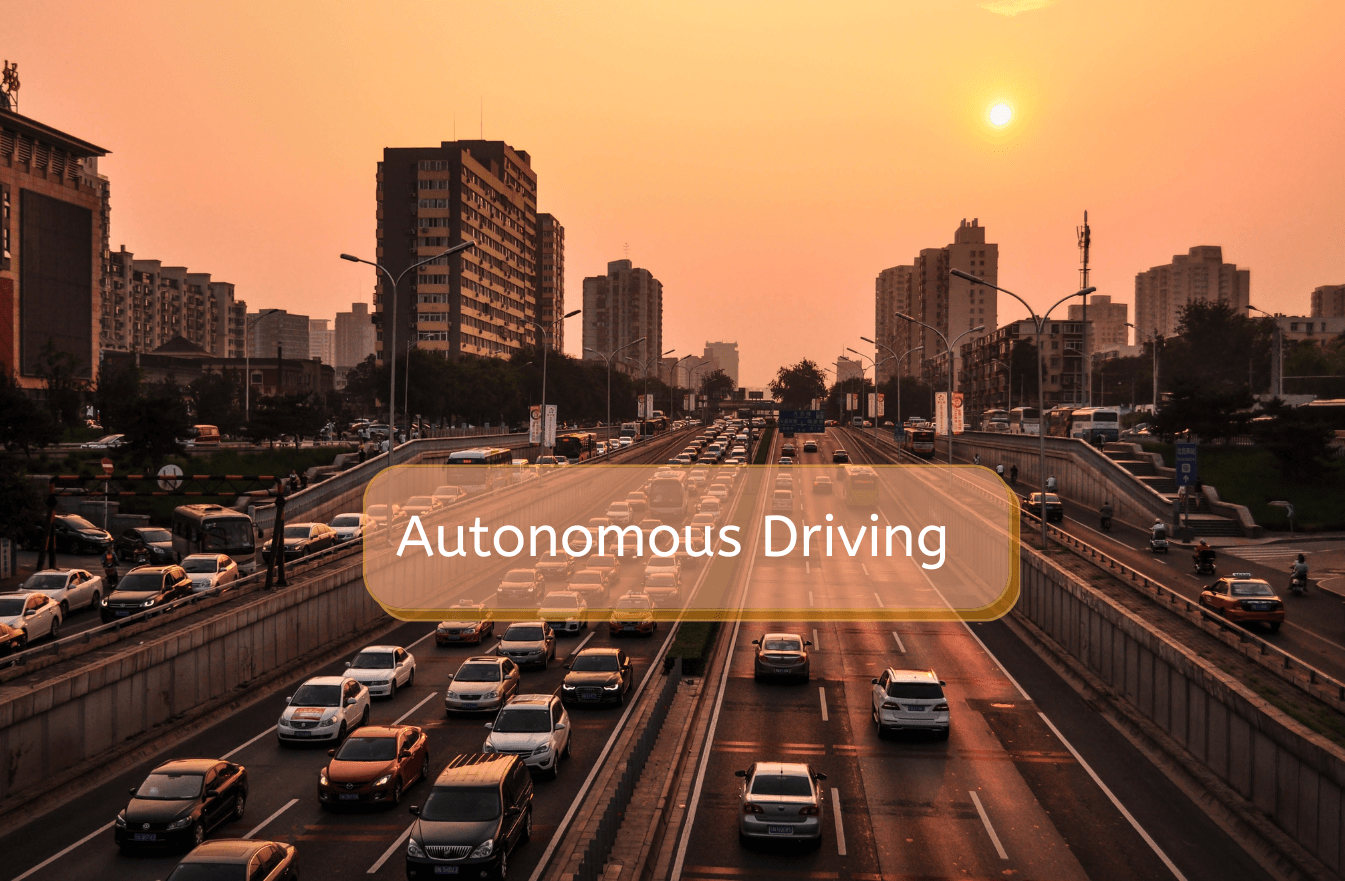
Autonomous vehicles are still working towards reaching the stage of full autonomy. A fully functioning and safe autonomous vehicle must be competent in a wide range of machine learning processes before it can be trusted to drive on its own. From processing visual data in real-time to safely coordinating with other vehicles, the need for AI is essential. Self-driving cars could not do any of this without a huge volume of different types of training data, created and tagged for specific purposes.

Due to the several existing sensors and cameras, advanced automobiles generate a tremendous amount of data. We cannot use these datasets effectively unless they are correctly labeled for subsequent processing. This could range from simple 2D bounding boxes all the way to more complex annotation methods, such as semantic segmentation.

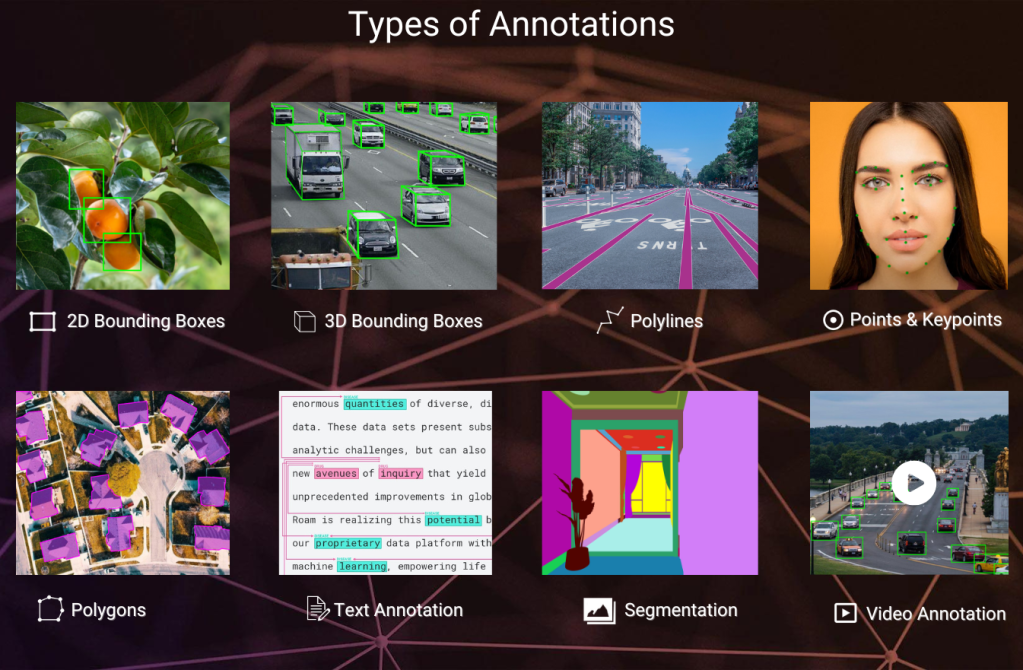
There are various image annotation types such as Polygons, bounding boxes, 3D cuboids, Semantic Segmentation, Lines, and Splines that can be incorporated into autonomous vehicles.  These annotation methods help in achieving greater accuracy for autonomous driving algorithms. However, which annotation method is best suited for you must be chosen according to the requirements of your project.

Types of Annotation for Autonomous Driving

Below we have discussed all types of annotation required to make the vehicle autonomous.

2D bounding Box Annotation

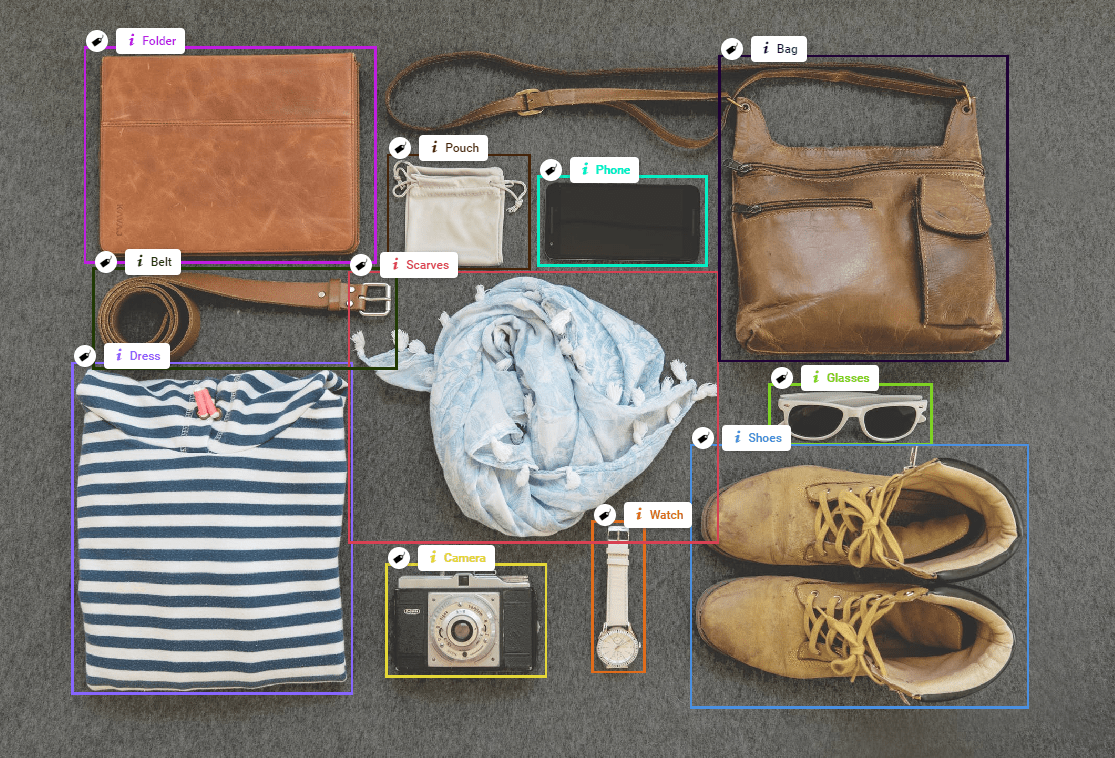
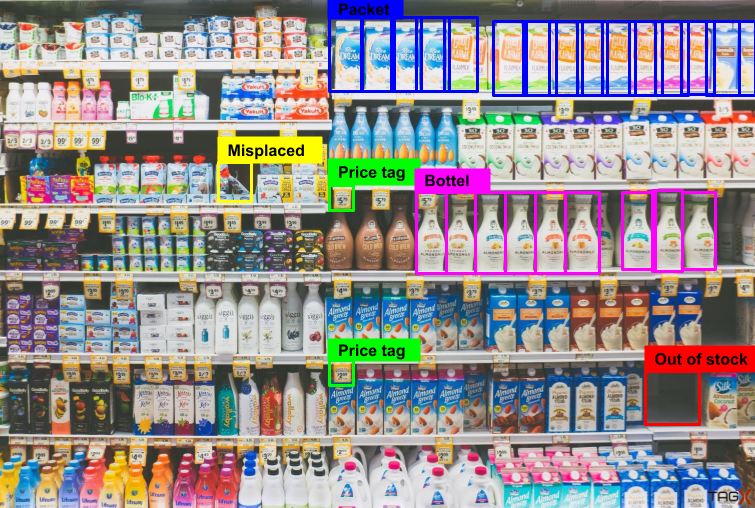
The bounding box annotation technique is used to map objects in a given image/video to build datasets thereby enabling ML models to identify & localize objects.2D boxing is rectangular, and among all the annotation tools, it is the simplest data annotation type with the lowest cost. This annotation type is preferred in less complex cases and also if you are restricted by your budget. This is not trusted to be the most accurate type of annotation but saves a lot of labeling time. Common labeling objects include: Vehicles, Pedestrian, Obstacles, Road signs, Signal lights, Buildings, Parking zone

3D Cuboid Annotation

Similar to the bounding boxes that were previously discussed, this type involves the annotator drawing boxes around the objects in an image. The bounding boxes in this sort of annotation, as the name implies, are 3D, allowing the objects to be annotated on depth, width, and length (X, Y, and Z axes). An anchor point is placed at each edge of the object after the annotator forms a box around it. Based on the characteristics of the object and the angle of the image, the annotator makes an accurate prediction as to where the edge maybe if it is missing or blocked by another object. This estimation/ annotation plays a vital role in judging the distance of the object from the car based on the depth and detecting the object’s volume and position.

Polygon Annotation

It can occasionally be challenging to add bounding boxes around specific items in an image due to their forms and sizes. In photos and movies with erratic objects, polygons provide precise object detection and localization. Due to its precision, it is one of the most popular annotation techniques. However, the accuracy comes at a price because it takes longer than other approaches. Beyond a 2D or 3D bounding box, irregular shapes like people, animals, and bicycles need to be annotated. Since polygonal annotation allows the annotator to specify additional details such as the sides of a road, a sidewalk, and obstructions, among other things, it can be a valuable tool for algorithms employed in autonomous vehicles.

Semantic Segmentation

We’ve looked at defining objects in images up to this point, but semantic segmentation is far more accurate than other methods. It deals with assigning a class to each pixel in an image. For a self-driving automobile to function well in a real-world setting, it must comprehend its surroundings. The method divides the items into groups like bicycles, people, autos, walkways, traffic signals, etc. Typically, the annotator will have a list made up of these. In conclusion, semantic segmentation locates, detects, and classifies the item for computer vision. This form of annotation demands a high degree of accuracy, where the annotation must be pixel-perfect.

Lines and Splines Annotation

In addition to object recognition, models need to be trained on boundaries and lanes. To assist in training the model, annotators drew lines in the image along the lanes and edges. These lines allow the car to identify or recognize lanes, which is essential for autonomous driving to succeed since it enables the car to move through traffic with ease while still maintaining lane discipline and preventing accidents.

Video Annotation

The purpose of video annotation is to identify and track objects over a collection of frames. The majority of them are utilized to train predictive algorithms for automated driving. Videos are divided into thousands of individual images, with annotations placed on the target object in each frame. In complicated situations, single frame annotation is always employed since it can ensure quality. At this time, machine learning-based object tracking algorithms have already helped in video annotation. The initial frame’s objects are annotated by the annotator, and the following frames’ items are tracked by the algorithm. Only when the algorithm doesn’t work properly does the annotator need to change the annotation. As labor costs decrease, clients can save a greater amount of money. In basic circumstances, streamed frame annotation is always employed.

Use Cases of Autonomous Driving

The main goal of data annotation in automotive is to classify and segment objects in an image or video. They help achieve precision, which to automotive is important, given that it is a mission-critical industry, and the accuracy, in turn, determines user experience. This process is essential because of the use cases it enables:

  • Object and vehicle detection: This crucial function allows an autonomous vehicle to identify obstacles and other vehicles and navigate around them. Various types of annotation are required to train the object detection model of autonomous driving so that it can detect persons, vehicles, and other obstacles coming in its way.
  • Environmental perception: Annotators use semantic segmentation techniques to create training data that labels every pixel in a video frame. This vital context allows the vehicle to understand its surroundings in more detail. It’s important to have a complete understanding of its location and everything surrounding it to make a safe drive.
  • Lane detection: Autonomous vehicles need to be able to recognize road lanes so that they can stay inside of them. This is very important to avoid any accidents. Annotators support this capability by locating road markings in video frames.
  • Understanding signage: The vehicle must be able to recognize all the signs and signals on the road to predict when and where to stop, take a turn, and many related objectives. Autonomous vehicles should automatically detect road signs and respond to them accordingly. Annotation services can enable this use case with careful video labeling.

Conclusion

Although it takes a lot of effort, delivering Ground Truth quality annotation for self-driving cars is crucial to the project’s overall success. Get the best solutions by using precise annotations created by TagX to train and validate your algorithms.

We are the data annotation experts for autonomous driving. We can help with any use case for your automated driving function, whether you’re validating or training your autonomous driving stack. Get in contact with our specialists to learn more about our automobile and data annotation services as well as our AI/ML knowledge.

Training Data for Natural Language Processing

The spoken words you use in regular interactions with other people are known as natural language. Machines could not comprehend it not long ago. However, data scientists are already working on artificial intelligence systems that can comprehend natural language, opening the door to enormous potential and future advances.

What is Natural Language Processing?

Software with Natural Language Processing (NLP) capabilities can read, understand, interpret, and respond meaningfully to natural human language. The goal of NLP, a branch of artificial intelligence (AI) technology, is to educate computers to process data and solve problems in a manner that is similar to or even superior to human intelligence. 

Deep learning and rule-based language models are used with AI and machine learning (ML) technology in NLP applications. By utilizing these technologies, NLP software can process spoken and written human language, identify the speaker’s intent or attitude, and provide insightful responses that aid the speaker in reaching their objectives.

Main NLP use cases

Text Analysis

Text analysis can be performed on several levels including morphological, grammatical, syntactic, and semantic analyses. Businesses may better organize their data and find insightful patterns and insights by analyzing text and extracting various types of essential elements, such as themes, individuals, dates, locations, etc. For online retailers, this is quite helpful. In addition to using customer reviews to determine what features customers like and dislike about a product, they can use text analysis to improve product searchability and classification.

Chatbots

NLP will be integrated with Machine Learning, Big Data, and other technologies, according to Gartner, to create potent chatbots and other question-answering systems. Contextual chatbots, smart assistants, and conversational AI, in particular, enable businesses to accelerate digital transformation in areas that are people- and customer-focused.

Monitoring social networks

A bad review going viral on social media may ruin a brand’s reputation, as many marketers and business owners are well aware. Applications using natural language processing (NLP) can assist track brand mentions on social media, identifying unfavorable opinions, and generating actionable alerts.

Intelligent document processing

A technology known as intelligent document processing automatically pulls data from various documents and formats it according to the specifications. To find important information in the document, classify it, and extract it into a common output format, it uses NLP and computer vision.

Speech recognition

The phonetic map of the spoken text is created by machines, which then analyze which word combinations meet the model. With the use of language modeling, it examines the entire context to determine which word should come next. Virtual assistants and tools for creating subtitles are mostly powered by this technology.

Preparing an NLP dataset

Successful NLP depends on high-quality training data. How amazing is data, though? The volume of data is crucial for machine learning, and even more so for deep learning. At the same time, you want to ensure that the quality is not compromised as a result of your focus on scale.

Algorithms are trained using data to gain knowledge. It’s a good thing you’ve kept those customer transcripts for the last ten years, isn’t it? The data you’ve saved probably isn’t nearly ready to be used by machine learning algorithms yet. Usually, you need to enrich or classify the data you wish to use.

Why is training data important?

Depending on the needs of a project, training data is a sort of data used to instruct a new application, model, or system to start identifying patterns. Data used for training in AI or ML is slightly different since it is tagged or annotated using specific methods to make it understandable to computers.

This training data collection aids computer algorithms in their search for connections, cognitive development, decision-making, and confidential assessment. And the better the training data is, the better the model performs.

In actuality, rather than the magical machine learning algorithms themselves, your data project’s success depends more on the quality and amount of your training data. For initiatives involving language understanding, this is exponentially true.

How Much Training Data Is Enough?

There’s really no hard-and-fast rule around how much data you need. Different use cases, after all, will require different amounts of data. Ones where you need your model to be incredibly confident (like self-driving cars) will require vast amounts of data, whereas a fairly narrow sentiment model that’s based on text necessitates far less data.

Annotation for natural language data

Your language data sets cannot be magically transformed into training data sets that machine learning algorithms can utilize to start making predictions. Currently, the process of data annotation and labeling requires humans in order to categorize and identify information. A machine learning system will struggle to forecast characteristics that allow for spoken or written language interpretation without these labels. Without people in the loop, machines are unable to perform annotation.

The process of labeling any kind of data is complex. It is possible to manage this entire process in excel spreadsheets but this easily becomes overwhelming with all that needs to be in place:

  • Quality assurance for data labeling
  • Process iteration, such as changes in data feature selection, task progression, or QA
  • Management of data labelers
  • Training of new team members
  • Project planning, process operationalization, and measurement of success

Types of annotations in a natural language data set

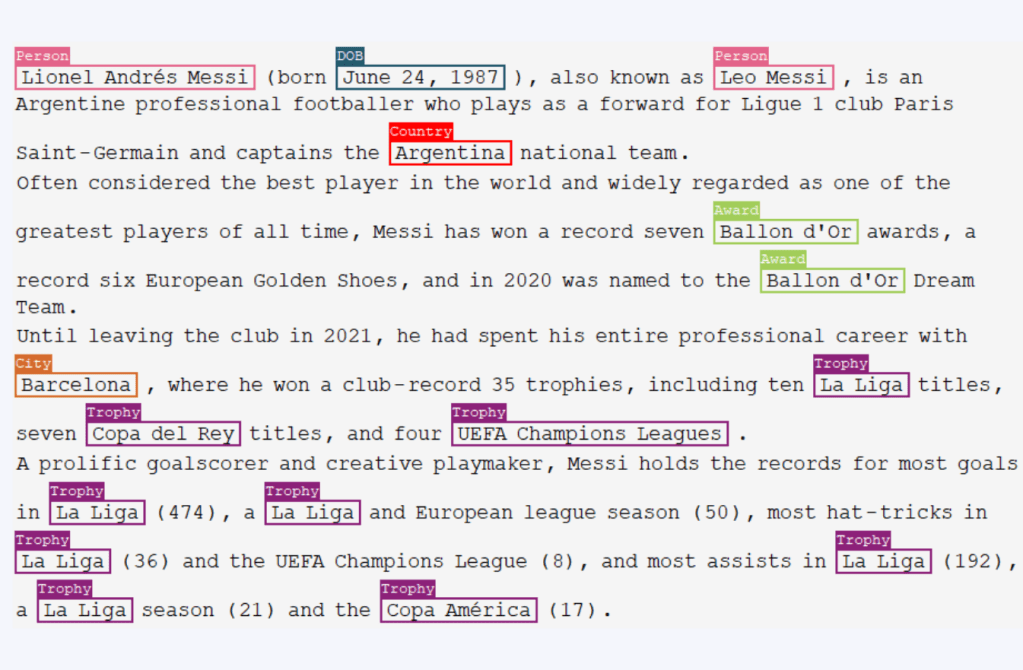
Named Entity Recognition

Entity annotation is the act of locating and labeling mentions of named entities within a piece of text data. This includes identification of entities in a paragraph(like a person, organization, date, location, time, etc.), and further classifying them into categories according to the need.

Part-of-speech tagging

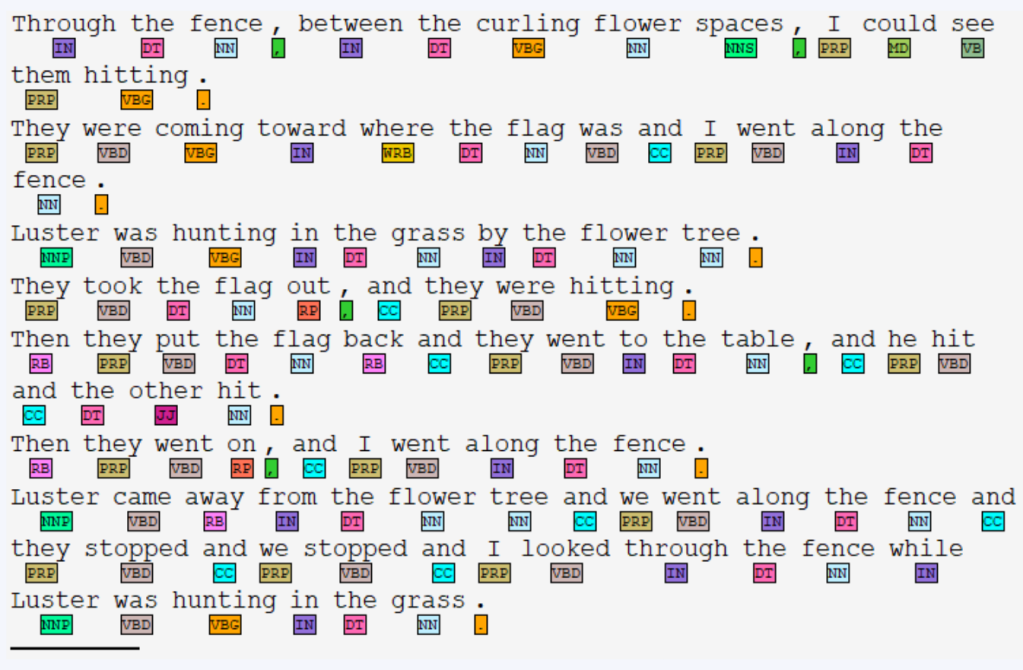
Part-of-speech tagging is the task that involves marking up words in a sentence as nouns, verbs, adjectives, adverbs, and other descriptors.

Summarization

Summarization is the task that includes text shortening by identifying the important parts and creating a summary. It involves creating a brief description that includes the most important and relevant information contained in the text.

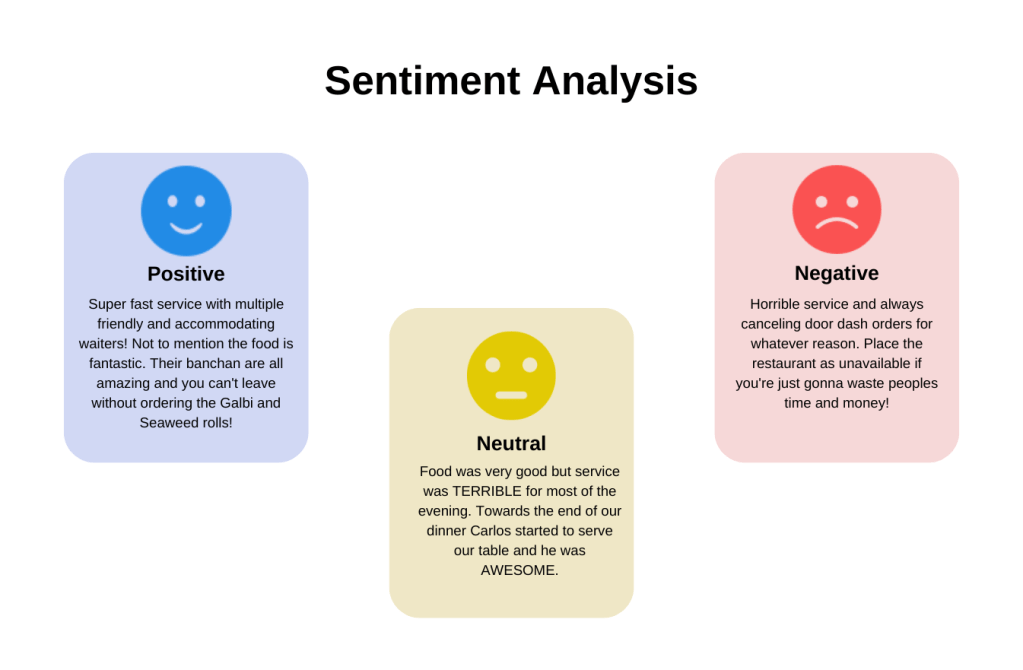
Sentiment analysis

Sentiment analysis is the task that implies a broad range of subjective analysis to identify positive or negative feelings in a sentence, the sentiment of a customer review, judging mood via written text or voice analysis, and other similar tasks.

Text classification

Text classification is the task that involves assigning tags/categories to text according to the content. Text classifiers can be used to structure, organize, and categorize any text. Placing text into organized groups and labeling it, based on features of interest.

Audio Transcription

The method of translating spoken language into written language is known as audio transcription. TagX offers transcription services in a variety of fields, including e-commerce, legal, medical, and technology. In addition to our regular audio transcription services, we also provide add-ons like quicker turnaround times, multilingual audio, time stamping, speaker identification, and support for different file types.

Audio Classification

Audio classification is the process to classify audio based on language, dialect, semantics, and other features. Audio classification is used in numerous natural language processing applications like chatbots, automatic speech recognition, text-to-speech, and more. Human annotators determine its content and classify it into a series of predetermined categories. Our curated crowd can accurately label and categorize your audio in the language of your choice.

Audio Translation

TagX offers to translate your large content into multiple languages for your application. Translation helps you to attract the attention of potential clients, create an internationally recognized product, and turn customers into evangelists for your brand across the globe. We combine human translations with rigorous quality checks to ensure that every sentence meets your high standards.

Who does the labeling?

Companies spend five times as much on internal data labeling as they do with third parties, according to Cognilytica research. This is not only expensive, but it also consumes a lot of team members’ time when they could be using their skills in other ways. Additionally, developing the appropriate processes, pipelines, and annotation tools generally takes more time than some ML initiatives.

Organizations use a combination of software, processes, and people to clean, structure, or label data. In general, you have four options for your data labeling workforce:

  • Employees – They are on your payroll, either full-time or part-time. Their job description may not include data labeling. 
  • Managed teams – You use vetted, trained, and actively managed data labelers. TagX offers complete Data Solutions right from collection to labeling to tweaking datasets for better performance.
  • Contractors – They are temporary or freelance workers.
  • Crowdsourcing – You use a third-party platform to access large numbers of workers at once.

Final Thoughts

Machine learning is an iterative process. Data labeling evolves as you test and validate your models and learn from their outcomes, so you’ll need to prepare new datasets and enrich existing datasets to improve your algorithm’s results.

Your data labeling team should have the flexibility to incorporate changes that adjust to your end users’ needs, changes in your product, or the addition of new products. A flexible data labeling team can react to changes in the business environment, data volume, task complexity, and task duration. The more adaptive your labeling team is, the more machine learning projects you can work through.

Different types of Chatbots driving Automation

A chatbot is an AI-powered software that can effectively communicate with people in a lucid and intelligent manner. A chatbot stimulates communication through messaging applications, websites, mobile apps, or smartphone assistants like Ok Google or Siri. Thus, a chatbot represents the closest interface of communication between a man and a machine. This article will help you understand about different types of chatbots used in various business sectors.

With the advent of chatbots, the contact between a customer and a brand has undergone a complete transformation. Chatbots are being used by companies in practically every sector to service clients worldwide. Determine the purpose of your chatbot, who will lead the discussion while posing questions, the channels you want to employ, and your budget before deciding which chatbot is best for you. This will offer you an idea of the proper kind to concentrate on and center your plan around.

Types of Chatbots

  1. Menu/Button-Based Chatbots
  2. Rule-based chatbots
  3. Keyword recognition-based chatbots
  4. Machine Learning chatbots
  5. Social Messaging Chatbots
  6. Voice bots

Menu/Button-Based Chatbots

These chatbots allow the user to choose from a variety of options that are shown as menus or buttons. Depending on what the user clicks, the bot will present them with a different set of options to choose from.

For Example, 

Chatbot: Hello (first name), 

Please select an option.  

  • Order Food 
  • Order Drink 
  • Order Sweets 

You: Order Food  

Chatbot: You seem to be hungry. Choose what you want to eat, and I’ll call someone to assist you. 

  • Italian
  • Chinese
  • Mexican

You: Italian

Rule-based chatbots

Rule-based chatbots are essentially conversational flows that are initiated by clickable buttons below a chat window. 

For Example:

Would you like this freebie? When you press the button, a reply message with the words “Great!” will appear. Is this helpful?

Keyword recognition-based chatbots

Unlike menu-based chatbots, keyword recognition-based chatbots can hear what users are saying or typing. They employ customizable keywords and AI to determine how to react appropriately.

Natural language processing (NLP) is a technique used by chatbots with keyword recognition to help their users. By entering free text, users can communicate with this website. The chatbot answers with the most suitable response after evaluating the user’s content using keywords.

Machine Learning chatbots

Machine learning is the process of teaching computers to behave more like the human brain. It teaches robots to solve issues, answer questions, and draw conclusions without the need for human intervention by utilizing training data and natural language processing (NLP). This is the most advanced chatbot. These chatbots employ machine learning (ML) and artificial intelligence (AI) to record particular user chats in order to learn and evolve over time. Chatbots with contextual information, as opposed to keyword recognition-based bots, are intelligent enough to self-improve based on what users ask for and how they ask for it.

For instance, a contextual chatbot that enables users to place pizza orders will learn the user’s preferred ordering preferences by storing the data from each conversation. This means that eventually, whenever a user chats with this chatbot, it will remember their most frequent order, their delivery address, and their payment details and will only prompt them to repeat this transaction. The user only needs to reply with “Yes” and the food will be ready, saving them from having to respond to multiple questions.

Chatbots for Social Messaging

In messaging apps like Facebook Messenger, a chatbot is a type of bot that employs artificial intelligence to respond to queries and carry out simple tasks. Customer support, data and lead gathering, purchasing advice, and other functions can all be performed by a chatbot.

Voice bots

A voice chatbot is an AI conversational communication tool that can record, decode, and understand vocal input from the speaker in order to answer in a manner that is similar to natural language. A voice AI chatbot allows users to engage with it using voice commands and receive contextualized, pertinent responses.

By enabling users to speak naturally to the AI, voice chatbots elevate AI chatbots to a new level. The voice chatbot will react in its own voice when you speak to it in the same way you would to a real person. The speech chatbot’s natural language processing capabilities make communication simple. Alexa, Siri, and Google Assistant are three voice assistants that people are now accustomed to using in their homes.

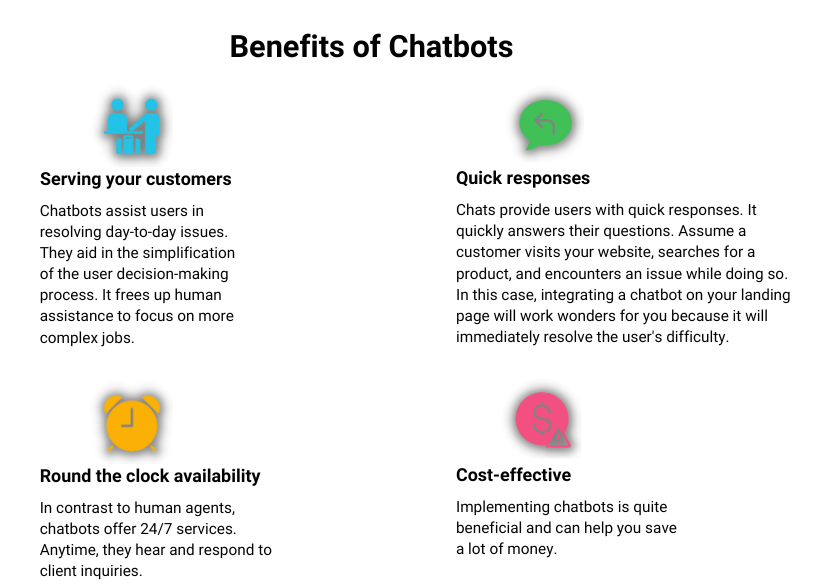
Chatbot benefits

The main purpose of a chatbot is to reduce the workload that the industries are burdened with currently. In the current times, the need for a chatbot is most vital. This is because a chatbot is available all the time irrespective of local time and geographic location. It should also be mentioned that a chatbot is less prone to errors and delivers commendable customer satisfaction round the clock.

TagX for Chatbot Training

To make the Chatbot smarter and more helpful, it is important to feed the AI algorithm with more accurate and high-grade training data sets. TagX has significant experience in gathering, classifying, and processing different types and quality of chatbot training data sets to make such self-propelled applications more effective. We ensure to provide the best virtual customer service with just a few seconds of interaction. We provide you with exceptional, relevant data sets to train your chatbots for them to solve customer queries and take appropriate actions as and when required.

What is Good Quality Training Dataset for Machine learning

Training data is the key input to machine learning and having the right quality and quantity of data sets is important to get accurate results.  In the planning stages of a machine learning problem, the team is usually excited to talk about algorithms and deployment infrastructure. Much effort is spent discussing the tradeoffs between various approaches and algorithms. Eventually, the project gets off the ground, but then the team often runs into a roadblock. They realize that the data available to train the deep learning models are not sufficient to achieve good model performance. To move forward the team needs to collect more data.

Every machine learning vision method is built around a significant collection of labeled photos, regardless of whether the issue at hand is image classification, object detection, or localization. But when confronting deep learning issues in computer vision, designing a data collecting strategy is a crucial step that is frequently skipped. Don’t be mistaken One of the biggest obstacles to a successful applied deep learning project is assembling a high-quality dataset.

Factors involved to make a good dataset

A good dataset for machine learning projects has three keys: quality, quantity, and variability.

Quality

Quality images will replicate the lighting, angles, and camera distances that would be found in the target location. A high-quality dataset contains distinct examples of the desired topic. Generally speaking, if you are unable to recognize your target subject from an image, neither can an algorithm. This rule has some major exceptions, such as recent developments in face recognition, but it’s an excellent place to start.

If the target object is tough to see, consider adjusting the lighting or camera angle. You may also consider adding a camera with optical zoom to enable closer images with greater detail of the subject. In the image shown below, we can see low resolution vs high-resolution images. If you train the model on poor quality low resolution images, it would make the model difficult to learn. Whereas good quality images help the model to easily get trained on the classes we wish for. The efficiency and time required to train the model are affected by the quality of the dataset being used.

Quantity

Each parameter that your model has to consider in order to perform its task increases the amount of data that it will need for training. Generally, the more labeled instances available for training vision models the better. Instances refer to not just the number of images, but the examples of a subject contained in each image. Sometimes an image may contain only one instance as is typical in classification problems such as problems classifying images of cats and dogs.

In other cases, there may be multiple instances of a subject in each image. For an object detection algorithm, having a handful of images with multiple instances is much better than having the same number of images with just one instance in each image. As a result, the training method you use will cause significant variation in the amount of training data that is useful to your model.

Variability

The more variety a dataset has, the more value that dataset can provide to the algorithm. A deep learning vision model needs variety in order to generalize to new examples and scenarios in production. Failure to collect a dataset with variety can lead to overfitting and poor performance when the model encounters new scenarios. For example, a model that is trained based on daytime lighting conditions may show good performance on images captured in the day but will struggle under nighttime conditions. In the example below we have shown how various timing and light conditions gives us varied image dataset and we are able to train the model to give accurate predictions in all varied conditions.

Models may also be biased if one group or class is overrepresented in the dataset. So whenever the model encounters a different scenario in which it is not trained, the prediction is failed. This is common in face detection models where most facial-recognition algorithms show inconsistent performance across subjects that vary by age, gender, and race Having a dataset with good variety not only leads to good performance but also helps address potential issues related to consistent performance across the full range of subjects.

How to build a good dataset?

The process of creating a dataset involves three important steps:

  1. Data Collection
  2. Data Cleaning
  3. Data Labeling
Data Collection

The process of data acquisition involves finding datasets that can be used for training machine learning models. There are a couple of ways you can go about doing this, and your approach will largely depend on the problem that you are trying to solve and the type of data that you think is best suited for it. 

Don’t underestimate the difficulty of collecting a high-quality dataset. Collecting enough examples can be time-consuming and expensive. Even with a good data collection process, it could take weeks or months to collect enough instances to achieve good model performance across all representative classes. This is particularly true when you are trying to capture examples of rare events, such as examples of bad quality in a manufacturing line.

Data cleaning

If you do have enough data, but the quality of the dataset isn’t that great (e.g., data is noisy), or there’s an issue with the general formatting in your dataset (e.g., some data intervals are in minutes while some in hours), we move on to the second most important process, which involves cleaning the data.

You can perform data operations manually, but it is labor-intensive and would take a lot of time. Alternatively, you can leverage already built systems and frameworks to help you achieve the same goal easier and faster. Since missing values can tangibly reduce prediction accuracy, make this issue a priority. 

Data labeling

Data Labeling is an important part of data preprocessing that involves attaching meaning to digital data. Input and output data are labeled for classification purposes, and provide a learning basis for future data processing. For example, the picture of a dog can be attached to the label “a dog”.Now you have acquired enough data to have a representative dataset (a dataset that captures the most important information), clean, and in the right format.

Depending on the task you’re doing, data points can be annotated in different ways. This can cause significant variation in the number of labels your data produces, as well as the effort it takes to create those labels. TagX creates digital data assets powering Artificial Intelligence by collecting, annotating, analyzing, and pre-processing data corpus for training, evaluation, and test purposes.

Build Quality Assurance into your labeling process

Many applications for deep learning in vision require labels that identify objects or classes within the training images. Labeling takes time and requires consistency and careful attention to detail. Poor quality in the labeling process could be due to several causes, all of which can lead to poor model performance. Untagged instances and Inconsistent bounding boxes or labels are two examples of poor labeling quality.

To help ensure labeling quality, build a “review” step into the labeling process. Has each label been reviewed by at least one other person than the labeler to help protect against bad quality in the labeling process?  

Increased use of Synthetic Data

Great progress has been made in recent years in simulating realistic images. Simulators have been used to help train models for self-driving cars and robotics problems. These simulations have become so good that the resulting images can be used to support training deep learning models for computer vision. These images can augment your dataset and, in some cases, even replace your training dataset. 

This is an especially powerful technique for deep reinforcement learning, where the model must learn a wide variety of training examples. Synthetic data is Fusing computer graphics and data generation technologies to simulate real-world scenarios with photo-realistic details. TagX generates these datasets to propel Machine Learning Algorithms faster to production.

Final Thoughts

Once you have a large-high-quality dataset you can focus on model training, tuning, and deployment. At this point, the hard effort of collecting and labeling images can be translated into a working model that can help solve your computer vision problem. After spending days or even weeks collecting images, the training process will go fast by comparison. Continue to evaluate your models as you collect more images to maintain a sense of progress. This will give you an idea of how your model is improving and allow you to gauge the value of more training images.

TagX offers complete Data Solutions right from collection to labeling to tweaking datasets for better performance, book a consultation call today to know more.

Text Analytics: Unlocking the power of Business Data

Due to the development in the use of unstructured text data, both the volume and diversity of data used have significantly increased. For making sense of such huge amounts of acquired data, businesses are now turning to technologies like text analytics and Natural Language Processing (NLP).

The economic value hidden in these massive data sets can be found by using text analytics and natural language processing (NLP). Making natural language understandable to machines is the focus of NLP, whereas the term “text analytics” refers to the process of gleaning information from text sources.

What is text analysis in machine learning?

The technique of extracting important insights from texts is called text analysis.

ML can process a variety of textual data, including emails, texts, and postings on social media. This data is preprocessed and analyzed using specialized tools.

Textual analysis using machine learning is quicker and more effective than manually analyzing texts. It enables labor expenses to be decreased and text processing to be accelerated without sacrificing quality.

The process of gathering written information and turning it into data points that can be tracked and measured is known as text analytics. To find patterns and trends in the text, it is necessary to be able to extract quantitative data from unprocessed qualitative data. AI allows this to be done automatically and at a much larger scale, as opposed to having humans sift through a similar amount of data.

Process of  text analysis 

  1. Assemble the data. Choose the data you’ll research and how you’ll gather it. Your model will be trained and tested using these samples. The two main categories of information sources are. When you visit websites like forums or newspapers, you are gathering outside information. Every person and business every day produces internal data, including emails, reports, chats, and more. For text mining, both internal and external resources might be beneficial.
  2. Preparation of data. Unstructured data requires preprocessing or preparation. If not, the application won’t comprehend it. There are various methods for preparing data and preprocessing.
  3. Apply a machine learning algorithm for text analysis. You can write your algorithm from scratch or use a library. Pay attention to NLTK, TextBlob, and Stanford’s CoreNLP if you are looking for something easily accessible for your study and research.

How to Analyze Text Data

Depending on the outcomes you want, text analysis can spread its AI wings across a variety of texts. It is applicable to:

  • Whole documents: gathers data from an entire text or paragraph, such as the general tone of a customer review.
  • Single sentences: gathers data from single sentences, such as more in-depth sentiments of each sentence in a customer review.
  • Sub-sentences: a sub-expression within a sentence can provide information, such as the underlying sentiments of each opinion unit in a customer review.

You can begin analyzing your data once you’ve decided how to segment it.

These are the techniques used for ML text analysis:

Data extraction

Data extraction concerns only the actual information available within the text. With the help of text analysis, it is possible to extract keywords, prices, features, and other important information. A marketer can conduct competitor analysis and find out all about their prices and special offers in just a few clicks. Techniques that help to identify keywords and measure their frequency are useful to summarize the contents of texts, find an answer to a question, index data, and generate word clouds.

Named Entity Recognition

NER is a text analytics technique used for identifying named entities like people, places, organizations, and events in unstructured text. It can be useful in machine translation so that the program wouldn’t translate last names or brand names. Moreover, entity recognition is indispensable for market analysis and competitor analysis in business.

Sentiment analysis

Sentiment analysis, or opinion mining, identifies and studies emotions in the text. The emotions of the author are important for understanding texts. SA allows to classify opinion polarity about a new product or assess a brand’s reputation. It can also be applied to reviews, surveys, and social media posts. The pro of SA is that it can effectively analyze even sarcastic comments.

Part-of-speech tagging

Also referred to as “PoS” assigns a grammatical category to the identified tokens. The AI bot goes through the text and assigns each word to a part of speech (noun, verb, adjective, etc.). The next step is to break each sentence into chunks, based on where each PoS is. These are usually categorized as noun phrases, verb phrases, and prepositional phrases. 

Topic analysis

Topic modeling classifies texts by subject and can make humans’ lives easier in many domains. Finding books in a library, goods in the store and customer support tickets in the CRM would be impossible without it. Text classifiers can be tailored to your needs. By identifying keywords, an AI bot scans a piece of text and assigns it to a certain topic based on what it pulls as the text’s central theme.

Language Identification

Language identification or language detection is one of the most basic text analysis functions. These capabilities are a must for businesses with a global audience, which in the age of online, is the majority of companies. Many text analytics programs are able to instantly identify the language of a review, social post, etc., and categorize it as such.

Benefits of Text Analytics

There is a range of ways that text analytics can help businesses, organizations, and event social movements:

  • Assist companies in recognizing customer trends, product performance, and service excellence. As a result, decisions are made quickly, business intelligence is improved, productivity is raised, and costs are reduced.
  • Aids scholars in quickly explore a large amount of existing literature and obtain the information that is pertinent to their inquiry. This promotes quicker scientific advancements.
  • Helps governments and political bodies make decisions by assisting in the knowledge of societal trends and opinions.
  • Search engines and information retrieval systems can perform better with the aid of text analytics tools, leading to quicker user experiences.
  • Refine user content recommendation systems by categorizing similar content.

Conclusion

Unstructured data can be processed using text analytics techniques, and the results can then be fed into systems for data visualization. Charts, graphs, tables, infographics, and dashboards can all be used to display the results. Businesses may immediately identify trends in the data and make decisions thanks to this visual data.

Robotics, marketing, and sales are just a few of the businesses that use ML text analysis technologies. To train the machine on how to interact with such data and make insightful conclusions from it, special models are used. Overall, it can be a useful strategy for coming up with ideas for your company or product.

How Computer Vision is making Robots smart

Robotic systems have proven to be incredibly adept at selecting, organizing, arranging, and cataloging products on the production line or in retail settings. The field of robotics is expanding its permitted operating space. Robots can now work more quickly on the assembly line and in brand-new settings like supermarkets, hospitals, and restaurants thanks to machine vision systems that combine AI and deep learning. Machine vision system advances are the primary motivator.

Technology’s field of robotics, which deals with actual robots, mixes computer science and engineering. The latter have effectors to communicate with the outside environment and sensors to see and perceive their surroundings. These sensors are crucial to computer vision since it allows robots to “see” and focus on objects of interest.

Robots without visual perception capability are like blind machines developed for repetitive tasks placed in one place. Robots can now observe their environment and move appropriately to carry out a variety of tasks thanks to computer vision.

What is Robotic Vision?

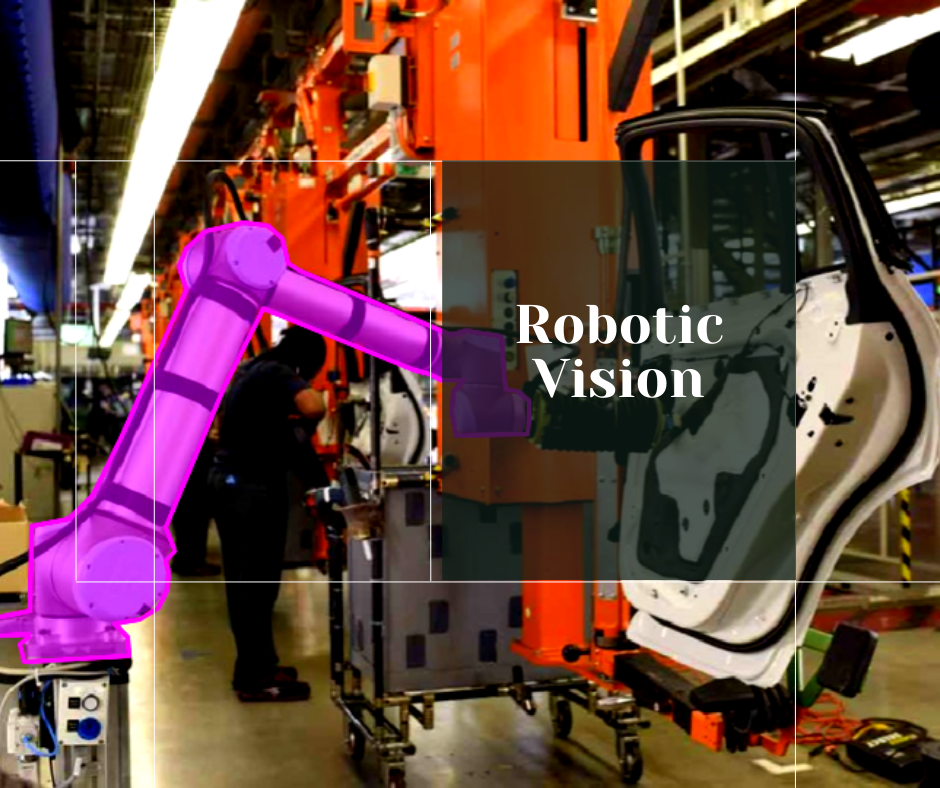
One of the most recent advancements in robotics and automation technologies is robotic vision. It allows machines, including robots, to see in a larger sense. It is composed of algorithms, cameras, and any other hardware that supports the development of visual insights in robots. This enables machines to perform difficult visual tasks, such as picking up an object placed on the board using a robot arm that has been taught to do so. In this instance, it will carry out the work using sensors, cameras, and vision algorithms. Using a 3D stereo camera to direct a robot to put wheels on a moving vehicle would be a more complicated example.

Robot Vision is the general term for the application of camera gear and computer algorithms to enable robots to process visual data from the environment. Your robot is virtually blind if it doesn’t have Robot Vision. For many robotic tasks, this is not an issue, but for some, Robot Vision is helpful or even necessary. The adventures of robots outside of factories are also made possible by these improved visual systems. Robots will need to recognize people, buildings, street signs, animals, and a variety of other impediments as they enter public settings in order to function.

Types of tasks performed by Robots with Computer vision

There are a number of applications of machine vision in robotics that are currently being used, and also many are still being worked on in the lab or are still in the concept phases.

Inspection

Robots and machine vision can be used to do inspection duties. Checks for visual components like surface finish, dimensions, possible labeling mistakes, the existence of holes, and other elements are made using machine vision. Because machine vision can complete these activities more quickly and accurately than humans, production increases in speed and profitability.

Identification

Robotics can use machine vision to detect things, allowing for the simultaneous identification and classification of a large number of items. To effectively identify an item, machine vision searches for the “variable” part of the object, the feature that makes it unique. This can speed up production, assist robots in warehouses in swiftly locating the proper item, and improve the effectiveness of retail procedures.

Navigation

Robots need to be able to move safely and autonomously in a changing environment, and machine vision is used to improve and rectify data that is obtained from other sources. Other data collection methods, such as accelerometers, and encoders, can detect minute inaccuracies that accumulate over time. The robots’ ability to see better allows them to maneuver with greater precision. Numerous industries, including manufacturing, mining, and even autonomous vehicles, are affected by this capability.

Quality Control

Machine vision may be utilized with confidence in quality control applications thanks to its inspection and recognition capabilities. In order to determine if items pass various quality control checks, inspection and identification techniques of machine vision are used. Production will become more effective and efficient as a result.

Assembling

Machine vision can be combined with robotic systems to create pick-and-place capabilities, according to research. Together, the system can precisely choose the necessary assembly components from the storage station, place them in the proper assembly locations, and fix them to the required components. This opens up the prospect of using robots with machine vision to automate assembly lines.

Locating Parts

A robot with machine vision may choose the necessary parts by classifying them according to their distinct visual characteristics using inspection and identification.

Due to the ability of manufacturing equipment to automatically locate and identify products, production procedures can be completed more quickly and with less labor.

Transporting Parts

A data processing system that aims to be able to interpret the floor within a scene is currently being developed. Machine vision is used to process and interpret environmental data in order to provide the robot with feedback on movement commands.

These applications are just the beginning of how machine vision will be used in robotics. Many applications are still in the laboratory, and as the development of machine vision increases, so will its applications in robotics. The industries that will benefit from these applications of machine vision in robotics are numerous.

Industries implementing Robotic Vision

Visual feedback is essential for image and vision-guided robots. Their power of sight is one of the elements that make them widely used across different disciplines. By and large, the applications of CV in robotics include but are far not limited to the following:

Industrial robotics

Any task that currently requires human involvement can be partially or completely automated within a few years. Therefore, it is not surprising that the development of industrial robots places a high value on Computer vision. A robot arm is no longer the only industrial task that a robot can perform nowadays. Here we have shared a list of industrial tasks performed by AI robots:

  • Processing
  • Cutting and shaping
  • Inspection and sorting
  • Palletization and primary packaging
  • Secondary packaging
  • Warehouse order picking

Medical robotics

The analysis of 3D medical images by a CV aids in diagnosis and therapy, but there are other medical uses for a CV as well. In operating rooms, robots are particularly useful for three types of tasks: pre-op analytics, intra-op direction, and intra-op verification. To be more precise, they can perform the following tasks using vision algorithms:

  • Sort surgery tools
  • Stitch tissues
  • Plan surgeries
  • Assist diagnosis

Military robotics

With CV integration, robots may now help with a wider variety of duties to support military operations. The integration of Computer vision into military robots adds unquestionable value. Robotics advanced from a luxury to a necessity, enabling the following with CV-embedded robot operations:

  • Military robot path planning
  • Rescue robots
  • Tank-based military robots
  • Mine detection and destruction

Final thoughts

Robotics does not cease to revolutionize the world around us. It has penetrated through almost every field one may think of. With similar control over human operations and activity in the world, it becomes almost essential to have some kind of automation or human substitutes to assist in daily tasks. These are impossible without visual feedback and ultimate CV integration into robot-guided interventions.

Such machines work automatically while carrying out a variety of activities employing several important sectors thanks to AI in robotics. Robotics is used in a variety of industries, including manufacturing, healthcare, and agriculture, for cost-effective and increased productivity. Better efficiency also enables humans to take benefit of AI’s advantages in these industries. For businesses creating AI robots for diverse industries, TagX offers the intelligence and high-quality training data sets necessary to enable the application of AI in robotics.

Data Augmentation for Computer Vision

When given enough training data, machine learning algorithms can do amazing feats. Unfortunately, many applications still struggle to access high-quality data.

Making copies of current data and making small modifications to them is one method for increasing the diversity of the training dataset. This is referred to as “data augmentation.” Data augmentation is a low-cost and effective approach to improving the performance and accuracy of machine learning models in data-constrained scenarios.

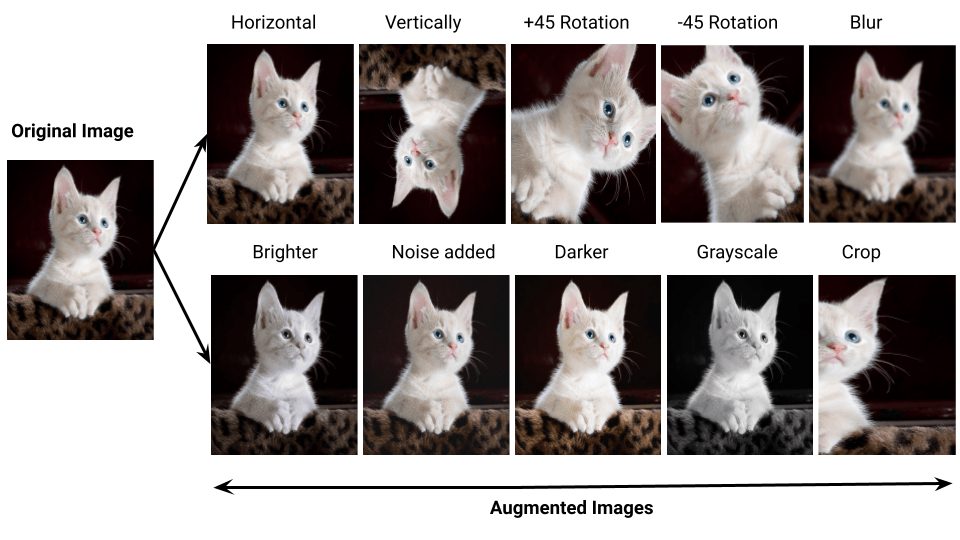
For example: Let’s suppose your image classification dataset has ten images of cats. You’ve increased the number of cats for the “cat” class by making duplicates of your cat images and turning them horizontally. Rotation, cropping, and translation are some of the additional changes available. You can also combine the changes to increase the number of unique training instances in your collection.

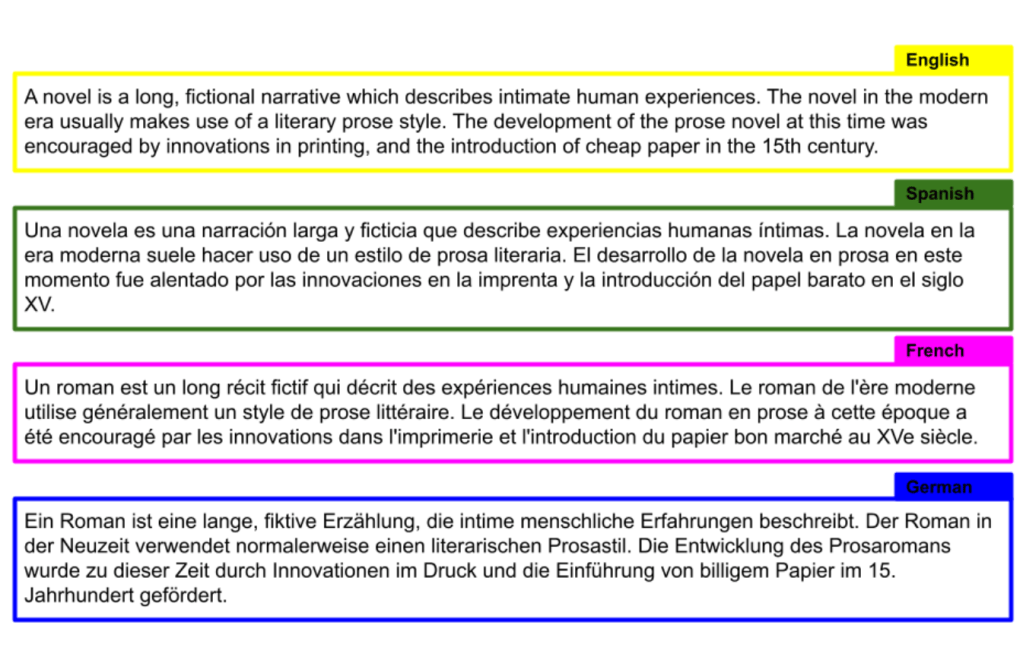
The process of changing, or “augmenting” a dataset with extra information is known as data augmentation. This additional input might range from images to text, and its integration into machine learning algorithms increases their productivity. In order to increase the amount of a real dataset, data augmentation techniques artificially create many versions of the dataset. Computer vision and natural language processing NLP models use data augmentation tactics to address data scarcity and a lack of data diversity.Data augmentation is not restricted to images and may be used on other forms of data as well. In text datasets, synonyms can be used to change nouns and verbs. Training examples in audio data can be adjusted by adding noise or adjusting the playback speed.

Data Augmentation techniques in Computer Vision:

Some of the methods for data augmentation that are frequently used are:

Noise Addition

To the existing images, add gaussian noise.

Cropping

A portion of the image is selected, cropped, and resized to its original size.

Flipping

The image is flipped horizontally and vertically. Flipping rearranges the pixels while protecting the features of the image.

Rotation

The image is rotated by a degree ranging from 0° to 360°. In the model, each rotated image will be unique.

Scaling

The image is scaled outward and inward. When scaled outward, the image size increases, whereas when scaled inward, the image size decreases.

Translation

Along the x-axis or y-axis, the image is shifted into various locations.

Brightness

The image’s brightness is changed, and the new image will be darker or lighter. This technique enables the model to identify images in a variety of lighting conditions.

Contrast

The contrast of the image is changed and the new image will be different from luminance and color aspects. The following image’s contrast is changed randomly.

Color Augmentation

The color of the image is changed by new pixel values. There is an example image that is grayscale.

Saturation

The depth or intensity of color in an image is referred to as saturation. The data augmentation process has saturated the image below.

Conclusion

TagX tried to provide an overview of several Data Augmentation approaches and demonstrated how data augmentation techniques are frequently used in combination, for example, cropping after resizing. So it is important to note that Data Augmentation is used to boost training data size and Machine learning model performance.

TagX is the industry leader in providing high-quality training datasets for machine learning and deep learning. Working with renowned clients, it is offering data annotation and data collection for computer vision and NLP-based AI model developments.

Introduction to Object Detection for Computer Vision and AI

Humans can easily detect and identify objects present in an image. The human visual system is fast and accurate and can perform complex tasks like identifying multiple objects and detecting obstacles with little conscious thought. With the availability of large amounts of data, faster GPUs, and better algorithms, we can now easily train computers to detect and classify multiple objects within an image with high accuracy.

With this kind of identification and localization, object detection can be used to count objects in a scene and determine and track their precise locations, all while accurately labeling them.

Object detection is a key field in artificial intelligence, allowing computer systems to “see” their environments by detecting objects in visual images or videos. Object detection is often called object recognition, object identification, and image detection, and these concepts are synonymous.

What is Object Detection?

Object detection is an important computer vision task used to detect instances of visual objects of certain classes (for example, humans, animals, cars, or buildings) in digital images such as photos or video frames. The goal of object detection is to develop computational models that provide the most fundamental information needed by computer vision applications: “What objects are where?”.

Object detection is not, however, akin to other common computer vision technologies such as classification (assigns a single class to an image), keypoint detection (identifies points of interest in an image), or semantic segmentation (separates the image into regions via masks).

As with every emerging tech, there are plenty of technical terms that might cause confusion or be thought of as synonyms when it comes to computer vision. There’s classification, detection, tracking, counting, and more. However, one of the biggest confusion points involves object detection and image classification. At the most basic level, the difference between classification and detection is simple:

Image Classification: Applies a prediction to an image based on an analysis of the contents.

Objection Detection: Locates objects within an image.

Why is Object Detection important?

Object detection is one of the fundamental problems of computer vision. It forms the basis of many other downstream computer vision tasks, for example, instance segmentation, image captioning, object tracking, and more. Specific object detection applications include pedestrian detection, people counting, face detection, text detection, pose detection, and number-plate recognition.

How Are Object Recognition Models Trained?

The AI model training process for Object recognition is similar to that of Image recognition. However, there’s one crucial difference: the labels for the input dataset.

Object recognition datasets bundle together an image or video with a list of objects it contains and their locations.

Before training an Object recognition model, machine learning experts need to decide which categories they would like the AI model to recognize. For example, a simple Mask detection model might classify faces in images as “with mask,” ” or “without a mask.” Each faces in the image or video in the training dataset needs to be associated with one of these labels so that the model can learn it during the training process.

Once the Object recognition model is trained, it can start analyzing real-world data. The model accepts an image as input and returns a list of predictions for the image’s label. The more data you give your model, the better your device will be at recognizing the objects you want and learning how to improve for the future. 

Object Detection Use Cases and Applications

The use cases involving object detection are very diverse; there are almost unlimited ways to make computers see like humans to automate manual tasks or create new, AI-powered products and services. It has been implemented in computer vision programs used for a range of applications, from sports production to productivity analytics. Today, object recognition is the core of most vision-based AI software and programs. Object detection plays an important role in scene understanding, which is popular in security, transportation, medical, and military use cases.

  • Object detection in Retail. Strategically placed people counting systems throughout multiple retail stores are used to gather information about how customers spend their time and customer footfall. AI-based customer analysis to detect and track customers with cameras helps to gain an understanding of customer interaction and customer experience, optimize the store layout, and make operations more efficient. A popular use case is the detection of queues to reduce waiting time in retail stores.
  • Autonomous Driving. Self-driving cars depend on object detection to recognize pedestrians, traffic signs, other vehicles, and more. For example, Tesla’s Autopilot AI heavily utilizes object detection to perceive environmental and surrounding threats such as oncoming vehicles or obstacles.
  • Video surveillance -Because state-of-the-art object detection techniques can accurately identify and track multiple instances of a given object in a scene, these techniques naturally lend themselves to automated video surveillance systems. For instance, object detection models are capable of tracking multiple people at once, in real-time, as they move through a given scene or across video frames. From retail stores to industrial factory floors, this kind of granular tracking could provide invaluable insights into security, worker performance and safety, retail foot traffic, and more. Example of object detection in video analytics for people detection in dangerous areas using CCTV cameras
  • Vehicle detection with AI in Transportation. Object recognition is used to detect and count vehicles for traffic analysis or to detect cars that stop in dangerous areas, for example, on crossroads or highways.
  • Animal detection in Agriculture. Object detection is used in agriculture for tasks such as counting, animal monitoring, and evaluation of the quality of agricultural products. Damaged produce can be detected while it is in processing using machine learning algorithms.
  • Medical feature detection in Healthcare. Object detection has allowed for many breakthroughs in the medical community. Because medical diagnostics rely heavily on the study of images, scans, and photographs, object detection involving CT and MRI scans has become extremely useful for diagnosing diseases, for example with ML algorithms for tumor detection.

Data Annotation for Object Recognition

Making object recognition becomes possible with data labeling service. Human annotators spent time and effort manually annotating each image producing a huge quantity of datasets. Machine learning algorithms need the bulk of the huge amount of training data to make train the model.

In data annotation, thousands of images are annotated using various image annotation techniques assigning a specific class to each image. Usually, most AI companies don’t spend their workforce or deploy such resources to generate the labeled training datasets.

TagX is the industry leader in providing high-quality training datasets for machine learning and deep learning. Working with renowned clients, it is offering data annotation for computer vision and NLP-based AI model developments.

Data Collection for Machine Learning and AI

In order to build intelligent applications capable of understanding, machine learning models need to digest large amounts of structured training data. Gathering sufficient training data is the first step in solving any AI-based machine learning problem.

Data collection means pooling data by scraping, capturing, and loading from multiple sources including offline and online sources. High volumes of data collection or data creation can be the hardest part of a machine learning project, especially at scale.

Furthermore, all datasets have flaws. This is why data preparation is so crucial in the machine learning process. In a word, data preparation is a series of processes for making your dataset more machine learning-friendly. In a broader sense, data preparation also entails determining the best data collection mechanism. And these techniques take up the majority of machine learning time. It can take months for the first algorithm to be constructed!

Why is Data Collection Important?

Collecting data allows you to capture a record of past events so that we can use data analysis to find recurring patterns. From those patterns, you build predictive models using machine learning algorithms that look for trends and predict future changes.

Predictive models are only as good as the data from which they are built, so good data collection practices are crucial to developing high-performing models. The data need to be error-free and contain relevant information for the task at hand. For example, a loan default model would not benefit from tiger population sizes but could benefit from gas prices over time.

How much data do you need?

This is an interesting question, but it has no definite answer because “how much” data you need depends on how many features there are in the data set. It is recommended to collect as much data as possible for good predictions. You can begin with small batches of Data and see the result of the model. The most important thing to consider while data collection is Diversity. Diverse data will help your model to cover more scenarios. So when focusing on how much data you need, you should cover all the scenarios in which the model will be used.

The Quantity of Data also depends on the complexity of your model. If it is as simple as license plate detection then you can expect predictions with small batches of data. But if are working on higher levels of Artificial intelligence like medical AI, you need to consider huge volumes of Data.

Process of Data Collection

Type of Data Requirements

Text Collection

In different languages and scenarios, text data collection supports the training of conversational interfaces. On the other hand, handwritten text data collection enables the enhancement of optical character recognition systems.  Text data can be gathered from various sources, including documents, receipts, handwritten notes, and more.

Audio Collection

Automatic speech recognition technologies must be trained with multilingual audio data of various types and associated with different scenarios, to help machines recognize the intents and nuances of human speech. Conversational AI systems including in-home assistants, chatbots, and more require large volumes of high-quality data in a wide variety of languages, dialects, demographics, speaker traits, dialogue types, environments, and scenarios for model training.

Image & Video Collection

Computer vision systems and other AI solutions that analyze visual content need to account for a wide variety of scenarios. Large volumes of high-resolution images and videos that are accurately annotated provide the training data that is necessary for the computer to recognize images with the same level of accuracy as a human. Algorithms used for computer vision and image analysis services need to be trained with carefully collected and segmented data in order to ensure unbiased results. 

How to Measure Data Quality?

The main purpose of the data collection is to gather information in a measured and systematic way to ensure accuracy and facilitate data analysis. Since all collected data are intended to provide content for analysis of the data, the information gathered must be of the highest quality to have any value.

Regardless of the way data are collected, it’s essential to maintain the neutrality, credibility, quality, and authenticity of the data.  If these requirements are not guaranteed, then we can run into a series of problems and negative results

To ensure whether the data fed into the system is high quality or not, ensure that it adheres to the following parameters:

  • Intended for specific use cases and algorithms
  • Helps make the model more intelligent
  • Speeds up decision making 
  • Represents a real-time construct

As per the mentioned aspects, here are the traits that you want your datasets to have:

  1. Uniformity: Regardless of where data pieces come from, they must be uniformly verified, depending on the model. For instance,  When coupled with audio datasets designed specifically for NLP models like chatbots and Voice Assistants, a well-seasoned annotated video dataset would not be uniform.
  1. Consistency: If data sets are to be considered high quality, they must be consistent. As a complement to any other unit, every unit of data must try to make the model’s decision-making process faster.
  1. Comprehensiveness: Plan out every aspect and characteristic of the model and ensure that the sourced datasets cover all the bases. For instance, NLP-relevant data must adhere to the semantic, syntactic, and even contextual requirements. 
  1. Relevance: If you want to achieve a specific result, make sure the data is homogenous and relevant so that AI algorithms can process it quickly. 
  1. Diversified: Diversity increases the capability of the model to have better predictions in multiple scenarios. Diversified datasets are essential if you want to train the model holistically. While this might scale up the budget, the model becomes way more intelligent and perceptive.

Choose Right Data Collection Provider

Obtaining the appropriate AI training data for your AI models can be difficult. TagX simplifies this procedure using a wide range of datasets that have been thoroughly validated for quality and bias. TagX can help you construct AI and ML models by sourcing, collecting, and generating speech, audio, image, video, text, and document data. We provide a one-stop-shop for web, internal, and external data collection and creation, with several languages supported around the globe and customizable data collecting and generation options to match any industrial domain need.

Once your data is collected, it still requires enhancement through annotation to ensure that your machine learning models extract the maximum value from the data. Data transcription and/or annotation are essential to preparing data for production-ready AI. 

Our approach to collecting custom data makes use of our experience with unique scenario setups and dynamic project management, as well as our base of annotation experts for data tagging. And with an experienced end-to-end service provider in play, you get access to the best platform, most seasoned people, and tested processes that actually help you train the model to perfection. We don’t compromise on our data, and neither should you.

Image Annotation: A Quick Guide

What is image annotation?

Image annotation is defined as the task of labeling and image with human-powered work and, in some cases, computer-assisted assistance. Labels are predetermined by a machine learning engineer and are chosen to provide information to the computer vision model.

Image annotation frequently requires manual work. A Machine Learning engineer determines the labels, referred to as “classes,” and feeds the image-specific information to the computer vision model. After training and deployment, the model will anticipate and detect those preset features in new photos that have not previously been annotated.

What are the techniques for image annotation?

The five main techniques of image annotation are:

  1. Bounding box
  2. Landmarking
  3. Masking
  4. Polygon
  5. Polyline

Bounding box

A rectangle box is drawn around the object to be identified. Bounding boxes can be used for both two- and three-dimensional images.

Landmarking

Landmark annotation labels objects within an image by placing points across the image. This type of labeling can be as simple as a single point to annotate small objects or as complex as multiple points to outline specific details. Maps, faces, bodies, and objects can all be used to annotate landmarks and so on with specific numbers by using this information ML model learns the parts of the human face.

Masking

Image masking annotation is used to shade a portion of the image classify object. Layer masking techniques can also be used to accomplish this. By using opacity we can make changes in the layers of the images. This technique can simply be used to hide unwanted content in an image, highlight key points, and improve image quality.

Polyline

The polyline technique aids in the development of machine learning models for computer vision, which are used to guide autonomous vehicles. It ensures that ML models recognize road objects, directions, turns, and oncoming traffic in order to perceive the environment for safe driving.

Polygon

Label irregularly shaped features with precise polygons drawn around any items of interest. Image polygon annotation is commonly used in automated object detection. Polygon annotation is a precise method of annotating objects by selecting a series of x and y coordinates along their edges. Polygon annotation can thus have pixel-perfect precision while remaining highly flexible and adaptable to a wide range of shapes.

The most common Image Annotation Formats

There are no specific formats for image annotation, which cannot be denied. However, the following are the most common:

COCO: This format is subdivided into keypoint detection, panoptic segmentation, image captioning, stuff segmentation, and object detection.

YOLO: Each image in the same directory receives a.txt file with the same name in this format. This.txt file contains annotations for the related picture file (height, width, object class, and other information).

Pascal VOC: It stores annotations in XML file format and provides standardized image data sets that aid in object class identification.

The Challenges of Image Annotation for Machine Learning

Human annotation vs Automated annotation:

The cost of data annotation varies according to the method used. Annotation using automated methods promising a given level of accuracy can be rapid and less expensive, but it risks annotation precision because the degree of correctness remains unclear until studied. Human annotation, on the other hand, takes time and is more expensive, but it is more accurate.

Consistently producing high-quality data:

High-quality training data produces the best results for any ML model, which is a challenge in and of itself. An ML model can only make accurate predictions if the data is of high quality and consistent. Subjective data, for example, is difficult to interpret for data labelers from various geographical locations of the world due to differences in culture, beliefs, and even prejudices – and this might result in diverse answers to repeated tasks.

Choosing the right Annotation Tool:

Producing high-quality training datasets requires the use of the appropriate data annotation tools as well as a well-trained workforce. For data labeling, several types of data are used, and knowing what factors to consider while selecting the correct annotation tool is critical.

Best Practices for Image Annotation for Machine Learning

Only high-quality datasets produce remarkable model performance, as we already know. The high performance of a model can be attributed to the precise and meticulous data labeling method discussed earlier in this text. It’s crucial to note, however, that data labelers use a few “tactics” to aid sharpen the data labeling process and producing excellent results. It’s worth noting that each dataset necessitates distinct labeling instructions for its labels. Consider a dataset to be an evolving phenomenon as you go through these procedures.

Use Tight Bounding Boxes:

The idea of employing tight boxes around items of interest is to assist the model to understand which pixels are meaningful and which are not. However, data labelers must be careful not to keep the boxes so close together that they cut off a section of the object. Simply make sure the boxes are small enough to hold the entire thing.

Tag or Label Occluded Objects:

What are occluded objects, and what do they do? Occlusion occurs when an object is partially blocked and kept out of view in an image. If this is the case, make sure the occluded object is labeled fully as if it were visible. In such instances, creating bounding boxes on the partially visible section of the object is a common mistake. It’s worth noting that the boxes may overlap if there are multiple things of interest that appear obscured (which is fine); nevertheless, as long as all objects are properly named, this shouldn’t be an issue.

Maintain Consistency Across Images:

The truth is that almost all items of interest have some degree of sensitivity when it comes to identification, which necessitates a high level of consistency during the annotation process. For example, in order to call a vehicle body part a “crack,” the extent of the damage must be consistent across all images.

Tag All Objects of Interest in Each Image:

Have you ever heard of false negatives in machine learning models? Computer vision models, you see, are designed to learn which patterns of pixels in an image correspond to an object of interest. In this regard, every appearance of an object should be labeled in all images to assist the model in accurately identifying the object.

Labeling Instructions Must Be Clearly Visible:

When labeling instructions are not set in stone, they should be explicit and shared in order to allow for future model modifications. To produce and maintain high-quality datasets, your fellow data labelers will rely on a set of unambiguous instructions piled safely somewhere.

Label Objects of Interests in Their Entirety:

When labeling images, one of the most fundamental and important best practices is to ensure that the bounding boxes encompass the entire object of interest. If only a portion of an object is labeled, a computer vision model may become perplexed as to what a full object consists of. Furthermore, ensure completeness; that is, label all objects in all categories in an image. Failure to annotate any item in an image impedes the learning of the ML model.

Final Thoughts

Since image annotation is very important for the overall success of your AI projects, you should carefully choose your service provider. TagX offers data annotation services for machine learning. Having a diverse pool of accredited professionals, access to the most advanced tools, cutting-edge technologies, and proven operational techniques, we constantly strive to improve the quality of our client’s AI algorithm predictions.  

With the perfect blend of experience and skills, our outsourced data annotation services consistently deliver structured, highest-quality, and large volumes of data streams within the desired time and budget. As one of the leading providers of data labeling services, we have worked with clients across different industry verticals such as Satellite Imagery, Insurance, Logistics, Retail, and more.

Design a site like this with WordPress.com
Get started