Artificial Intelligence Terminology: A Beginners Guide

Artificial intelligence (AI) is a broad field of computer science involving the development of computer systems that are capable of performing tasks that typically require human intelligence, such as visual perception, speech recognition, decision-making, and translation between languages. AI is used in a variety of applications, including robotics, natural language processing, expert systems, gaming, and virtual reality. AI is also used in medical diagnosis, self-driving cars, financial trading, and other areas.

The Glossary

1. Artificial Intelligence (AI): Refers to the ability of computers or machines to imitate or simulate human intelligence and behavior. 

2. Machine Learning (ML): A subset of Artificial Intelligence (AI) that enables machines to learn from experience and data without being explicitly programmed. 

3. Neural Network: A type of machine learning algorithm that is based on a network of interconnected nodes. 

4. Natural Language Processing (NLP): A subfield of Artificial Intelligence (AI) that is concerned with the understanding of human language. 

5. Deep Learning: A subset of Artificial Intelligence (AI) that uses multi-layered artificial neural networks to learn from large amounts of data. 

6. Cognitive Computing: A type of Artificial Intelligence (AI) that is based on the principles of cognitive science and aims to understand and replicate human thought processes. 

7. Robotics: The science and technology of designing, constructing, and operating robots. 

8. Autonomous Agents: Artificial Intelligence (AI) systems that are able to act independently of external instruction.

9. Algorithm: A set of instructions that a computer follows to solve a problem or perform a task. 

10. Classification: A type of supervised machine learning task in which data is divided into classes based on certain characteristics. 

11. Data Mining: The process of extracting meaningful patterns or knowledge from large datasets. 

12. Feature Engineering: The process of creating additional features from existing data. 

13. Hyperparameter: A parameter used to control the behavior of a machine learning model. 

14. Loss Function: A measure of how far the model’s prediction is from the true value. 

15. Neural Network: A kind of machine learning model composed of multiple layers of neurons. 

16. Optimization: The process of finding the parameters that lead to the best performance of a machine learning model. 

17. Training Set: A subset of the data used to train a machine learning model.

18. Feature Extraction: This term refers to the process of extracting meaningful information from a set of data, such as an image. An example of feature extraction in computer vision would be extracting edges, corners, or other characteristics from an image. 

19. Image Segmentation: This term refers to the process of dividing an image into multiple regions or segments. It is used in computer vision to identify important objects or features in an image.

20. Object Detection: This term refers to the process of identifying and locating objects in an image. It is used to detect objects of interest in an image and can be used for various tasks such as facial recognition, object tracking, and image classification. 

21. Object Recognition: This term refers to the process of recognizing an object in an image. It is used to identify objects in an image and can be used for various tasks such as facial recognition, object tracking, and image classification. 

22. Image Classification: This term refers to the process of categorizing an image into one or more predefined classes. It is used in computer vision to classify objects in an image and can be used for various tasks such as object detection, object tracking, and image recognition.

23. Corpus: A corpus is a large collection of text data used to train and develop natural language processing algorithms.

24. Tokenization: Tokenization is the process of breaking down a text into its smallest elements, such as words and punctuation. 

25. Word Embedding: Word embedding is a technique for representing text as numerical vectors (usually in a high-dimensional space) which capture the context of the words in the text. 

26. Named Entity Recognition: Named entity recognition (NER) is the process of automatically identifying and classifying entities (such as names, locations, organizations, etc.) from a given text. 

27. Part-of-Speech Tagging: Part-of-speech tagging is the process of assigning a part of speech (such as a noun, verb, adjective, etc.) to each token in a given text. 

28. Syntactic Parsing: Syntactic parsing is the process of analyzing a sentence to determine its syntactic structure, such as its constituent phrases and the relationships between them. 

29. Semantic Analysis: Semantic analysis is the process of determining the meaning of a text by analyzing the words and sentences within it.

30. Autonomous Agents: A type of AI system that can act independently and make decisions without direct input from a human operator.

31. Expert System: A computer program that uses expert knowledge and reasoning to solve complex problems. 

32. Reinforcement Learning: A type of machine learning where rewards are used to encourage desired behaviors. 

33. Deep Learning: A type of machine learning where algorithms are designed to learn from large amounts of data. 

34. Chatbot: A computer program designed to simulate conversation with human users. 

35. Dialog Flow: A natural language processing library that enables the development of conversational user interfaces. 

36. Intent Recognition: The process of recognizing user intent from spoken or written input. 

37. Entity Extraction: The process of extracting relevant data from a user’s input. 

38. Knowledge Representation: The process of representing knowledge in a structured form. 

39. Chatbot Platform: A platform that provides the infrastructure needed to develop and deploy chatbot applications. 

40. Chatbot Framework: A framework that provides the necessary tools and components to build chatbot applications.

41. Data Annotation: Data annotation is the process of labeling and providing structured information about data in order to facilitate easier understanding and interpretation. This is done by providing metadata, which may include labels, descriptions, and other contextual information. Data annotation is essential for machine learning applications and is used to train, evaluate, and improve algorithms.

42. Data Labeling: Data labeling is the process of assigning labels to data points. Labels are typically used to provide additional information about the data. For instance, labels may be used to indicate the class or category of a data point, the person or object in an image, the sentiment of a text, or the intent of a voice command. Data labeling is a critical step in the development of machine learning models, as it helps the model learn to recognize patterns in the data.

43. Data Type: A data type is a classification that specifies which type of value is stored in a variable or a database field.

44. Validation: Validation is the process of ensuring that data is valid and meets certain criteria before it is accepted.

45. Categorization: The process of assigning labels or categories to data points based on the characteristics of the data.

46. Ground Truth: A set of data points that have already been labeled and can be used as a reference to evaluate the accuracy of a machine learning model.

47. Test Data: Data points used to test a machine learning model.

48. Quality Check: In data annotation, quality checking is an important step to ensure accuracy and consistency in the data. It begins with reviewing the data annotation guidelines to ensure that the annotators are following the same rules. Additionally, a sample of the annotated data can be reviewed to ensure that the data is accurately labeled and that any mistakes are corrected.

How Training Data is prepared for Computer Vision

As humans, we generally spend our lives observing our surroundings using optic nerves, retinas, and the visual cortex. We gain context to differentiate between objects, gauge their distance from us and other objects, calculate their movement speed, and spot mistakes. Similarly, computer vision enables AI-powered machines to train themselves to carry out these very processes. These machines use a combination of cameras, algorithms, and data to do so. Today, computer vision is one of the hottest subfields of artificial intelligence and machine learning, given its wide variety of applications and tremendous potential. Its goal is to replicate the powerful capacities of human vision.

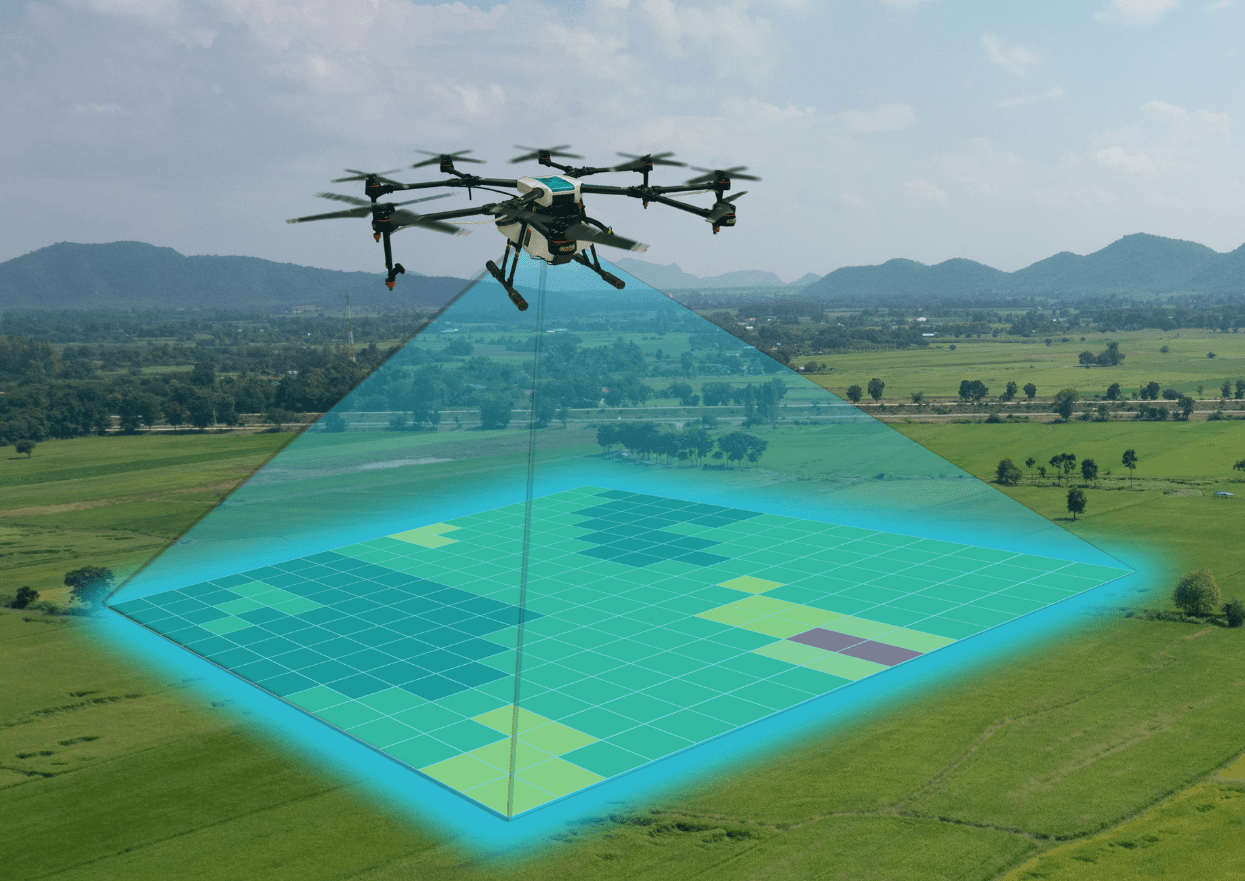
Computer vision needs a large database to be truly effective. This is because these solutions analyze information repeatedly until they gain every possible insight required for their assigned task. For instance, a computer trained to recognize healthy crops would need to ‘see’ thousands of visual reference inputs of crops, farmland, animals, and other related objects. Only then would it effectively recognize different types of healthy crops, differentiate them from unhealthy crops, gauge farmland quality, detect pests and other animals among the crops, and so on.

How Does Computer Vision Work? 

Computer Vision primarily relies on pattern recognition techniques to self-train and understand visual data. The wide availability of data and the willingness of companies to share them has made it possible for deep learning experts to use this data to make the process more accurate and fast. 

Generally, computer vision works in three basic steps: 

1: Acquiring the image Images, even large sets, can be acquired in real-time through video, photos, or 3D technology for analysis.

2: Processing and annotating the image The models are trained by first being fed thousands of labeled or pre-identified images. The collected data is cleaned according to the use case and the labeling is performed.

3: Understanding the image The final step is the interpretative step, where an object is identified or classified. 

What is training data?

Training data is a set of samples such as videos and images with assigned labels or tags. It is used to train a computer vision algorithm or model to perform the desired function or make correct predictions. Training data goes by several other names, including learning set, training set, or training data set. It is used to train the machine learning model to get desired output. The model also scrutinizes the dataset repetitively to understand its traits and fine-tune itself for optimal performance.

In the same way, human beings learn better from examples; computers also need them to begin noticing patterns and relationships in the data. But unlike human beings, computers require plenty of examples as they don’t think as humans do. In fact, they don’t see objects or people in the images. They need plenty of work and huge datasets for training a model to recognize different sentiments from videos. Thus a huge amount of data needs to be collected for training

Types of training data

Images, videos, and sensor data are commonly used to train machine learning models for computer vision. The types of training data used include:

  • 2D images and videos: These datasets can be sourced from scanners, cameras, or other imaging technologies.
  • 3D images and videos: They’re also sourced from scanners, cameras, or other imaging technologies.
  • Sensor data: It’s captured using remote technology such as satellites.

Training Data Preparation

If you plan to use a deep learning model for classification or object detection, you will likely need to collect data to train your model. Many deep learning models are available pre-trained to detect or classify a multitude of common daily objects such as cars, people, bicycles, etc. If your scenario focuses on one of these common objects, then you may be able to simply download and deploy a pre-trained model for your scenario. Otherwise, you will need to collect and label data to train your model.

Data Collection

Data collection is the process of gathering relevant data and arranging it to create data sets for machine learning. The type of data (video sequences, frames, photos, patterns, etc.) depends on the problem that the AI model aims to solve. In computer vision, robotics, and video analytics, AI models are trained on image datasets with the goal of making predictions related to image classification, object detection, image segmentation, and more. Therefore, the image or video data sets should contain meaningful information that can be used to train the model for recognizing various patterns and making recommendations based on the same.

The characteristic situations need to be captured to provide the ground truth for the ML model to learn from. For example, in industrial automation, image data needs to collected that contains specific part defects. Therefore a camera needs to gather footage from assembly lines to provide video or photo images that can be used to create a dataset. 

The data collection process is crucial for developing an efficient ML model. The quality and quantity of your dataset directly affect the AI model’s decision-making process. And these two factors determine the robustness, accuracy, and performance of the AI algorithms. As a result, collecting and structuring data is often more time-consuming than training the model on the data.

Data annotation

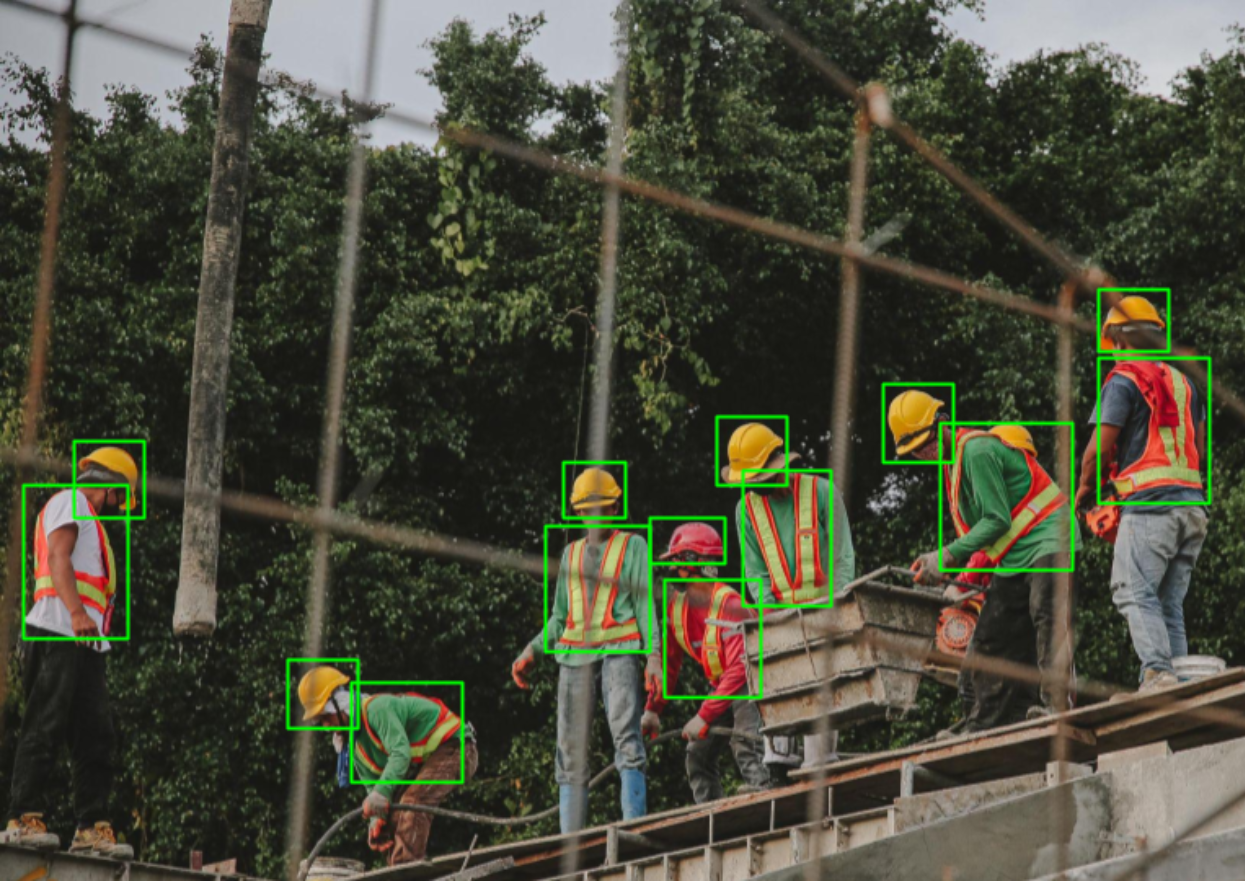
The data collection is followed by Data annotation, the process of manually providing information about the ground truth within the data. In simple words, image annotation is the process of visually indicating the location and type of objects that the AI model should learn to detect. For example, to train a deep learning model for detecting cats, image annotation would require humans to draw boxes around all the cats present in every image or video frame. In this case, the bounding boxes would be linked to the label named “cat.” The trained model will be able to detect the presence of cats in new images.

Once you have a good set of images collected you will need to label the images. Several tools exist to facilitate the labeling process. These include open-source tools such as labelImg and commercial tools such as Azure Machine Learning, which support image classification and object detection labeling. For large labeling projects, it is recommended to select a labeling tool that supports workflow management and quality reviews. These features are essential to ensure quality and efficiency in the labeling process. Labeling is a very tedious job. So companies prefer to outsource this to third-party labeling vendors like Tagx who take care of this whole labeling process.

What are the labels?

Labels are what the human-in-the-loop uses to identify and call out features that are present in the data. It’s critical to choose informative, discriminating, and independent features to label if you want to develop high-performing algorithms in pattern recognition, classification, and regression. Accurately labeled data can provide ground truth for testing and iterating your models. 

Label Types of Computer Vision Data Annotation

Currently, most computer vision applications use a form of supervised machine learning, which means we need to label datasets to train the applications.

Choosing the correct label type for an application depends on what the computer vision model needs to learn. Below are four common types of computer vision models and annotations.

  1. 2D Bounding Boxes

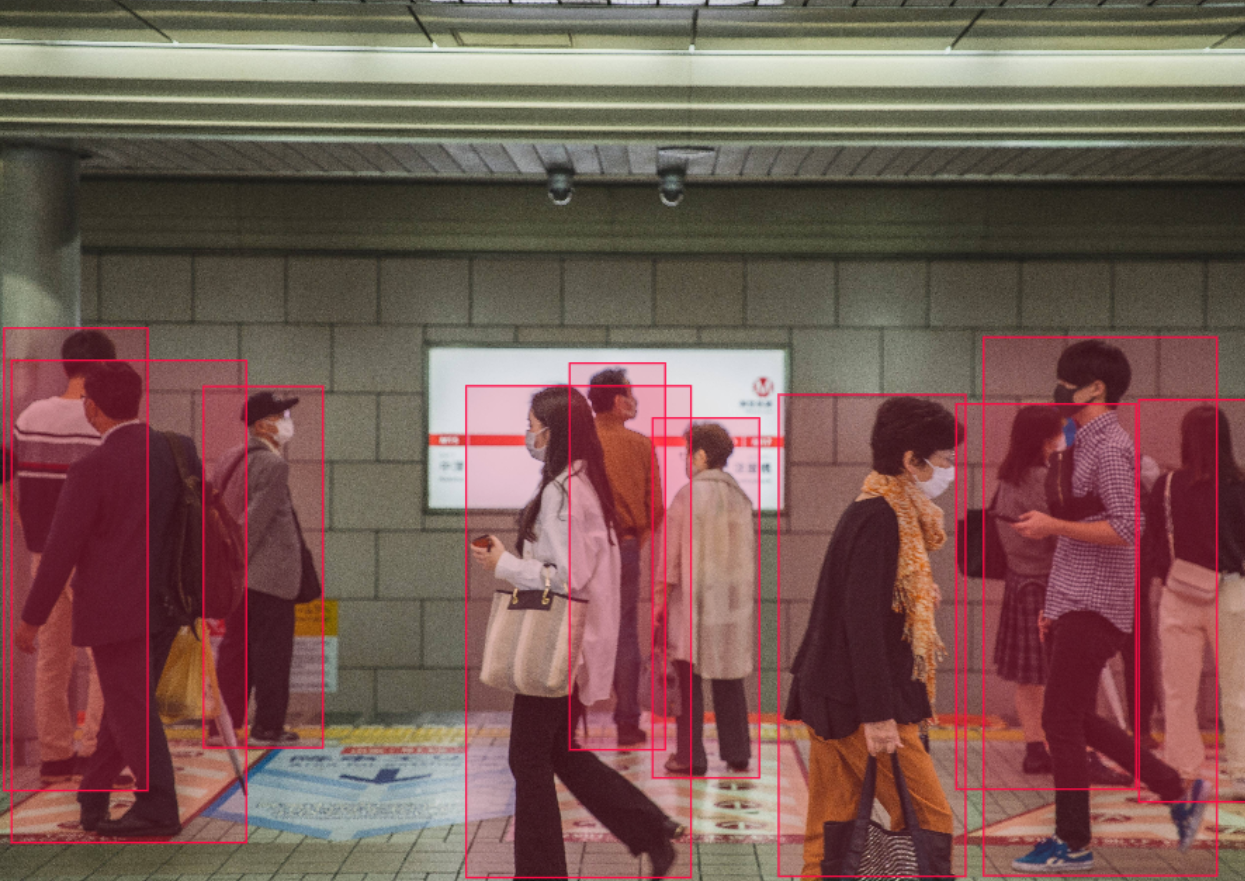
Bounding boxes are one of the most commonly relied-on techniques for computer vision image annotation. It’s simple all the annotator has to do is draw a box around the target object. For a self-driving car, target objects would include pedestrians, road signs, and other vehicles on the road. Data scientists choose bounding boxes when the shape of target objects is less of an issue. One popular use case is recognizing groceries in an automated checkout process.

  1. 3D Bounding Boxes 

Not all bounding boxes are 2D. Their 3D cousins are called cuboids. Cuboids create object representations with depth, allowing computer vision algorithms to perceive volume and orientation. For annotators, drawing cuboids means placing and connecting anchor points. Depth perception is critical for locomotive robots. Understanding where to place items on shelves involves an understanding of more than just height and width.

  1. Landmark Annotation

Landmark annotation is also called dot/point annotation. Both names fit the process: placing dots or landmarks across an image, and plotting key characteristics such as facial features and expressions. Larger dots are sometimes used to indicate more important areas.

Skeletal or pose-point landmark annotations reveal body position and alignment. These are commonly used in sports analytics. For example, skeletal annotations can show where a basketball player’s fingers, wrist, and elbow are in relation to each other during a slam dunk.

  1. Polygons

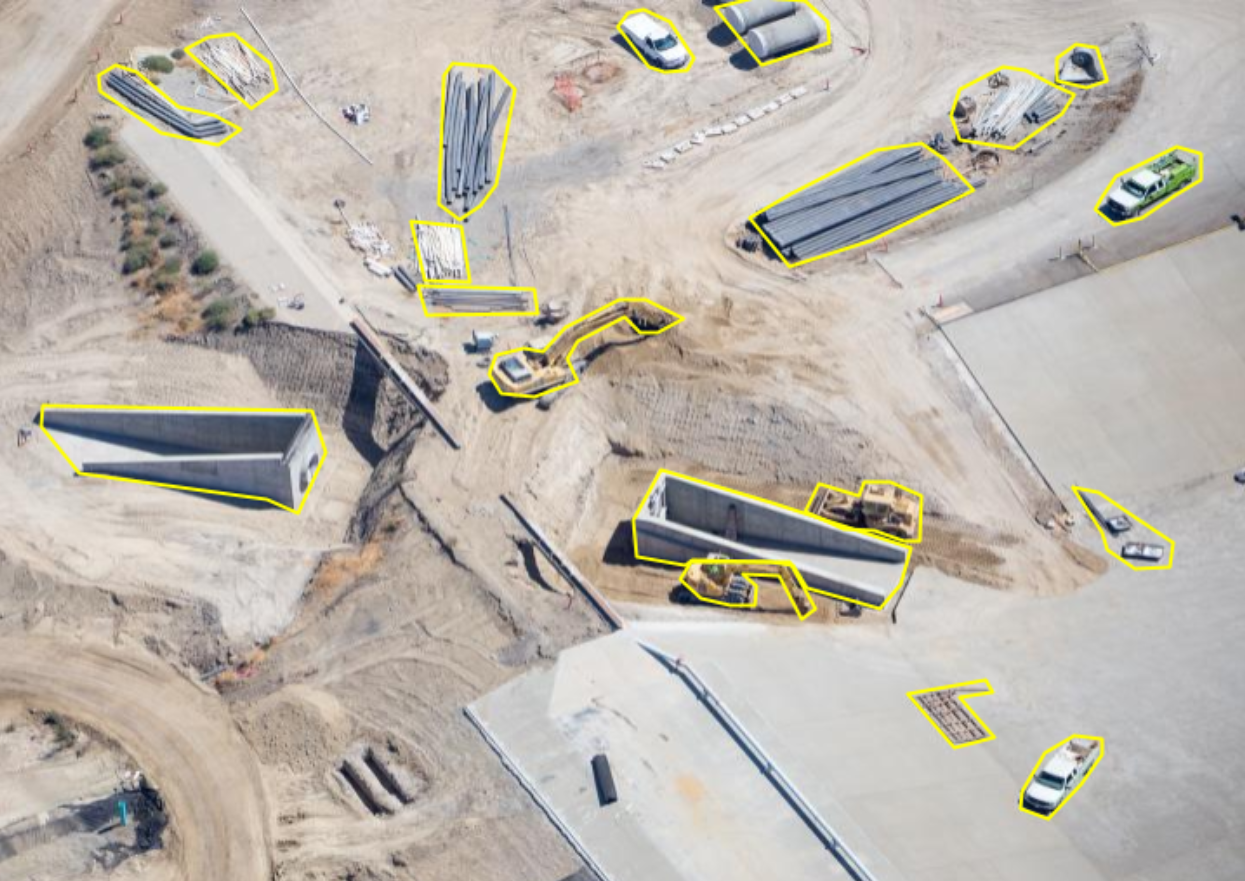
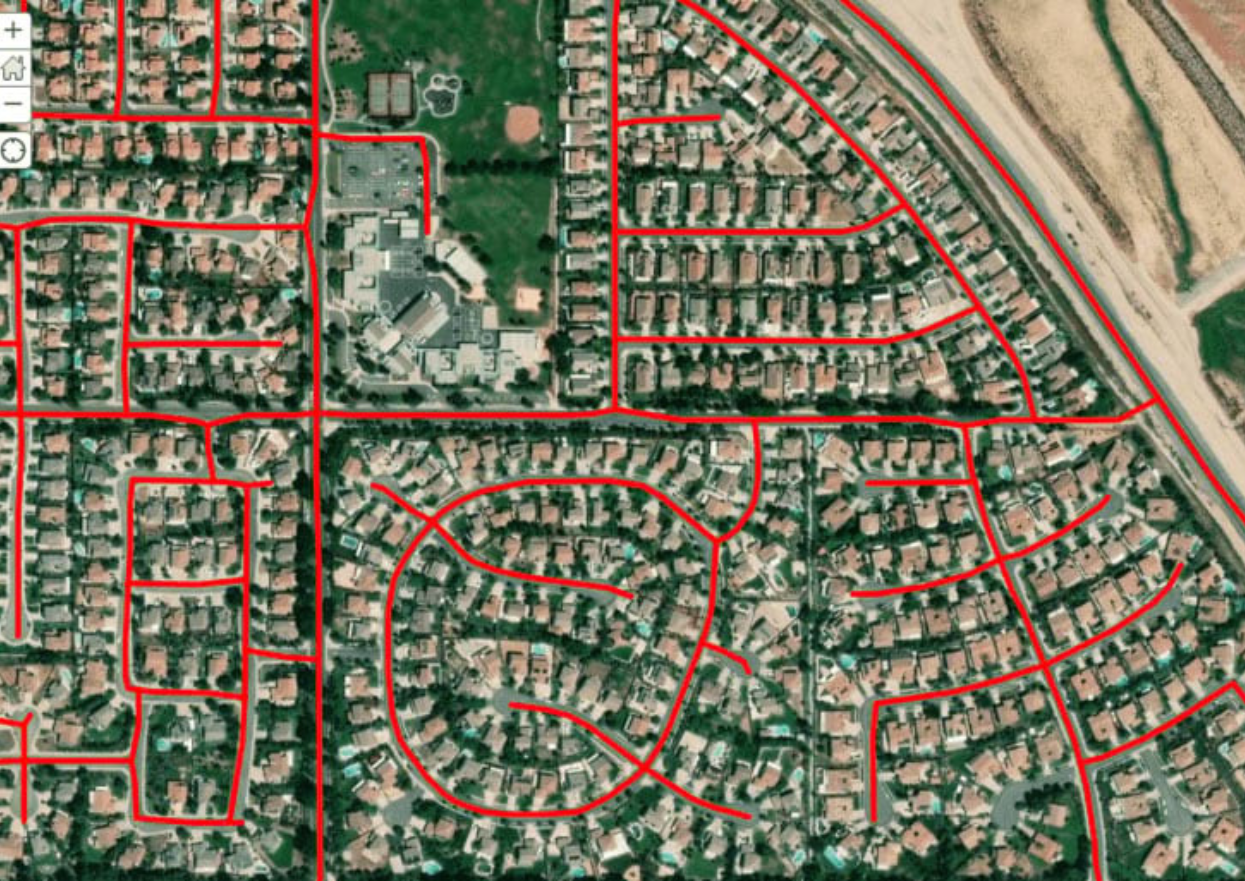
Polygon segmentation introduces a higher level of precision for image annotations. Annotators mark the edges of objects by placing dots and drawing lines. Hugging the outline of an object cuts out the noise that other image annotation techniques would include. Shearing away unnecessary pixels becomes critical when it comes to irregularly shaped objects, such as bodies of water or areas of land captured by autonomous satellites or drones.

Final thoughts

Training data is the lifeblood of your computer vision algorithm or model. Without relevant, labeled data, everything is rendered useless. The quality of the training data is also an important factor that you should consider when training your model. The work of the training data is not just to train the algorithms to perform predictive functions as accurately as possible. It is also used to retrain or update your model, even after deployment. This is because real-world situations change often. So your original training dataset needs to be continually updated.

If you need any help, contact us to speak with an expert at TagX. From Data Collection, and data curation to quality data labeling, we have helped many clients to build and deploy AI solutions in their businesses.

Intelligent Document Processing Workflow and Use cases

Artificial Intelligence has stepped up to the front line of real-world problem solving and business transformation with Intelligent Document Processing (IDP) becoming a vital component in the global effort to drive intelligent automation into corporations worldwide.

IDP solutions read the unstructured, raw data in complicated documents using a variety of AI-related technologies, including RPA bots, optical character recognition, natural language processing, computer vision, and machine learning. IDP then gathers the crucial data and transforms it into formats that are structured, pertinent, and usable for crucial processes including government, banking, insurance, orders, invoicing, and loan processing forms. IDP gathers the required data and forwards it to the appropriate department or place further along the line to finish the process.

Organizations can digitize and automate unstructured data coming from diverse documentation sources thanks to intelligent document processing (IDP). These consist of scanned copies of documents, PDFs, word-processing documents, online forms, and more. IDP mimics human abilities in document identification, contextualization, and processing by utilizing workflow automation, natural language processing, and machine learning technologies.

What exactly is Intelligent Document Processing?

A relatively new category of automation called “intelligent document processing” uses artificial intelligence, machine learning, and natural language processing to help businesses handle their papers more effectively. Because it can read and comprehend the context of the information it extracts from documents, it marks a radical leap from earlier legacy automation systems and enables businesses to automate even more of the document processing lifecycle. 

Data extraction from complicated, unstructured documents is automated by IDP, which powers both back office and front office business operations. Business systems can use data retrieved by IDP to fuel automation and other efficiencies, including the automated classification of documents. Enterprises must manually classify and extract data from these papers in the absence of IDP. They have a quick, affordable, and scalable option with IDP.

How does intelligent document processing work?

There are several steps a document goes through when processed with IDP software. Typically, these are:

  • Data collection. Intelligent document processing starts with ingesting data from various sources, both digital and paper-based. For taking in digitized data, most IDP solutions feature built-in integrations or allow developing custom interfaces to enterprise software. When it comes to collecting paper-based or handwritten documents, companies either relies on its internal data or outsource the collection requirement to third party vendor like TagX who can handle the whole collection process for a specific IDP usecase.
  • Pre-processing.Intelligent document processing (IDP) can only produce trustworthy results if the data it uses is well-structured, accurate, and clean. Because of this, intelligent document recognition software cleans and prepares the data it receives before actually extracting it. For that, a variety of techniques are employed, ranging from deskewing and noise reduction to cropping and binarization, and beyond. During this step, IDP aims to integrate, validate, fix/impute errors, split images, organise, and improve photos.
  • Classification & Extraction. Enterprise documentation typically has multiple pages and includes a variety of data. Additionally, the success of additional analysis depends on whether the various data types present in a document are processed according to the correct workflow. During the data extraction stage, knowledge from the documents is extracted. Machine learning models extract specific data from the pre-processed and categorised material, such as dates, names, or numbers. Large volumes of subject-matter data are used to train the machine learning models that run IDP software. Each document’s pertinent entities are retrieved and tagged for IDP model training.
  • Validation and Analytics. The retrieved data is available to ML models at the post-processing phase. To guarantee the accuracy of the processing results, the extracted data is subjected to a number of automated or manual validation tests. The collected data is now put together into a finished output file, which is commonly in JSON or XML format. A business procedure or a data repository receives the file. IDP can anticipate the optimum course of action. IDP can also turn data into insights, automation, recommendations, and forecasts by utilising its AI capabilities.

Top Use Cases of Intelligent Document Processing

Invoice Processing

With remote work, processing bills has never been simpler for the account payable and human resources staff. Invoice collection, routing, and posting via email and paper processes results in high costs, poor visibility, and compliance and fraud risks. Also, the HR and account payable staff shares the lion’s part of their day on manual repetitive chores like data input and chasing information that leads to delay and inaccurate payment. However, intelligent document processing makes sure that all information is gathered is in an organised fashion, and data extraction in workflow only concentrates on pertinent data. Intelligent document processing assists the account payable team in automating error reconciliation, data inputs, and the decision-making process from receipt to payment. IDP ensures organizations can limit errors and reduce manual intervention.

Claims Processing

Insurance companies frequently suffer with data processing because of unstructured data and varying formats, including PDF, email, scanned, and physical documents. These companies mainly rely on a paper-based system. Additionally, manual intervention causes convoluted workflows, sluggish processing, high expenses, increased mistake, and fraud. Both insurers and clients must wait a long time during this entire manual process. However, intelligent document processing is a cutting-edge method that enables insurers to swiftly examine the large amount of structured and unstructured data and spot fraudulent activity. Insurance companies can quickly identify, validate, and integrate the data automatically and offer quicker claims settlement by utilising AI technologies like OCR and NLP.

Fraud Detection

Document fraud instances are increasing as a result of the processing of a lot of data. Additionally, the manual inspection of fraudulent documents and invoices is a time-consuming traditional procedure. Any fraudulent financial activity involving paper records may result in diminished client confidence and higher operating expenses. Therefore, implementing automated workflows for transaction validation and verification is essential to preventing fraudulent transactions. Furthermore, intelligent document processing has the ability to automatically identify and annotate questionable transactions for the fraud team. Furthermore, IDP frees the operational team from manual labour while reducing fraud losses.

Logistics

Every step of the logistics process, including shipping, transportation, warehousing, and doorstep consumer delivery, involves thousands of hands exchanging data. For manual processing by outside parties, this information must be authenticated, verified, cross-checked, and sometimes even re-entered. Companies utilize IDP to send invoices, labels, and agreements to vendors, contractors, and transportation teams at the supply chain level. IDP enables to read unstructured data from many sources, which eliminates the need for manual processing and saves countless hours of work. It also helps to handle the issue of document variability. IDP keeps up with enterprises as they grow and scale to handle larger client user bases due to intelligent automation of various document processing workflow components.

Medical records

It is crucial to keep patient records in the healthcare sector. In a particular situation, quick and easy access to information may be essential; as a result, it is crucial to digitize all patient-related data. IDP can now be used to effectively manage a patient’s whole medical history and file. Many hospitals continue to save patient information in manual files and disorganised paper formats that are prone to being lost. So it becomes a challenge for a doctor to sort through all the papers in the files to find what they’re looking for when they need to access a specific file. All medical records and diagnostic data may be kept in one location using an IDP, and only pertinent data can be accessed when needed.

The technologies behind intelligent document processing

When it comes to processing documents in a new, smart way, it all heavily relies on three cornerstones: Artificial intelligence, optical character recognition, and robotic process automation. Let’s get into a bit more detail on each technology.

Optical Character Recognition

OCR is a narrowly focused technology that can recognize handwritten, typed, or printed text within scanned images and convert it into a machine-readable format. As a standalone solution, OCR simply “sees” what’s there on a document and pulls out the textual part of the image, but it doesn’t understand the meanings or context. That’s why the “brain” is needed. Thus OCR is trained using AI and deep learning algorithms to increase its accuracy.

Artificial intelligence

Artificial intelligence deals with designing, training, and deploying models that mimic human intelligence. AI/ML is used to train the system to identify, classify, and extract relevant information using tags, which can be linked to a position or visual elements or a key phrase. AI is a field of knowledge that focuses on creating algorithms and training models on data so that they can process new data inputs and make decisions by themselves. So, the models learn to “understand” imaging information and delve into the meaning of textual data the way humans do.IDP heavily relies on such ML-driven technologies as

  • Computer Vision (CV) utilizes deep neural networks for image recognition. It identifies patterns in visual data say, document scans, and classifies them accordingly. Computer vision uses AI to enable automatic extraction, analysis, and understanding of useful information from digital images. Only a few solutions leverage computer vision technology to recognize images/pictures within documents. 
  • Natural Language Processing (NLP) finds language elements such as separate sentences, words, symbols, etc., in documents, interprets them, and performs a linguistic-based document summary. With the help of NLP, IDP solutions can analyze the running text in documents, understand the context, consolidate the extracted data, and map the extracted fields to a defined taxonomy. It can help in recognizing the sentiments from the text (e.g., from emails and other unstructured data) and in classifying documents into different categories. It also assists in creating summaries of large documents or data from charts using NLG by capturing key data points. 

Robotic Process Automation

RPA is designed to perform repetitive business tasks through the use of software bots. The technology has proved to be effective in working with data presented in a structured format. RPA software can be configured to capture information from certain sources, process and manipulate data, and communicate with other systems. Most importantly, since RPA bots are usually rule-based, if there are any changes in the structure of the input, they won’t be able to perform a task.RPA bots can extend the intelligent process automation pipeline, executing such tasks as processing transactions, manipulating the extracted data, triggering responses, or communicating with other enterprises IT systems.

Conclusion

It is needless to say; the number of such documents will keep on piling up and making it impossible for many organizations to manage effectively. Organizations should be able to make use of this data for the benefit of businesses, but when it becomes so voluminous in physical documents gleaning insights from it will become even more tedious. With the use of Intelligent Document Processing, the time-consuming, monotonous, and tedious process is made simpler without any risks of manual errors. This way, data becomes more powerful even in varying formats and also helps organizations to ensure enhanced productivity and operational efficiency.

The implementation of IDP is not as easy. The big challenge is a lack of training data. For an artificial intelligence model to operate effectively, it must be trained on large amounts of data. If you don’t have enough of it, you could still tap into document processing automation by relying on third-party vendors like Tagx who can help you with the collection, classification, Tagging, and data extraction. The more processes you automate, the more powerful AI will become, enabling it to find ways to automate even more.

Implementation of Artificial Intelligence in Gaming

What is AI in Gaming?

AI in gaming is the use of artificial intelligence to create game characters and environments that are capable of responding to a player’s actions in a realistic and dynamic way. AI can be used to create believable characters that can interact with the player, create dynamic levels, and generate new gaming experiences. AI can even be used to create challenging opponents that require the player to think strategically.

AI Development in Gaming

AI development in gaming refers to the use of artificial intelligence (AI) to create non-player characters (NPCs) that can interact with players in a game environment. AI development is used in modern video games to create immersive and realistic gaming experiences. AI development has been used to create NPCs that can respond to players in various ways, such as offering advice and guidance. AI can also be used to create NPCs that can challenge players and offer a more realistic gaming experience. Additionally, AI development is used to create more complex and lifelike game environments, such as virtual worlds and cities. AI can also be used to create more intelligent game enemies that can react to players’ actions and strategies. AI development is also being used to create autonomous game characters that can act on their own or interact with players.

Features in AI Gaming include: 

1. Dynamic Environments: AI games can have dynamic environments that change in real-time. This allows for greater complexity and unpredictability compared to games that have a fixed environment.

 2. AI Opponents: AI opponents can be programmed to use a range of strategies to challenge the player and make the game more interesting. 

3. Adaptive Learning: AI games can learn from their mistakes and adjust their strategies over time to become more challenging. 

4. Procedural Generation: AI games can generate levels and opponents in real-time, making the game more unpredictable and providing an ever-changing challenge. 

5. Natural Language Processing: AI games can use natural language processing to interpret player commands and understand the player’s intent. 

6. Real-Time Decision Making: AI games can make decisions in real-time, allowing the game to be more responsive to the player’s actions. 

7. Realistic Physics and Animation: AI games can use realistic physics and animation to create a believable game world.

8. Audio Recognition: AI games can use audio recognition to interpret player commands and understand the player’s intent.

How is AI used in Video Games?

Ai is used in video games to bring realism and challenge to the gaming experience. This can include non-player characters (NPCs) that react to the player’s actions, enemy units that use strategic decision-making, environment-specific behaviors, and more. AI can also be used to create and manage dynamic in-game events and levels, as well as to generate opponents that can adapt to the player’s skill level.

Application of AI in Games:

1. Autonomous Opponents: Autonomous opponents are computer-controlled characters in a video game. AI can be used to create autonomous opponents that can adapt to the player’s behavior and provide a challenging gaming experience. 

2. Pathfinding: Pathfinding is a cornerstone of game AI and is used to help the characters and enemies move around the game environment correctly. AI techniques such as A* search and Dijkstra’s algorithm are used to calculate the best possible routes for characters to take.

3. Natural Language Processing: Natural language processing (NLP) is a form of artificial intelligence that allows machines to understand and interpret human language. AI can be used to create virtual characters in games that are capable of understanding and responding to the player’s input in natural language.

4. Decision-Making and Planning: AI can be used to create characters that can make decisions and plan actions based on the current game state. AI techniques such as Monte Carlo Tree Search and Reinforcement Learning are used to help characters make decisions in the most optimal way.

5. Procedural Content Generation: Procedural content generation is a form of AI that can be used to generate content in games such as levels, items

Advantages of AI in Gaming: 

1. Improved User Experiences: Artificial Intelligence technology can be used to enhance the user experience in gaming by providing players with more engaging and immersive gameplay. AI can be used to generate more interesting scenarios, create more challenging puzzles, and provide better feedback to the player.

 2. Increased Realism: AI can be used to create more realistic environments, characters, and stories. This can lead to a more believable and engaging gaming experience. 

3. Improved Performance: AI can be used to optimize the performance of a game. AI can be used to analyze the user’s gaming experience and provide feedback on how to improve performance. 

4. Greater Variety: AI can be used to generate more diverse and interesting content. This can create more dynamic and exciting gaming experiences. 

5. Improved Accessibility: AI can be used to create more accessible gaming experiences. AI can be used to create more intuitive and user-friendly interfaces, making gaming more accessible to a wider range of players.

Top 5 AI Innovations in the Gaming Industry:

1. Autonomous AI Agents: Autonomous AI agents are programmed to act independently in a virtual environment. These agents are able to interact with a game’s environment and other characters, as well as make decisions about when and how to act. 

2. Natural Language Processing: Natural language processing (NLP) is the ability of AI to understand and interpret human language. This technology is used in many video games to help players communicate with each other and the game itself. 

3. Adaptive Difficulty: Adaptive difficulty is a feature that allows the game to adjust its difficulty level based on the player’s performance. This helps keep the game interesting, as the challenge can be adjusted to match each player’s skill level. 

4. Automated Level Design: Automated level design is a technology that uses AI to create levels for video games. This allows developers to quickly and easily generate a variety of levels for their games. 

5. AI-Driven NPCs: Non-player characters (NPCs) are characters in a game that are controlled by the AI. This technology allows NPCs to act realistically and react to the player’s actions.

Conclusion:

AI in gaming has come a long way since its early days, and it will continue to evolve in the future. AI has changed the way games are designed, developed, and played, and has opened up new possibilities for gamers. It can help create immersive experiences, create smarter opponents, and create more realistic and varied gaming experiences. It will continue to be used to explore new ways of playing games, providing gamers with ever more exciting and engaging gaming experiences.
AI is being used in various aspects of gaming, from game design and development to helping players with strategy and tactics.AI can help game developers create games with more complex environments and have more intelligent opponents. It can also help players find better strategies and tactics to win games. AI can also be used to create games with more sophisticated storylines and narrative arcs. In the future, AI can be used to create virtual worlds with more diverse and complex populations, allowing for more immersive and dynamic gaming experiences.

MLOps and ML Data pipeline: Key Takeaways

If you have ever worked with a Machine Learning (ML) model in a production environment, you might have heard of MLOps. The term explains the concept of optimizing the ML lifecycle by bridging the gap between design, model development, and operation processes.

As more teams attempt to create AI solutions for actual use cases, MLOps is now more than just a theoretical idea; it is a hotly debated area of machine learning that is becoming increasingly important. If done correctly, it speeds up the development and deployment of ML solutions for teams all over the world.

MLOps is frequently referred to as DevOps for Machine Learning while reading about the word. Because of this, going back to its roots and drawing comparisons between it and DevOps is the best way to comprehend the MLOps concept.

MLOps vs DevOps

DevOps is an iterative approach to shipping software applications into production. MLOps borrows the same principles to take machine learning models to production. Either Devops or MLOps, the eventual objective is higher quality and control of software applications/ML models.

What is MLOps?

Machine Learning Operations is referred to as MLOps. Therefore, the function of MLOps is to act as a communication link between the operations team overseeing the project and the data scientists who deal with machine learning data.

For the development and improvement of machine learning and AI solutions, MLOps is a helpful methodology. By utilizing continuous integration and deployment (CI/CD) procedures with appropriate monitoring, validation, and governance of ML models, data scientists and machine learning engineers can work together and accelerate the speed of model creation and production by using an MLOps approach.

The key MLOps principles are:

  • Versioning – keeping track of the versions of data, ML model, code around it, etc.;
  • Testing – testing and validating an ML model to check whether it is working in the development environment;
  • Automation – trying to automate as many ML lifecycle processes as possible;
  • Reproducibility – we want to get identical results given the same input;
  • Deployment – deploying the model into production;
  • Monitoring – checking the model’s performance on real-world data.

What are the benefits of MLOps?

The primary benefits of MLOps are efficiency, scalability, and risk reduction. 

Efficiency: MLOps allows data teams to achieve faster model development, deliver higher quality ML models, and faster deployment and production. 

Scalability: Thousands of models may be supervised, controlled, managed, and monitored for continuous integration, continuous delivery, and continuous deployment thanks to MLOps’ extensive scalability and management capabilities. MLOps, in particular, makes ML pipelines reproducible, enables closer coordination between data teams, lessens friction between DevOps and IT, and speeds up release velocity.

Risk reduction: Machine learning models often need regulatory scrutiny and drift-check, and MLOps enables greater transparency and faster response to such requests and ensures greater compliance with an organization’s or industry’s policies.

Data pipeline for ML operations

One significant difference between DevOps and MLOps is that ML services require data–and lots of it. In order to be suitable for ML model training, most data has to be cleaned, verified, and tagged. Much of this can be done in a stepwise fashion, as a data pipeline, where unclean data enters the pipeline, and then the training, validating, and testing data exits the pipeline.

The data pipeline of a project involves several key steps:

  • Data collection: 

Whether you source your data in-house, open-source, or from a third-party data provider, it’s important to set up a process where you can continuously collect data, as needed. You’ll not only need a lot of data at the start of the ML development lifecycle but also for retraining purposes at the end. Having a consistent, reliable source for new data is paramount to success.

  • Data cleansing: 

This involves removing any unwanted or irrelevant data or cleaning up messy data. In some cases, it may be as simple as converting data into the format you need, such as a CSV file. Some steps of this may be automatable.

  • Data annotation: 

Labeling your data is one of the most time-consuming, difficult, but crucial, phases of the ML lifecycle. Companies that try to take this step internally frequently struggle with resources and take too long. Other approaches give a wider range of annotators the chance to participate, such as hiring freelancers or crowdsourcing. Many businesses decide to collaborate with external data providers, who can give access to vast annotator communities, platforms, and tools for any annotating need. Depending on your use case and your need for quality, some steps in the annotation process may potentially be automated.

After the data has been cleaned, validated, and tagged, you can begin training the ML model to categorize, predict, or infer whatever it is that you want the model to do. Training, validation, and hold-out testing datasets are created out of the tagged data. The model architecture and hyperparameters are optimized many times using the training and validation data. Once that is finished, you test the algorithm on the hold-out test data one last time to check if it performs enough on the fresh data you need to release.

Setting up a continuous data pipeline is an important step in MLOps implementation. It’s helpful to think of it as a loop, because you’ll often realize you need additional data later in the build process, and you don’t want to have to start from scratch to find it and prepare it.

Conclusion

MLOps help ensure that deployed models are well maintained, performing as expected, and not having any adverse effects on the business. This role is crucial in protecting the business from risks due to models that drift over time, or that are deployed but unmaintained or unmonitored.

TagX is involved in delivering Data for each step of ML operations. At TagX, we provide high-quality annotated training data to power the world’s most innovative machine learning and business solutions. We can help your organization with data collection, Data cleaning,  data annotation, and synthetic data to train your Machine learning models.

How NLP can increase Financial Data Efficiency

The finance sector is driven to make a significant investment in natural language processing (NLP) in order to boost financial performance by the quickening pace of digitization. NLP has become an essential and strategic instrument for financial research as a result of the massive growth in textual data that has recently become widely accessible. Research reports, financial statistics, corporate filings, and other pertinent data gleaned from print media and other sources are all subject to the extensive time and resource analysis by analysts. NLP can analyze this data, providing chances to find special and valuable insights.

NLP & AI for Finance 

The automation now includes a new level of support for workers provided by AI. If AI has access to all the required data, it can deliver in-depth data analysis to help finance teams with difficult decisions. In some situations, it might even be able to recommend the best course of action for the financial staff to adopt and carry out.

NLP is a branch of AI that uses machine learning techniques to enable computer systems to read and comprehend human language. The most common projects to improve human-machine interactions that use NLP are a chatbot for customer support or a virtual assistant.

Finance is increasingly being driven by data. The majority of the crucial information can be found in written form in documents, texts, websites, forums, and other places. Finance professionals spend a lot of time reading analyst reports, financial print media, and other sources of information. By using methods like NLP and ML to create the financial infrastructure, data-driven informed decisions might be made in real time.

NLP in finance – Use cases and applications

Loan risk assessments, auditing and accounting, sentiment analysis, and portfolio selection are all examples of finance applications for NLP. Here are some examples of how NLP is changing the financial services industry:

  1. Chatbots

Chatbots are artificially intelligent software applications that mimic human speech when interacting with users. Chatbots can respond to single words or carry out complete conversations, depending on their level of intelligence, making it difficult to tell them apart from actual humans. Chatbots can comprehend the nuances of the English language, determine the true meaning of a text, and learn from interactions with people thanks to natural language processing and machine learning. They consequently improve with time. The approach employed by chatbots is two-step. They begin by analyzing the query that has been posed and gathering any data from the user that may be necessary to provide a response. They then give a truthful response to the query.

  1.  Risk assessments

Based on an evaluation of the credit risk, banks can determine the possibility of loan repayment. The ability to pay is typically determined by looking at past spending patterns and loan payment history information. However, this information is frequently missing, especially among the poor. Around half of the world’s population does not use financial services because of poverty, according to estimates. NLP is able to assist with this issue. Credit risk is determined using a range of data points via NLP algorithms. NLP, for instance, can be used to evaluate a person’s mindset and attitude when it comes to financing a business. In a similar vein, it might draw attention to information that doesn’t make sense and send it along for more research. Throughout the loan process, NLP can be used to account for subtle factors like the emotions of the lender and borrower. 

  1. Stock behavior predictions

Forecasting time series for financial analysis is a difficult procedure due to the fluctuating and irregular data, as well as the long-term and seasonal variations, which can produce major flaws in the study. However, when it comes to using financial time series, deep learning and NLP perform noticeably better than older methods. These two technologies provide a lot of information-handling capacity when utilized together.

  1.  Accounting and auditing

Businesses now recognize how crucial NLP is to gain a significant advantage in the audit process after dealing with countless everyday transactions and invoice-like papers for decades. NLP can help financial professionals focus on, identify, and visualize anomalies in commonplace transactions. When the right technology is applied, identifying anomalies in the transactions and their causes requires less time and effort. NLP can help with the detection of significant potential threats and likely fraud, including money laundering. This helps to increase the amount of value-creating activities and spread them out across the firm.

  1. Text Analytics

Text analytics is a technique for obtaining valuable, qualitative structured data from unstructured text, and its importance in the financial industry has grown. Sentiment analysis is one of the most often used text analytics objectives. It is a technique for reading a text’s context to draw out the underlying meaning and significant financial entities.

Using the NLP engine for text analysis, you may combine the unstructured data sources that investors regularly utilize into a single, better format that is designed expressly for financial applicability. This intelligent format may give relevant data analytics, increasing the effectiveness and efficiency of data-driven decision-making by enabling intelligible structured data and effective data visualization.

  1. Financial Document Analyzer

Users may connect their document finance solution to existing workflows using AI technology without altering the present processes. Thanks to NLP, financial professionals may now automatically read and comprehend a large number of financial papers. Businesses can train NLP models using the documentation resources they already have.

The databases of financial organizations include a vast amount of documents. In order to obtain relevant investing data, the NLP-powered search engine compiles the elements, conceptions, and ideas presented in these publications. In response to employee search requests from financial organizations, the system then displays a summary of the most important facts on the search engine interface.

Key Benefits of Utilizing NLP in Finance

Consider the following benefits of utilizing NLP to the fullest, especially in the finance sector:

Efficiency

It can transform large amounts of unstructured data into meaningful insights in real-time.

Consistency

Compared to a group of human analysts, who may each interpret the text in somewhat different ways, a single NLP model may produce results far more reliably.

Accuracy 

Human analysts might overlook or misread content in voluminous unstructured documents. It gets eliminated to a greater extent in the case of NLP-backed systems.

Scaling

NLP technology enables text analysis across a range of documents, internal procedures, emails, social media data, and more. Massive amounts of data can be processed in seconds or minutes, as opposed to days for manual analysis.

 Process Automation 

You can automate the entire process of scanning and obtaining useful insights from the financial data you are analyzing thanks to NLP.

 Final Thoughts

The finance industry can benefit from a variety of AI varieties, including chatbots that act as financial advisors and intelligent automation. It’s crucial to have a cautious and reasoned approach to AI given the variety of choices and solutions available for AI support in finance.

We have all heard talk about the potential uses of artificial intelligence in the financial sector. It’s time to apply AI to improve both the financial lives of customers and the working lives of employees. TagX has an expert labeling team who can analyze, transcribe, and label cumbersome financial documents and transactions.

Insurance Claims: Data Annotation Types for Computer Vision

Machine learning is already being employed across multiple industries to automate the processes that are slowed down by manual, repetitive steps. With advanced algorithms, techniques, and frameworks under the hood, AI tools can accelerate the process of recognizing damaged vehicle parts, assessing damage, making predictions about what kind of repair is needed, and estimating how much it may cost.

Computer Vision for Vehicle Damage Assessment:

Computer vision, a technology that processes visual information and interprets data, can paint a fuller and more accurate picture of an auto accident, including the conditions, scene, and repairs needed.

When imagery is available, captured through cameras onboard vehicles or via street surveillance, computer vision technology can extract, analyze, and provide insights to aid and speed up the inspection process, benefiting both insurers and the insured. It can determine who is at fault based on precise measurement analysis, road, and traffic conditions. So drivers who aren’t at fault can breathe a sigh of relief.

Applying computer vision to vehicle imagery can also help assess damage post-accident. Algorithms trained on volumes of estimated data and photos can determine whether a car is repairable or a total loss and list the parts damaged and to what degree, speeding up the repair process and reducing the inconvenience for insureds. Soon, this capability will be able to generate an initial estimate to further expedite the claims process. Imagine how revolutionary this will be for drivers in accidents. Even before they return home or to the office, their insurer will have been alerted to the loss, approved the initial repair estimate, and booked it into the local auto repair center. 

In the claims process, imagery using computer vision both before and during the accident provides tremendous visual data to analyze the weather, lighting, scene, speed, and traffic. These visuals contain many of the facts required to determine liability and feed into the adjudication of other issues, such as subrogation and injuries. In addition, computer vision can also help quickly decide the inspection path a vehicle should take and whether the claims process requires staff or third-party resources. Using technology to solve issues previously requiring someone else’s eyes also helps lower loss adjusting expenses.

Data Annotation Types for Insurance Claims:

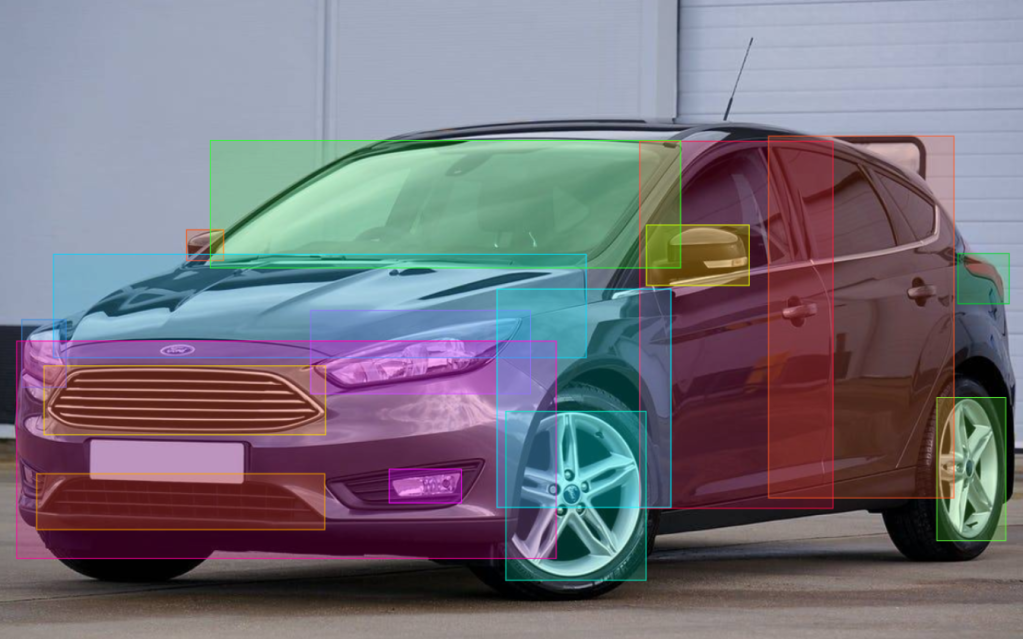
Bounding Box for Car Damage and Body Parts Detection

The bounding box image annotation technique can be used to detect car body parts and damages for both minor and severe problems, such as scratches, dents, and so on.

Semantic Segmentation for Car Damage and Body Parts Detection

To train the machine learning-based AI model, the semantic segmentation image annotation technique is used to detect the depth and more insight about the damaged area in the body parts of motor vehicles. Annotators carefully annotate this section, which not only aids in detecting the affected area but also in identifying and classifying the object of interest in the images.

Vehicle Dent Detection

Cars or vehicles with dents caused by minor accidents can be detected using bounding box image annotation techniques. The affected area can be identified and captured using computer vision to make it recognizable to machines.

Damage Level Detection

AI is also capable of identifying the degree or severity of damage to various car types of bodies. And it is achievable if the AI model has been properly trained using annotated images to feed the computer algorithms that can learn from such detection and anticipate when employed in real-life situations.

Damaged Car Body Parts

Damaged car body parts such as headlights, bumpers, indicators, and bonnets can also be detected if image annotation techniques are used correctly.

Final Thoughts

Insurers need to reimagine their systems, operations, and partnerships to successfully adopt computer vision. It will involve collecting and processing vast amounts of data. Carriers must have the right systems to capture inspection data in the form of images, videos, and annotations, and the security in place to safely store, access, and share data among key stakeholders.

By working with partners to access AI, data engineering, and other digital tools, insurers can take advantage of these new technologies as they come to market without waiting for them to become fully plug-and-play. They need to ensure that their claims processes augment new technologies and decide who is going to execute the outcomes.

Computer Vision and Data Annotation: Leading the way for Drone AI

Unmanned Aerial Vehicles (UAVs) have created great ease in a number of operations and across various industries. Integrating the latest technologies has allowed for higher levels of reliability and a more reassuring degree of trust in the use of UAVs. in the air. It also enables drones to capture and identify obstacles in real-time and dodge possible collisions. When deprived of computer vision, a drone only captures digital images and videos of the environment but doesn’t have the intelligence to understand and interact with its surroundings.

What is computer vision?

Computer vision is a field of artificial intelligence that trains computers to identify, interpret, and track objects in imagery and video. The technology is driven by pattern recognition. It’s trained by feeding computer models thousands to millions of images with labeled objects. This allows the algorithms to establish a profile (e.g., color, shape) for each object to then identify the things in unlabeled images.

Thanks to advances in machine learning and neural networks, computer vision has made great leaps in recent years and can often surpass the human eye in detecting and labeling certain objects. One of the driving factors behind this growth is the amount of data we generate that can be used to train computer vision models more accurately.

In many cases, machine learning and deep learning are also involved with computer vision algorithms, which increases the prediction level accuracy.

Industries advancing with Drones and Computer Vision

Many sectors resort to drones to get more work done in a shorter period of time. Here are some examples of industries that lean towards AI drone applications:

  • Construction
  • Farming
  • Remote Area Monitoring
  • Manufacturing and Industrial
  • Smart cities
  • Security and surveillance

Construction Progress Monitoring

Numerous modern drone systems include real-time monitoring for improved security and on-the-spot analysis, decision-making, and planning. The creation of weekly progress maps is quicker, simpler, and less expensive thanks to drones than it would be otherwise. Additionally, they make it simpler and easier for construction companies to share information with their clients, improving communication and efficiency overall.

Agriculture

Drones provide high-resolution images that help field laborers feel less stressed. It is simple to map and survey the field and keep an eye on the plantation at all times. It also offers farmers precise data, allowing them to make well-informed decisions about pesticide application, water requirements, and soil health. The ability of drones to fly as high or as low as required makes it easier for farmers to identify potential issues that the human eye from ground level cannot see. Common applications in farming include:

1. Soil analysis and field planning

2. Standing crop tracking and counting

3. Ripeness tracking and timing the harvest

4. Weed detection

Smart City Management

Drone-based visual AI technology can be used in smart cities to detect and respond to a variety of problems more quickly, earlier, and more effectively. Cities can employ drone AI to monitor and keep an eye out for issues with transportation like traffic congestion, accidents, and slowdowns. This can facilitate faster first responder response times and give crucial telemetry data for enhancing citywide traffic flow and safety. Drone AI for smart cities may also keep an eye out for the warning signals of fires, flooding, and fire dangers. This enables cities to take preventative action or react more quickly to emergencies.

Security and Surveillance

Security drones that are used for video surveillance can perform useful and essential tasks. Drones can monitor the job sites, record aerial footage of the assets, secure perimeters, and deter break-ins to supplement human guards. When combined with AI technology, they can provide real-time data streaming around the clock. Drones can automatically recognize things that pose dangers and notify security of the threat as AI makes them smarter. Additionally, they can be set up to take particular measures immediately if they discover harmful items, weapons, perimeter intrusion, or unusual activity. They can perform remote security operations and make quicker incident response decisions thanks to AI video analytics.

Manufacturing and Industrial Safety

Users can routinely employ computer vision drones in an industrial or manufacturing scenario to continuously monitor for cracks and leaks in vital infrastructure items including pipes, storage towers, water tanks, gas tanks, and more. These devices have the ability to monitor crucial machine parts for the quick and early detection of flares and overheating. To check for certain requirements, they can fly through tunnels, mines, along pipes and power lines, or high above installations.

Monitoring hazardous and Remote areas

Drones are capable of quickly and efficiently inspecting difficult-to-reach sites, monitoring huge areas, and providing the data needed to evaluate potentially harmful situations. Drones enable better-informed decisions during bad occurrences because of their capacity to cover large regions regardless of topography, allowing them to reach closer to dangers like high voltage zones without placing people at risk of harm. An intelligent drone can fly over rapidly, spot dangers, and deliver aerial photos and live video. Security personnel can then gauge the level of danger and decide on the best course of action. Drones also come in handy to provide comprehensive coverage of the crime scene for officers to be fully briefed on the situation and assess the risk before venturing in to tackle the incident.

Types of Annotation for Drone Data

The best way to maximize accuracy and performance in drone technology is to improve your data labeled for aerial imaging. We’ve listed the most common data annotation and segmentation techniques to train computer vision models on drone data.

1.  2D Bounding Box

Bounding boxes are rectangles drawn over objects of interest in an image. 2D bounding box annotation can be used to train your computer vision segmentation algorithms to recognize, track, and avoid objects during flight.

2.  3D Cuboids

2D bounding boxes aren’t enough to inform your drone about an object’s length, width, or depth. Bringing your average bounding box into the third dimension creates a cuboid. Cuboids are essential for orienting your drone in a real-world environment. Image annotation for self-driving cars relies heavily on cuboids for the same reason.

3.  Polygon Annotation

A real-world environment contains more than straight edges. To truly navigate on its own, a drone must be able to detect trees, lamp posts, fences, and rooftops. All of which can involve asymmetrical and irregular shapes. Polygon annotations provide more detail than bounding boxes and cuboids in practice, more detail translates to better drone vision. The most interesting part of polygon annotation is that it annotates the objects in irregular shapes providing the true detection of objects from an aerial view.

4.  Semantic Segmentation 

When it comes to machine learning image processing, image segmentation offers the most detail. Segmentation can be carried out as pixel-by-pixel annotation, considerably improving the visual accuracy of the environment that your drone will be flying over.

Particularly for detail-oriented activities like geo-sensing and monitoring deforestation, semantic segmentation is frequently used.

5. Video Annotation

Video annotation for drone training helps to recognize moving objects while flying in the mid-air. Humans running, livestock moving, or vehicles driving fast can be only recognized by drones, if trained with the right training data created by drones.

Final Thoughts

Drones and other unmanned vehicles are becoming more and more common. The development of drone systems with enhanced and refined systems has been made possible by technological advances in sectors like blockchain, artificial intelligence, and machine learning. These systems give more security, safety, and efficiency to help drone missions succeed.

TagX is providing autonomous flying training data solutions with a wide range of image and video annotations for top aerial view in the images for drone mapping and imagery making drone training possible with highly accurate training data.

Video Annotation: A Complete Guide

The process of adding annotations to videos is known as video annotation or video labelling. The primary goal of video annotation is to make it easier for computers to identify objects in videos using AI-powered algorithms. Annotated videos create a high-quality reference database that computer vision-enabled systems can use to accurately identify objects like cars, people, and animals. With an increasing number of everyday tasks relying on computer vision, the value of video annotation cannot be overstated.

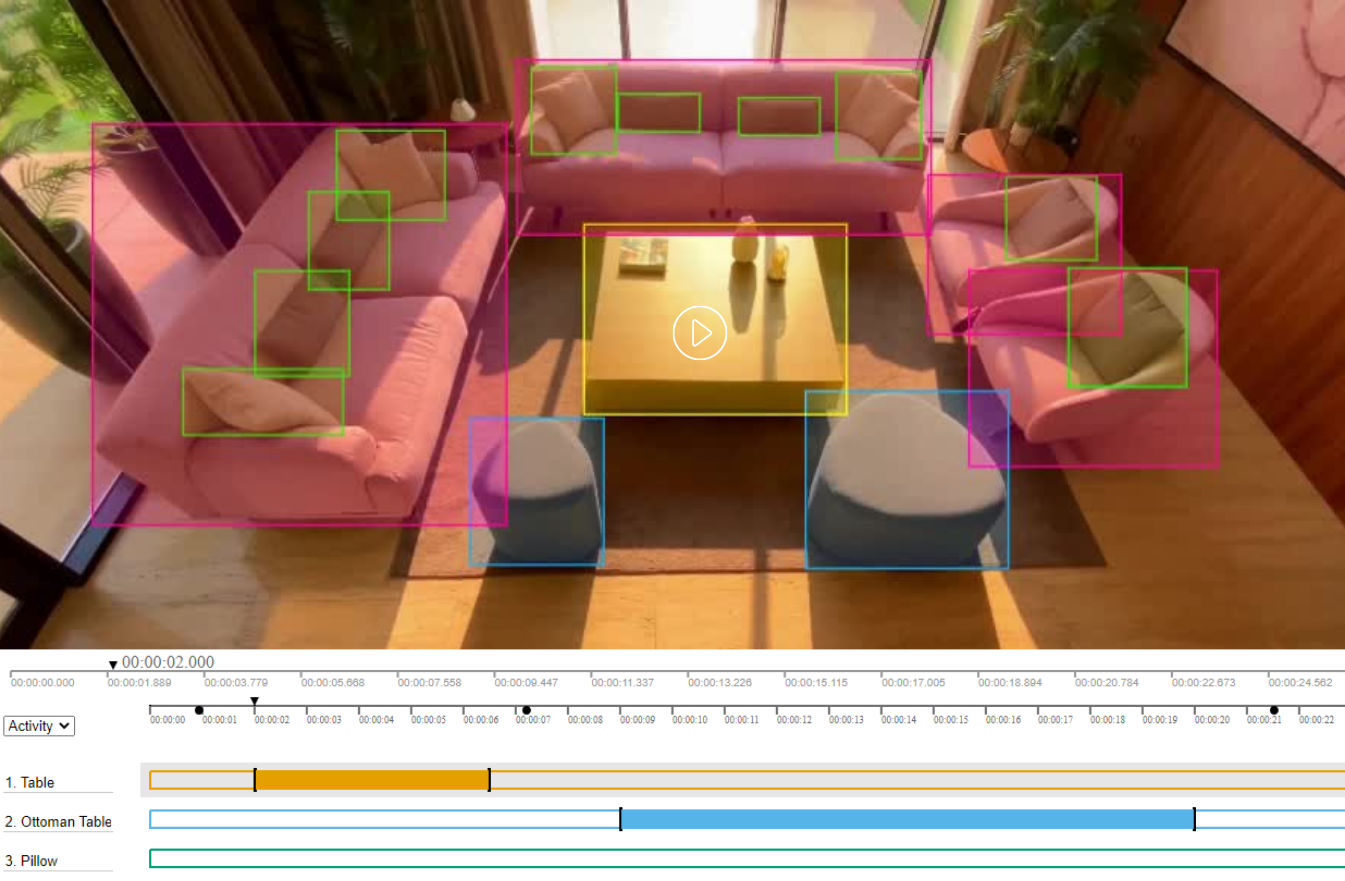
Video Annotation is one of the annotation processes that requires labeling target objects in video footage. This information is generally added to videos by human annotators who apply outlines and labels to video frames in line with the specific requirements of each machine learning model.In most cases, video annotation means teams of annotators locating relevant objects in each frame of video data.

Most commonly, annotators use bounding boxes to pinpoint objects that machine learning engineers have designated as important to label. These boxes will then be assigned a colour and a label. Different machine learning projects require different ranges of objects to be labeled, in different ways.

Video Annotation for Machine Learning:

While video annotation is useful for detecting and recognizing objects, its primary purpose is to create training data sets. When it comes to video annotation, there are several different steps that apply.

Frame-by-frame detection – With frame-by-frame detection, individual items of interest are highlighted and categorized. By capturing specific objects, detection with ML algorithms can be improved.

Object localization – object localization helps to identify specific images within a defined boundary. This helps algorithms find and locate the primary object in an image.

Object tracking – often used with autonomous vehicles, object tracking helps detect street lights, signage, pedestrians, and more to improve road safety.

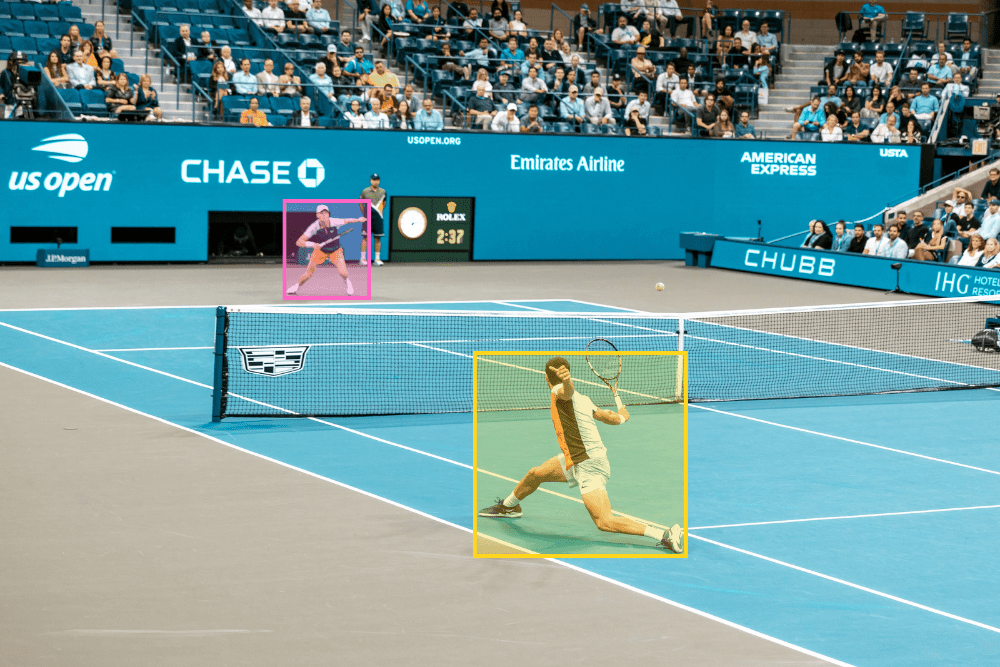
Individual tracking – similar to object tracking, individual tracking is focused on humans and how they move. Video annotation at sporting facilities helps ML algorithms understand human movement in different situations.

Various Methods for Video Annotation:

Bounding Boxes

Bounding boxes are a video annotation technique in which annotators draw a box around a specific object or image in a video. The box is then annotated so that computer vision tools can automatically identify similar objects in videos. This is one of the most common methods of video annotation.

3D Cuboids

Cuboids are useful for marking up objects in three dimensions. We can describe the size, orientation, and location of an object in a frame using this form of annotation. It is especially helpful for annotating 3D-structured things like furniture and cars.

Polygon Annotation

Unlike bounding box annotation, polygon annotation can be used to identify more complex objects. Any object, regardless of shape, can be annotated with a polygon annotation. This type of video annotation is ideal for objects with complex shapes, such as people and vehicles.

Semantic Segmentation

Images in videos are labelled using a variety of image annotation techniques. It has the ability to label certain parts of an image up to full segmentation. The semantic meaning of every pixel is tagged, enabling the computer vision model to operate at the highest level of accuracy.

Key Point Annotation

Keypoints are quite helpful for video annotations if we don’t need to worry about the shape of an object. Key point annotation is commonly used to identify small objects, shapes, postures, and movements.

Video Annotation Techniques:

Single frame annotation:

The traditional method of single image video annotation extracts each frame from the video and annotates each frame individually. The video is divided into frames, and each image is annotated in the traditional way. The target object’s annotated in every frame of the video. In complex scenarios, single frame annotation is always used because it ensures quality.

Streamed frame annotation:

The continuous frame method of video annotation can be streamlined with automation technologies. Frame-by-frame tracking of objects and their locations can be done automatically by computers, maintaining the information’s continuity and flow. In order to assess the pixels in the previous and subsequent frames and forecast the motion of the pixels in the current frame, computers rely on continuous frame techniques like optical flow. With this amount of information, the computer can correctly identify an object that is visible at the start of the video, then vanishes for a number of frames before reappearing later. Teams can mistakenly identify that thing as a different object when it reappears if they instead utilise the single image method. This approach nevertheless has its share of difficulties. Low-resolution captured video, such as that used for surveillance, is possible. Engineers are working to develop interpolation technologies like optical flow to better utilise context across frames for object recognition in order to address this issue.

Benefits of Video Annotation:

  • You can use interpolation. You don’t have to annotate every single frame with AI annotation tools. You can sometimes annotate the start and finish of your series and then interpolate between them. The annotations in between will be generated automatically.
  • The temporal context opens up new opportunities. Videos involve motion, which can be challenging to train for a static image-based AI model. By annotating videos, you can help the AI model learn how objects move and change over time.
  • Improved data for training AI models. Images are not as detailed as videos. Annotating a video gives the AI system more data to work with, which can lead to more accurate results.
  • It is cost efficient. A single video has more data points than a single image. And by concentrating on only a few keyframes, the entire process is less time consuming.

TagX Video Annotation Services 

Video annotation plays a crucial role in training computer vision models. However, segmenting a video into small frames and annotating a piece separately with the right metadata, unavoidable data quality compliances, inherent linguistic complexities, numerous probable classifiers, and volumes of data certain video contains is challenging. Businesses, therefore, outsource video annotation services to get excellent results quickly and cost-efficiently. 

TagX offers an efficient and accessible annotation framework that can be modified according to the deep learning model’s relevant use cases. Our professional annotators deliver the best-in-class results with the right blend of skills, experience, and expertise. Apart from the frame-by-frame analysis of videos, detection and metadata annotation, and object recognition, we also provide rapid video annotation services for computer vision models.

Synthetic Data: Description, Benefits and Implementation

The quality and volume of data are critical to the success of AI algorithms. Real-world data collection is expensive and time-consuming. Furthermore, due to privacy regulations, real-world data cannot be used for research or training in most situations, such as healthcare and the financial sector. Another disadvantage is the data’s lack of availability and sensitivity. To power deep learning and artificial intelligence algorithms, we need massive data sets.

Synthetic data, a new area of artificial intelligence, relieves you of the burdens of manual data acquisition, annotation, and cleaning. Synthetic data generation solves the problem of acquiring data that would otherwise be impossible to obtain. Synthetic data generation will produce the same results as real-world data in a fraction of the time and with no loss of privacy.

Visual simulations and recreations of real-world environments are the focus of synthetic data generation. It is photorealistic, scalable, and powerful data that was created for training using cutting-edge computer graphics and data generation algorithms. It is highly variable, unbiased, and annotated with absolute accuracy and ground truth, removing the bottlenecks associated with manual data collection and annotation.

Why is synthetic data required?

Businesses can benefit from synthetic data for three reasons: privacy concerns, faster product testing turnaround, and training machine learning algorithms.

Most data privacy laws limit how businesses handle sensitive data. Any leakage or sharing of personally identifiable customer information can result in costly lawsuits that harm the brand’s reputation. As a result, one of the primary reasons why companies invest in synthetic data and synthetic data generation techniques is to reduce privacy concerns.

Any previous data remains unavailable for completely new products. Furthermore, human-annotated data is an expensive and time-consuming process. This can be avoided if businesses invest in synthetic data, which can be generated quickly and used to develop reliable machine learning models.

What is the creation of synthetic data?

Synthetic data generation is the process of creating new data as a replacement for real-world data, either manually using tools like Excel or automatically using computer simulations or algorithms. If the real data is unavailable, the fake data can be generated from an existing data set or created entirely from scratch. The newly generated data is nearly identical to the original data.

Synthetic data can be generated in any size, at any time, and in any location. Despite being artificial, synthetic data mathematically or statistically reflects real-world data. It is similar to real data, which is collected from actual objects, events, or people in order to train an AI model.

Real data vs. synthetic data

Real data is measured or collected in the real world. Such information is generated every time a person uses a smartphone, laptop, or computer, wears a smartwatch, accesses a website, or conducts an online transaction. Furthermore, surveys can be used to generate real data (online and offline).

In digital contexts, synthetic data is produced. With the exception of the portion that was not derived from any real-world occurrences, synthetic data is created in a way that successfully mimics the actual data in terms of fundamental qualities. The idea of using synthetic data as a substitute for actual data is very promising because it may be used to provide the training data that machine learning models require. But it’s not certain that artificial intelligence can solve every issue that arises in the real world. The substantial benefits that synthetic data has to provide are unaffected by this.

Where can you use synthetic data?

Synthetic data has a wide range of applications. When it comes to machine learning, adequate, high-quality data is still required. Access to real data may be restricted due to privacy concerns at times, while there may not be enough data to train the machine learning model satisfactorily at others. Synthetic data is sometimes generated to supplement existing data and aid in the improvement of the machine learning model.

Many sectors can benefit greatly from synthetic data:

  • Banking and financial services
  • Healthcare and pharmaceuticals
  • Internet advertising and digital marketing
  • Intelligence and security firms
  • Robotics
  • Automotive and manufacturing

Benefits of synthetic data

Synthetic data promises to provide the following benefits:

  • Customizable: To meet the specific needs of a business, synthetic data can be created.
  • Cost-effective: In comparison to genuine data, synthetic data is a more affordable solution. Imagine a producer of automobiles that needs access to crash data for vehicle simulations. In this situation, acquiring real data will cost more than producing fake data.
  • Quicker to produce: It is possible to produce and assemble a dataset considerably more quickly with the right software and hardware because synthetic data is not gathered from actual events. This translates to the ability to quickly make a large amount of fabricated data available.
  • Maintains data privacy: The ideal synthetic data does not contain any information that may be used to identify the genuine data; it simply closely mimics the real data. This characteristic makes the synthetic data anonymous and suitable for dissemination. Pharmaceutical and healthcare businesses may benefit from this.

Some real-world applications of synthetic data

Here are some real-world examples where synthetic data is being actively used.

  1. Healthcare: In situations where actual data is lacking, healthcare institutions are modeling and developing a variety of tests using synthetic data. Artificial intelligence (AI) models are being trained in the area of medical imaging while always maintaining patient privacy. In order to forecast and predict disease patterns, they are also using synthetic data.
  2. Agriculture: In computer vision applications that help with crop production forecasting, crop disease diagnosis, seed/fruit/flower recognition, plant growth models, and more, synthetic data is useful.
  3. Banking and Finance: As data scientists create and develop more successful fraud detection algorithms employing synthetic data, banks and financial institutions will be better able to detect and prevent online fraud.
  4. Ecommerce: Through advanced machine learning models trained on synthetic data, businesses gain the benefits of efficient warehousing and inventory management, as well as an improved customer online purchase experiences.
  5. Manufacturing: Companies are benefiting from synthetic data for predictive maintenance and quality control.
  6. Disaster prediction and risk management: Government agencies are using synthetic data to predict natural disasters in order to prevent disasters and lower risks.
  7. Automotive & Robotics: Synthetic data is used by businesses to simulate and train self-driving cars, autonomous vehicles, drones, and robots.

Synthetic Data Generation by TagX

TagX focuses on accelerating the AI development process by generating data synthetically to fulfill every data requirement uniquely. TagX has the ability to provide synthetically generated data that are pixel-perfect, automatically annotated or labeled, and ready to be used as ground truth as well as train data for instant segmentation.

Final Thoughts

In some cases, synthetic data may be used to address a company’s or organization’s lack of relevant data or data scarcity. We also investigated the methods for creating artificial data and the potential users. Along with a few examples from actual fields where synthetic data is used, we discussed some of the challenges associated with working with it.

When making business decisions, the use of actual data is always preferable. When such true raw data is unavailable for analysis, realistic data is the next best option. However, it should be noted that in order to generate synthetic data, data scientists with a solid understanding of data modeling are required. A thorough understanding of the actual data and its surroundings is also required. This is necessary to ensure that, if available, the generated data is as accurate as possible.

Design a site like this with WordPress.com
Get started