Natural Language Processing Usecases And Services

Natural language processing is a form of AI that’s focused on identifying, understanding and using human languages. Written or spoken language is analyzed by computers to achieve a practical level of understanding. You may encounter NLP in many business applications on a daily basis, dealing with systems like spell checkers, search engines, translation tools and voice assistants. Most of the top-tier versions of these technologies utilize NLP.

The following are some significant use cases of NLP applied to different industries:

  • Named Entity Recognition

This includes identification of entities in a paragraph(like a person, organization, date, location, time, etc.), and further classifying them into categories according to the need..

  • Part-of-speech tagging

Part-of-speech tagging is the task that involves marking up words in a sentence as nouns, verbs, adjectives, adverbs, and other descriptors.

  • Summarization

Summarization is the task that includes text shortening by identifying the important parts and creating a summary

  • Sentiment analysis

  Sentiment analysis is the task that implies a broad range of subjective analysis to identify positive or negative feelings in a sentence, the sentiment of a customer review, judging mood via written text or voice analysis, and other similar tasks.

  • Text classification

Text classification is the task that involves assigning tags/categories to text according to the content. Text classifiers can be used to structure, organize, and categorize any text.

Now that you’ve got a better understanding of NLP, check out these natural language processing applications that showcase how versatile NLP is:

 Chatbots

Customer service automation offers opportunities to put NLP to work, too. Chatbots built on NLP technologies represent an opportunity to remove humans from mundane tasks and assign them to more involved queries. The e-commerce and customer support sectors have been using them with great effect for several years.

Survey Analysis

Surveys are an important way of evaluating a company’s performance. Companies conduct many surveys to get customer’s feedback on various products. This can be very useful in understanding the flaws and help companies improve their products.

Hiring and recruitment

By harnessing NLP, HR professionals can now considerably speed up candidate search by filtering out relevant resumes and crafting bias-proof and gender-neutral job descriptions. By using semantic analysis, NLP-based software sifts through the relevant synonyms to help recruiters detect candidates that meet the job requirements. 

 Social Media Marketing

One of the main strengths of NLP is its capacity to deal with unstructured social media data. Brand marketers can identify who the key influencers are in growth areas. Likewise, marketers can determine what types of content will resonate with social media followers. The goal is to target specific influencers with the right content to drive awareness and message diffusion.

Security Authentication

With the arrival of NLP technology, it’s possible to integrate more advanced security techniques. By using question generation, data scientists are able to build stronger security systems.

Conclusion

NLP applications are increasing at a fast pace and the technology has all it takes to accelerate customer service. NLP based software now even impacts our personal lives as well.  NLP use cases provide a better and basic understanding of what this technology can do to maximize productivity, streamline operations, deliver insights and keep up with the competition.
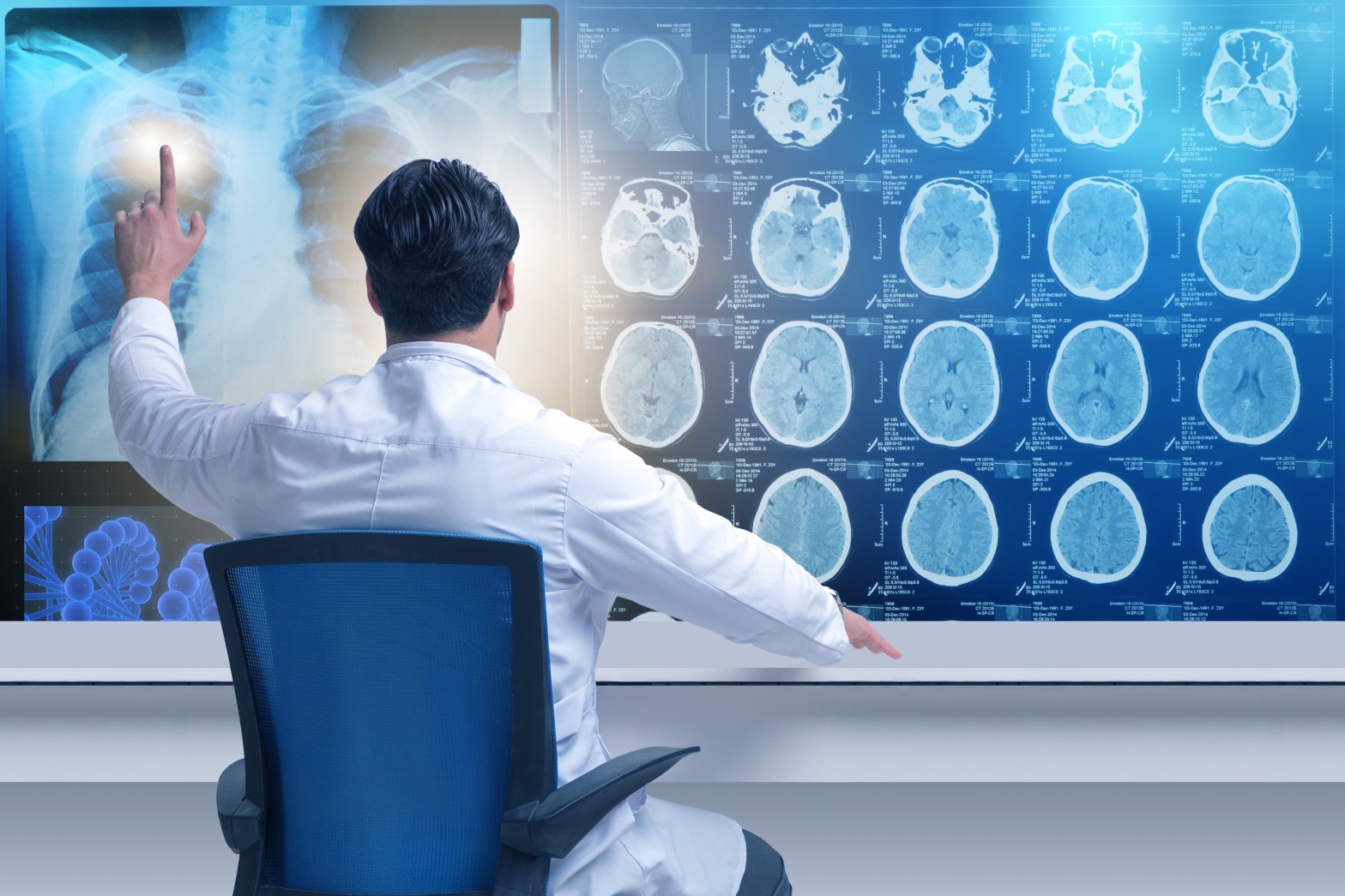
Role of Computer Vision in Medical Diagnosis

The healthcare industry has already seen many benefits coming from the rise of artificial intelligence (AI) solutions. One of the emerging AI fields today is computer vision.  By leveraging computer vision technology doctors can analyse health and fitness metrics to assist patients to make faster and better medical decisions. 

With growing advancement , computer vision allows us to make extensive use of medical imaging data to provide us better diagnosis, treatment and prediction of diseases. Many powerful tools have been available through image segmentation, machine learning, pattern classification, tracking, reconstruction to bring much needed quantitative information not easily available by trained human specialists.

Currently, there are several areas in healthcare where computer vision is being utilized and benefiting medical professionals to better diagnose patients, including medical imaging analysis, predictive analysis, health monitoring and many more.

Types of AI Medical Diagnostics Done through Image Annotation: 

Brain Tumor Segmentation -3D segmentation of brain tumor has high clinical relevance for the estimation of the volume and spread of the tumor.

Prostate  Segmentation -Prostate segmentation gives precise estimates of prostate volume which further helps for prostate cancer diagnosis.

Kidney Stones Detection-Considering Kidney related problems like infection, stone, and other ailment affecting the functioning of the kidney. There are various popular medical image annotation techniques used to annotate the images making AI possible in detecting the kidney related to various problems.

Cancer Cell Detection-Cancer being a life threatening disease , its detection at early stage is a challenge. Detecting cancers through AI-enabled machines is playing a big role in saving people  from such illnesses.

Dental Image Analysis-Teeth or gums related problems can be better diagnosed with AI-enabled devices. Apart from teeth structure, AI in dentistry can easily detect various types of oral problems.

Eye Cells Analysis-Eyes scanned through retinal images can be used to detect various problems like ocular diseases, cataracts, and other complications. All such symptoms visible in the eyes can be annotated with the right techniques to diagnose the possible disease.

Medical Record Documentation-Medical image annotation also covers the various documents including texts and other files to make the data recognizable and comprehensible to the machine. Medical records contain the data of patients and their health conditions that can be used to train the machine learning models.

Types of Documents Annotated through Medical Image Annotation:

There is no shortage of areas where computer vision could bring groundbreaking innovation to medical imaging: CT, MRI, ultrasound, X-rays, and more are just a few of the use cases.

X-Rays

The role of X-rays is to identify if there is any abnormalities or damage to a human organ or body part. Computer vision can be trained to classify scan results just like a radiologist would do and pinpoint all potential problems in a single take.

MRI

 problems in softer tissues, like joints and the circulatory system, are better highlighted by magnetic resonance imaging (MRI). Training a computer vision system to identify clogged blood vessels and cerebral aneurysms can help save those patients who would be under the radar if the images were analyzed by the naked eye.

Ultrasound

Using computer vision during pregnancy and for other routine check-ups could help future mothers see if the pregnancy is unfolding naturally or there are any health concerns to take into consideration. Relying on extensive data sets that combine years of medical knowledge, computer vision-equipped ultrasound systems can show more experience than a single physician would.

CT scans

 The advantage of using computer vision here is that the entire process can be automated with increased precision, since the machine could identify even those details that are invisible to the human eye. This method is used to detect tumours, internal bleeding, and other life-threatening conditions

Conclusion

The futuristic dream of completely automated diagnosis still has countless technical and ethical barriers, but consistent advancements have been made in the last years. AI can be used at various stages of the hospital-patient relationship, from easier admission via chatbots to personalized treatment based on DNA analysis. Medical image analysis is already becoming a field where AI proves to bring groundbreaking results.

Why Data Needs to be Labeled

In order for a self-driving car to “see,” “hear,”
“understand,” “talk” and “think,” it needs video,
image, audio, text, LIDAR and other sensor data to
be correctly collected, structured, and understood by
machine learning models.
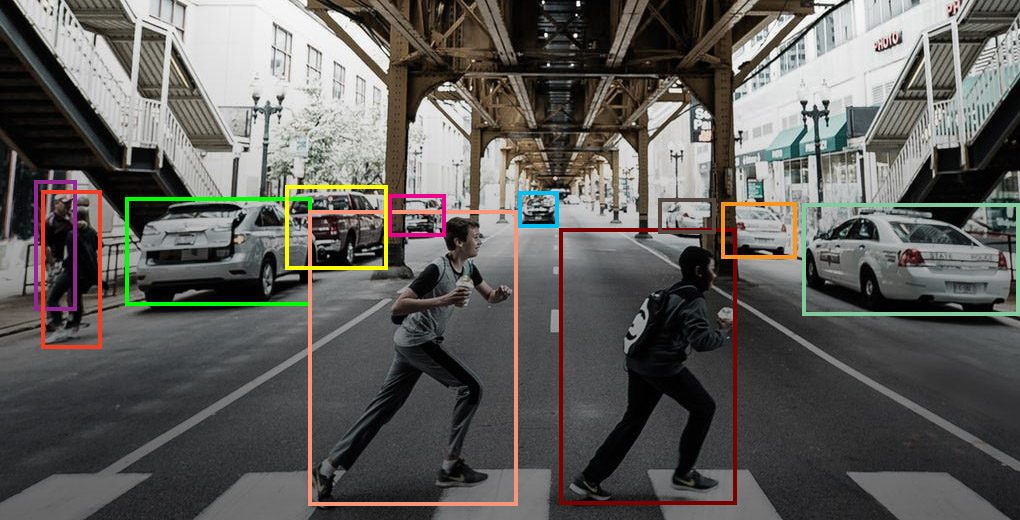
Breaking this down to just what a car “sees” requires annotating many images so that
a model can learn and understand all the different street signs under all conditions.
While speed limit signs may have the same shape, the car must also interpret the
number on the sign to drive safely. A car must also be able to “understand” what a
person is – including an adult, a kid, and a baby, for example. To do this, pictures of
many different people must be shown from all different angles so that it can start to
say what is and is not a person.
To break it down further, a picture is simply a series of pixels to a machine. Those
pixels have values that correspond to colors but those pixels don’t have values
that represent the object – just a tiny dot on a massive canvas of other pixels. But
labeled images show machines that certain collections of pixels are certain objects.
Let’s go back to ImageNet. Every image in that dataset was labeled by a person. The
end result: thousands of examples of different objects. From those labels, machines
can make sense of the pixels of which they’re made up.
Now, image labeling can be done in many different ways. You can run rudimentary
labeling tasks like “is there a dog in this picture,” but it’s going to take a ton of images
for a machine to start to understand that dataset. It’s usually better practice to use
bounding boxes, dots, or to actually label an image pixel by pixel.
Generally speaking, the more examples a machine sees, the better it understands.
This usually holds true no matter the use case—images, text, audio, what have you.
The point is that the data you have likely isn’t the data you need to create effective
machine learning algorithms. It’s far more common that the data you have needs to
be labeled or annotated in some way, shape, or form so that a machine can actually
understand it. And the more labels a piece of data has, the more complicated an
ontology it can create.

Contact us today to know more about labeled data

Computer Vision for Retail

What do face-detection cameras and self driving cars have in common? They all apply some form of Computer Vision (CV), a scientific discipline that enables machines to make useful decisions about real physical objects and scenes based on images. How Computer Vision is transforming retail?

Early research on Computer Vision started over 50 years ago, and its application across industries have grown along with our understanding of the discipline. Most digital cameras today recognize faces in a picture, OCR software in scanners converts scanned documents to text, and vision-based biometrics also famously helped identify an Afghan girl by her iris patterns.

Some early applications of Computer Vision in retail come from e-commerce, but increasingly, it is being used in physical retail stores to perfect shelf merchandising, enhance operational efficiencies and create a frictionless experience for shoppers.

Here are few inventive ways brands and retailers are using computer vision to bring innovation.

Blurring the line between online and offline

Sometimes you see something you want to buy, but have no information about it. In that case, a tool called Lens can help. It’s been launched by the photo sharing website Pinterest as a beta product, and it could aid the in-store experience. Most of the large Ecommerce websites like amazon use the same technology to help users find a product using photos.

Facial and behaviour recognition

Gourmet candy retailer Lolli & Pops uses facial recognition to identify loyalty members as they walk into the store. Computer Vision then enables a personalized shopping experience: by scouring their purchasing history and preferences, the system can make personalized product recommendations specific to each shopper.

By treating them as individuals – and more importantly, as VIPs – the system instills brand loyalty, and converts occasional shoppers into regular customers. Both of which are good for business.

Digitize Shelfs

The beauty and simplicity of Computer Vision is its ability to turn actual images into actionable insights in order to help brands and retailers focus on fundamentals in the store. By “digitizing the shelf”, companies now get real-time situational awareness about what’s happening on the shelf. The directives range from the obvious (such as: “go to the back room and get a box of product to fill an empty space”) to the more sublime, such as instructions to reduce the number of products of the same type that are sitting side by side of a competitor and increase your own products by that same amount.

Non-mobile users get role-based insights on a huge array of retail metrics that tell them exactly what’s happening on shelf and what to do to ensure the best shopping experience and drive better sales.

Seamless Checkouts

Computer Vision can also help when it comes to one of the worst parts of the shopping experience: queuing for the checkout.

The Amazon Go concept store in Seattle tracks shoppers using CV, with sensors on the shelves detecting when they pick up an item. It then registers all the items in the shopper’s shopping basket with the Go mobile app, and does away with the checkout process altogether – the shopper simply leaves the shop, with the Go app taking the money automatically from the shopper’s nominated credit card. The receipt is sent straight to the app.

The ever-connected shopper experiencing frictionless retail is truly where we’re headed, made possible by a combination of Computer Vision and deep learning.

Wondering how real shelf images are turned into actionable analytics? Check out how we can help the retail industry.

How to make your AI Algorithms smarter?

You know that data is really important for building AI systems. For example, gathering only one variable about revolutions per minute of your machine is not going to be enough to tell you why a failure happened. However, if you add vibration, temperatures, and data about many conditions that contribute to machine failure, you can begin to build models and algorithms to predict failure. Also, as more data is collected, you can create accuracy requirements, such as This algorithm will be able to predict this failure within one day, with 90% accuracy. How do you acquire data? Well, one way to get data is manual labeling. For example, you might collect a set of pictures like these over here, and then you might either yourself or have someone else go through these pictures and label each of them. So, the first one is a cat, the second one is not a cat, the third one is a cat, the fourth one is not a cat. By manually labeling each of these images, you now have a dataset for building a cat detector. To do that, you need more than four pictures. You might need hundreds of thousands of pictures but manual labeling is a tried and true way of getting a dataset where you have both A and B.

Adopting AI and ML is a journey, not a silver bullet that will solve problems in an instant. It begins with gathering data into simple visualizations and statistical processes that allow you to better understand your data and get your processes under control. From there, you’ll progress through increasingly advanced analytical capabilities, until you achieve that utopian goal of perfect production, where you have AI helping you make products as efficiently and safely as possible.

Explore how TagX can help you make your AI smarter.

What is Artificial Intelligence?

Artificial intelligence (AI) is wide-ranging branch of computer science concerned with building smart machines capable of performing tasks that typically require human intelligence. AI is an interdisciplinary science with multiple approaches, but advancements in machine learning and deep learning are creating a paradigm shift in virtually every sector of the tech industry. 

HOW DOES ARTIFICIAL INTELLIGENCE WORK?

AI works by combining large amounts of data with fast, iterative processing and intelligent algorithms, allowing the software to learn automatically from patterns or features in the data. AI is a broad field of study that includes many theories, methods and technologies, as well as the following major subfields:

  • Machine learning automates analytical model building. It uses methods from neural networks, statistics, operations research and physics to find hidden insights in data without explicitly being programmed for where to look or what to conclude.
  • A neural network is a type of machine learning that is made up of interconnected units (like neurons) that processes information by responding to external inputs, relaying information between each unit. The process requires multiple passes at the data to find connections and derive meaning from undefined data.
  • Deep learning uses huge neural networks with many layers of processing units, taking advantage of advances in computing power and improved training techniques to learn complex patterns in large amounts of data. Common applications include image and speech recognition.
  • Cognitive computing is a subfield of AI that strives for a natural, human-like interaction with machines. Using AI and cognitive computing, the ultimate goal is for a machine to simulate human processes through the ability to interpret images and speech – and then speak coherently in response.  
  • Computer vision relies on pattern recognition and deep learning to recognize what’s in a picture or video. When machines can process, analyze and understand images, they can capture images or videos in real time and interpret their surroundings.
  • Natural language processing (NLP) is the ability of computers to analyze, understand and generate human language, including speech. The next stage of NLP is natural language interaction, which allows humans to communicate with computers using normal, everyday language to perform tasks.

Additionally, several technologies enable and support AI:

  • Graphical processing units are key to AI because they provide the heavy compute power that’s required for iterative processing. Training neural networks requires big data plus compute power.
  • The Internet of Things generates massive amounts of data from connected devices, most of it unanalyzed. Automating models with AI will allow us to use more of it.
  • Advanced algorithms are being developed and combined in new ways to analyze more data faster and at multiple levels. This intelligent processing is key to identifying and predicting rare events, understanding complex systems and optimizing unique scenarios.
  • APIs, or application programming interfaces, are portable packages of code thatmake it possible to add AI functionality to existing products and software packages. They can add image recognition capabilities to home security systems and Q&A capabilities that describe data, create captions and headlines, or call out interesting patterns and insights in data.

In summary, the goal of AI is to provide software that can reason on input and explain on output. AI will provide human-like interactions with software and offer decision support for specific tasks, but it’s not a replacement for humans – and won’t be anytime soon. 

AI and Social Distancing

As companies are starting to think about how to bring employees back to work and keep them safe, a recently released tool by Andrew Ng leverages hashtag#MachineLearning & hashtag#ComputerVision to ensure that hashtag#COVID19 social distancing guidelines are maintained. The tool also helps managers arrange workspaces optimally.

https://www.technologyreview.com/2020/04/17/1000092/ai-machine-learning-watches-social-distancing-at-work/

Design a site like this with WordPress.com
Get started