What is a Data pipeline for Machine Learning?

As machine learning technologies continue to advance, the need for high-quality data has become increasingly important. Data is the lifeblood of computer vision applications, as it provides the foundation for machine learning algorithms to learn and recognize patterns within images or video. Without high-quality data, computer vision models will not be able to effectively identify objects, recognize faces, or accurately track movements.

Machine learning algorithms require large amounts of data to learn and identify patterns, and this is especially true for computer vision, which deals with visual data. By providing annotated data that identifies objects within images and provides context around them, machine learning algorithms can more accurately detect and identify similar objects within new images.

Moreover, data is also essential in validating computer vision models. Once a model has been trained, it is important to test its accuracy and performance on new data. This requires additional labeled data to evaluate the model’s performance. Without this validation data, it is impossible to accurately determine the effectiveness of the model.

Data Requirement at multiple ML stage

Data is required at various stages in the development of computer vision systems. 

Here are some key stages where data is required:

  1. Training: In the training phase, a large amount of labeled data is required to teach the machine learning algorithm to recognize patterns and make accurate predictions. The labeled data is used to train the algorithm to identify objects, faces, gestures, and other features in images or videos.
  1. Validation: Once the algorithm has been trained, it is essential to validate its performance on a separate set of labeled data. This helps to ensure that the algorithm has learned the appropriate features and can generalize well to new data.
  1. Testing: Testing is typically done on real-world data to assess the performance of the model in the field. This helps to identify any limitations or areas for improvement in the model and the data it was trained on.
  1. Re-training: After testing, the model may need to be re-trained with additional data or re-labeled data to address any issues or limitations discovered in the testing phase.

In addition to these key stages, data is also required for ongoing model maintenance and improvement. As new data becomes available, it can be used to refine and improve the performance of the model over time.

Types of Data used in ML model preparation

The team has to work on various types of data at each stage of model development. 

Streamline, structured, and unstructured data are all important when creating computer vision models, as they can each provide valuable insights and information that can be used to train the model.

  • Streamline data refers to data that is captured in real-time or near real-time from a single source. This can include data from sensors, cameras, or other monitoring devices that capture information about a particular environment or process.
  • Structured data, on the other hand, refers to data that is organized in a specific format, such as a database or spreadsheet. This type of data can be easier to work with and analyze, as it is already formatted in a way that can be easily understood by the computer.
  • Unstructured data includes any type of data that is not organized in a specific way, such as text, images, or video. This type of data can be more difficult to work with, but it can also provide valuable insights that may not be captured by structured data alone.

When creating a computer vision model, it is important to consider all three types of data in order to get a complete picture of the environment or process being analyzed. This can involve using a combination of sensors and cameras to capture streamline data, organizing structured data in a database or spreadsheet, and using machine learning algorithms to analyze and make sense of unstructured data such as images or text. By leveraging all three types of data, it is possible to create a more robust and accurate computer vision model.

Data Pipeline for machine learning

The data pipeline for machine learning involves a series of steps, starting from collecting raw data to deploying the final model. Each step is critical in ensuring the model is trained on high-quality data and performs well on new inputs in the real world. 

Below is the description of the steps involved in a typical data pipeline for machine learning and computer vision:

  1. Data Collection: The first step is to collect raw data in the form of images or videos. This can be done through various sources such as publicly available datasets, web scraping, or data acquisition from hardware devices.
  1. Data Cleaning: The collected data often contains noise, missing values, or inconsistencies that can negatively affect the performance of the model. Hence, data cleaning is performed to remove any such issues and ensure the data is ready for annotation.
  1. Data Annotation: In this step, experts annotate the images with labels to make it easier for the model to learn from the data. Data annotation can be in the form of bounding boxes, polygons, or pixel-level segmentation masks.
  1. Data Augmentation: To increase the diversity of the data and prevent overfitting, data augmentation techniques are applied to the annotated data. These techniques include random cropping, flipping, rotation, and color jittering.
  1. Data Splitting: The annotated data is split into training, validation, and testing sets. The training set is used to train the model, the validation set is used to tune the hyperparameters and prevent overfitting, and the testing set is used to evaluate the final performance of the model.
  1. Model Training: The next step is to train the computer vision model using the annotated and augmented data. This involves selecting an appropriate architecture, loss function, and optimization algorithm, and tuning the hyperparameters to achieve the best performance.
  1. Model Evaluation: Once the model is trained, it is evaluated on the testing set to measure its performance. Metrics such as accuracy, precision, recall, and score are computed to assess the model’s performance.
  1. Model Deployment: The final step is to deploy the model in the production environment, where it can be used to solve real-world computer vision problems. This involves integrating the model into the target system and ensuring it can handle new inputs and operate in real time.

TagX Data as a Service

Data as a service (DaaS) refers to the provision of data by a company to other companies. TagX provides DaaS to AI companies by collecting, preparing, and annotating data that can be used to train and test AI models.

Here’s a more detailed explanation of how TagX provides DaaS to AI companies:

  1. Data Collection: TagX collects a wide range of data from various sources such as public data sets, proprietary data, and third-party providers. This data includes image, video, text, and audio data that can be used to train AI models for various use cases.
  1. Data Preparation: Once the data is collected, TagX prepares the data for use in AI models by cleaning, normalizing, and formatting the data. This ensures that the data is in a format that can be easily used by AI models.
  1. Data Annotation: TagX uses a team of annotators to label and tag the data, identifying specific attributes and features that will be used by the AI models. This includes image annotation, video annotation, text annotation, and audio annotation. This step is crucial for the training of AI models, as the models learn from the labeled data.
  1. Data Governance: TagX ensures that the data is properly managed and governed, including data privacy and security. We follow data governance best practices and regulations to ensure that the data provided is trustworthy and compliant with regulations.
  1. Data Monitoring: TagX continuously monitors the data and updates it as needed to ensure that it is relevant and up-to-date. This helps to ensure that the AI models trained using our data are accurate and reliable.

By providing data as a service, TagX makes it easy for AI companies to access high-quality, relevant data that can be used to train and test AI models. This helps AI companies to improve the speed, quality, and reliability of their models, and reduce the time and cost of developing AI systems. Additionally, by providing data that is properly annotated and managed, the AI models developed can be explainable and trustworthy, which can be beneficial for regulatory and ethical considerations.
Synthetic Document Generation for NLP and Document AI

NLP (natural language processing) and document AI are technologies that are quickly developing and have a wide range of prospective applications. In recent years, the usage of NLP and document AI has significantly increased across a variety of industries, including marketing, healthcare, and finance. These solutions are being used to streamline manual procedures, accelerate data processing, and glean insightful information from massive amounts of unstructured data. NLP and document AI are anticipated to continue developing and revolutionizing numerous industries in the years to come with the introduction of sophisticated machine learning algorithms and data annotation techniques.

For different NLP and AI applications, large amounts of document data are necessary since they aid in the training of machine learning algorithms to comprehend the context, language, and relationships within the data. The algorithms are able to comprehend the subtleties and complexity of human language better the more data that is accessible, the more diverse the input. In turn, this aids the algorithms in producing predictions and classifications that are more precise. A more stable training environment is also provided by larger datasets, lowering the possibility of overfitting and enhancing the generalizability of the model. The likelihood that the model will perform well on unobserved data increases with the size of the dataset.

Data for Document AI

Document AI, or Document Artificial Intelligence, is an emerging field of artificial intelligence (AI) that focuses on the processing of unstructured data in documents, such as text, images, and tables. Document AI is used to automatically extract information, classify documents, and make predictions or recommendations based on the content of the documents.

It takes a lot of data to train a Document AI system. This information can originate from a variety of places, including internal document repositories, external data suppliers, and web repositories. To allow the Document AI system to learn from the data, it must be tagged or annotated. To offer information on the content of the documents, such as the document type, topic, author, date, or language, data annotation entails adding tags or metadata to the documents. The Document AI system can grow more precise as more data becomes accessible.

Training data for Document AI can come in various forms, including scanned documents, PDF files, images, and even audio or video files. The data can be preprocessed to remove noise or enhance the quality of the text or images. Natural Language Processing (NLP) techniques can also be applied to the text to extract entities, sentiments, or relationships. Overall, a large and diverse dataset of documents is crucial for building effective Document AI systems that can accurately process and analyze large volumes of unstructured data.

Application of Document AI

There are several applications of document AI, some of them are:

  1. Document scanning and digitization: AI-powered document scanning tools make it possible to turn paper documents into digital files that can be accessed, searched for, and used.
  2. Document classification and categorization: Depending on the content, format, and structure of the document, AI algorithms can be trained to categorize and classify various types of documents.
  3. Content extraction and summarization: With AI, significant information may be culled from massive amounts of documents and condensed into key insights and summaries.
  4. Document translation: AI-powered document translation tools can translate text from one language to another automatically, facilitating global communication for enterprises.
  5. Analysis and management of contracts: With AI algorithms, contracts may be automatically reviewed to find important terms, risks, and duties.
  6. Invoice processing and accounts payable automation: AI algorithms can be trained to process invoices automatically and make payments, reducing manual errors and increasing operational efficiency.
  7. Customer service chatbots: AI-powered chatbots can help automate customer support interactions, respond to frequent customer questions, and point customers in the appropriate direction.

These are some of the different applications of document AI. The potential of this technology is vast, and the applications continue to expand as the technology evolves.

Document Data Collection

There are various ways to collect documents for AI applications, including the following:

  1. Web scraping: Automatically extracting information from websites or other online sources.
  2. Public data repositories: Utilizing publicly available datasets from organizations such as government agencies, universities, and non-profit organizations.
  3. Internal data sources: Utilizing internal data sources within an organization, such as databases, CRM systems, and document management systems.
  4. Crowdsourcing: Engaging a large group of people to annotate or label data through online platforms.
  5. Purchasing datasets: Buying datasets from third-party providers who specialize in data collection and management.

However, real-world data is often limited and may not fully represent the diversity of documents and their variations. Synthetic data generation provides a solution to this problem by allowing the creation of large amounts of high-quality data that can be used to train and improve document AI models.

By generating synthetic data, companies can create training sets that represent a wide range of document types, formats, and styles, which can lead to more robust and accurate document AI models. Synthetic data can also help address issues of data bias, by ensuring that the training data is representative of the entire document population. Additionally, synthetic data generation can be more cost-effective and efficient than manual data collection, allowing companies to create large volumes of data quickly and at a lower cost.

Synthetic Document Generation

Synthetic data is generated for AI to address the challenges faced with real-world data such as privacy concerns, data scarcity, data imbalance, and the cost and time required for data collection and labeling. Synthetic data can be generated in large volumes and can be easily customized to meet the specific needs of a particular AI application. This allows AI developers to train models with a large and diverse dataset, without the constraints posed by real-world data, leading to better performance and accuracy. Furthermore, synthetic data can be used to simulate various scenarios and conditions, helping to make AI models more robust and versatile.

The primary reason for generating synthetic documents for AI is to increase the size of the training dataset, allowing AI algorithms to learn and make more accurate predictions. In addition, synthetic documents can also help in situations where it is difficult or expensive to obtain real-world data, such as in certain legal or privacy-sensitive applications.

To provide synthetic document generation for AI applications, the following steps can be taken:

  1. Collect a sample of real-world data to serve as the base for synthetic data generation
  2. Choose a suitable method for generating synthetic data, such as data augmentation, generative models, or data sampling
  3. Use the chosen method to generate synthetic data that is representative of the real-world data
  4. Validate the quality of the synthetic data to ensure it is representative and relevant to the intended use case
  5. Integrate the synthetic data into the AI training process to improve the performance of the AI algorithms.

Synthetic Documents by TagX

TagX specializes in generating synthetic documents of various types, such as bank statements, payslips, resumes, and more, to provide high-quality training data for various AI models. Our synthetic document generation process is based on real-world data and uses advanced techniques to ensure the data is realistic and diverse. With this, we can provide AI models with the large volumes of data they need to train and improve their accuracy, ensuring the best possible results for our clients. Whether you’re developing an AI system for financial services, HR, or any other industry, we can help you obtain the data you need to achieve your goals.

Synthetic documents are preferred over real-world documents as they do not contain any personal or sensitive information, making them ideal for AI training. They can be generated in large quantities, providing enough training data to help AI models learn and improve. Moreover, synthetic data is easier to manipulate, label, and annotate, making it a convenient solution for data annotation.

TagX can generate a wide variety of synthetic documents for different AI applications, including finance, insurance, chatbots, recruitment, and other intelligent document processing solutions. The synthetic documents can include, but are not limited to:

Payslips

We generate synthetic payslips in all languages to provide training data for AI models in finance, insurance, and other relevant applications. Our payslips mimic the structure, format, and language used in real-world payslips and are customizable according to the client’s requirements.

Invoices

Our team can generate invoices in all languages to provide training data for various AI models in finance and other applications. The invoices we generate mimic the structure, format, and language used in real-world invoices and are customizable according to the client’s needs.

Bank statements

 Our team is proficient in generating synthetic bank statements in various languages and formats. These bank statements can be used to provide training data for different AI models in finance, insurance, and other relevant applications. Our bank statements mimic the structure, format, and language used in real-world bank statements and can be customized according to the client’s requirements.

Resumes

 We generate synthetic resumes in various languages and formats to provide training data for AI models in recruitment, HR, and other relevant applications. Our resumes mimic the structure, format, and language used in real-world resumes and are customizable according to the client’s needs.

Utility bills

Our team is experienced in generating synthetic utility bills in various languages and formats. These utility bills can be used to provide training data for different AI models in finance, insurance, and other relevant applications. Our utility bills mimic the structure, format, and language used in real-world utility bills and can be customized according to the client’s requirements.

Purchase orders

Our team can generate synthetic purchase orders in various languages and formats to provide training data for AI models in finance and other relevant applications. Our purchase orders mimic the structure, format, and language used in real-world purchase orders and are customizable according to the client’s needs.

Passport and other personal documents

We generate synthetic passports and other personal documents in various languages and formats to provide training data for AI models in finance, insurance, and other relevant applications. Our passport and personal documents mimic the structure, format, and language used in real-world passports and personal documents and can be customized according to the client’s requirements.

TagX Vision

TagX focuses on providing documents that are relevant to finance, insurance, chatbot, recruitment, and other intelligent document processing solutions. Our team of experts uses advanced algorithms to generate synthetic payslips, invoices in multiple languages, bank statements, resumes, utility bills, purchase orders, passports, and other personal documents. All of these documents are designed to look and feel like real-world examples, with accurate formatting, text, and images. Our goal is to ensure that the AI models trained with our synthetic data have the ability to process and understand a wide range of documents, so they can make accurate predictions and decisions.

We understand the importance of data privacy and security and ensure that all generated documents are de-identified and comply with the necessary regulations. Our goal is to provide our clients with a solution that is not only high-quality but also trustworthy and secure. Contact us to learn more about how our synthetic document generation services can help you achieve your AI goals.

Data Annotation Outsourcing: How to choose a reliable vendor

Artificial Intelligence (AI) has rapidly grown and transformed the way businesses operate and interact with their customers. The success of an AI model is heavily dependent on the quality of the data it is trained on. This is why AI companies require data annotation services to provide the best possible outcome.

Data annotation refers to the process of labeling and categorizing data to make it more structured and usable for training AI models. It involves adding relevant information to the data, such as classifying images, transcribing audio recordings, and identifying the objects in an image. This process helps improve the accuracy and reliability of AI algorithms and ensures that the models are making predictions based on relevant and meaningful data.

In-house data annotation can be a time-consuming and resource-intensive task, especially for small and medium-sized companies that have limited budgets and manpower. This is why outsourcing data annotation services is an attractive option for AI companies. It not only reduces the workload on the in-house team but also ensures that the data is annotated efficiently and accurately by experienced professionals.

Need to outsource Data Annotation

There are several reasons why a company might choose to outsource their data annotation services instead of handling it in-house. Firstly, collecting and annotating large amounts of data can be a time-consuming and complex task. By outsourcing this work, companies can free up their in-house teams to focus on what they do best, such as developing the AI algorithms or building their business.

Another advantage of outsourcing data annotation is access to a larger pool of annotators. Data annotation companies often have a network of people trained in data annotation, allowing them to complete projects quickly and efficiently. This can be particularly beneficial for companies working on large-scale projects that would be challenging to complete in-house.

Additionally, outsourcing data annotation services can provide cost savings as it eliminates the need to invest in training and hiring in-house annotators. It also provides access to the latest annotation tools and technologies, helping companies to improve the quality and efficiency of their data annotation.

Primary factors for Data Annotation Vendor Selection

Gathering labeled datasets is a crucial step in building a machine-learning algorithm, but it can also be a time-consuming and complex task. Conducting data annotation in-house can take valuable resources away from your team’s core focus – creating a strong AI. To overcome this challenge, many organizations are turning to outsource data annotation services to boost productivity, speed up development time, and stay ahead of the competition.

With the growing number of AI training data service providers, choosing the best one for your needs can be a daunting task. It is important to take a systematic approach when evaluating different data annotation companies to ensure that you make the right decision. Here are some key considerations that can help you choose the best vendor for your needs:

When choosing a data annotation vendor, there are several key factors to consider to ensure a successful collaboration:

  1. Quality of Work: The vendor should be able to provide high-quality annotated data that meets your standards and requirements. You should also consider their track record and reviews from other clients to see if they deliver consistent and accurate results.
  1. Speed of Delivery: The vendor should be able to deliver the annotated data in a timely manner, with fast turnaround times and the ability to scale up or down as needed.
  1. Flexibility: The vendor should be able to work with different data types and annotate them in different formats, and be able to handle large volumes of data efficiently.
  1. Cost: The vendor should be transparent about their pricing and provide a cost-effective solution. You should compare the vendor’s pricing with other companies to ensure you’re getting a good value.
  1. Data Privacy and Security: The vendor should have robust security measures in place to protect your data and keep it confidential. You should also consider their data privacy policies and the measures they take to comply with relevant regulations.
  1. Customer Support: The vendor should have a responsive and knowledgeable customer support team to answer your questions and address any concerns you may have.
  1. Technology and Tools: The vendor should have a state-of-the-art infrastructure and use the latest tools and technologies for data annotation, including machine learning and natural language processing.

Considering these factors will help you choose a data annotation vendor that can deliver high-quality results, while also providing value for money and ensuring data security and privacy.

Steps to choose reliable Data Annotation Vendor

Building an Artificial Intelligence (AI) model or algorithm is a complex and time-consuming task, but the process is not complete without accurate and high-quality training data. A significant amount of time and effort goes into annotating data, which involves labeling and categorizing data for the AI system to learn from. This process is crucial for AI algorithms to work effectively and make accurate predictions.

While some companies try to handle data annotation in-house, it can be a time-consuming and distracting task that takes away from the focus on developing a strong AI. Outsourcing data annotation services is a proven way to boost productivity and reduce development time.

However, with the growing number of AI training data service providers, choosing the right data annotation vendor can be overwhelming. To help you make the right choice, here are the key steps to consider when selecting a data annotation vendor for your AI application:

  1. Determine your data annotation needs

Before choosing a data annotation vendor, it’s essential to understand your data annotation needs. This includes the type of data you need annotated, the volume of data, and the type of annotation you require.

  1. Look for a vendor with experience in your industry

It is important to choose a vendor that has experience in your specific industry as they will be better equipped to understand the nuances of your data and provide relevant annotations.

  1. Consider the quality of annotations

The quality of annotations is crucial for the success of your AI model. Make sure the vendor provides quality control measures to ensure accurate and consistent annotations.

  1. Check for privacy and security

AI applications often involve sensitive data, and it is crucial to ensure the vendor has robust security and privacy measures in place to protect your data.

  1. Consider the cost

Data annotation services can be costly, so it’s essential to compare the prices of different vendors and ensure that you get the best value for your money.

  1. Look for scalable solutions

As your AI application grows, your data annotation needs may increase. Choose a vendor that provides scalable solutions to meet the growing demands of your business.

Make decision based on your needs

Data annotation services are an essential component of AI development. Whether you are a startup or a large company, outsourcing data annotation can help you achieve faster results, reduce costs, and increase the accuracy of your AI models.

Why not include TagX in your list of potential data labelling vendors? In a variety of industries, including logistics, geospatial,  automotive, and e-commerce, we have a wealth of expertise labelling data. To learn more about our expertise and past projects, get in touch with our experts. Trust us to help you boost productivity, reduce development time and stay ahead of the competition.

Data Curation: Key step for AI/ML Data preparation

Data curation for AI refers to the process of selecting, cleaning, and organizing data to make it suitable for use in AI and machine learning applications. The goal of data curation is to provide high-quality, accurate, and relevant data to train and improve AI models. The process involves removing irrelevant or redundant data, correcting errors, filling in missing values, and ensuring that the data is in a consistent format. By providing high-quality data to AI systems, data curation helps ensure that AI models can make accurate predictions and deliver meaningful results.

A widespread belief among tech experts is that feeding AI with just any data collected is sufficient until they encounter the reality of contaminated and biased data during later stages of development. To overcome this challenge, it becomes necessary to revisit the original data, make the necessary adjustments, retrain the model, and observe the results. So it is better to incorporate Data Curation in your data preparation lifecycle.

Importance of Data Curation

If you start annotating data without cleaning or curating it, there is a risk that the resulting data may not be of high quality or suitable for use in AI applications. This could lead to incorrect or unreliable results, affecting the performance and accuracy of the AI models built on the data. If the data contains errors, duplicates, or missing values, these issues will not be corrected during the annotation process. As a result, the annotated data may contain inaccuracies, which could lead to biased or misleading AI models. Similarly, if the data is not in a consistent format, it may be more difficult to annotate and use the data in AI applications.

For example, consider a scenario where you are training a computer vision model to detect pedestrians in an urban environment. if the training data contains images that are taken in different lighting conditions, with different camera angles, or at different resolutions, this can also affect the performance of the model. The model may not be able to generalize to new images that are taken in different conditions, leading to incorrect predictions and lower accuracy.  

If the training data contains images that are not properly annotated or labeled, the model may not be able to accurately identify pedestrians in these images. This could lead to incorrect predictions, such as classifying a tree or a lamppost as a pedestrian. Therefore, it is important to clean and curate data prior to annotating it, in order to ensure that the data is of high quality and suitable for use in AI and machine learning applications.

Data Curation for AI and Machine Learning

Data curators collect data from multiple sources, integrate it into one form, and authenticate, manage, archive, preserve, retrieve, and represent it.

The process of curating datasets for machine learning starts well before availing datasets. Data curation for AI typically involves several methods, including:

  1. Data Collection: Gathering and acquiring data from various sources.
  2. Data Validation: Checking the accuracy, completeness, and consistency of the data.
  3. Data Cleansing: Removing duplicate, irrelevant, or incorrect data.
  4. Data Normalization: Converting data into a standard format for easier processing and analysis.
  5. De-identification: Personally identifiable or protected information is removed or masked.
  6. Data Transformation: Converting data into a form suitable for training AI models.
  7. Data Augmentation: Increasing the size and diversity of data to improve the accuracy of AI models.
  8. Data Sampling: Select a representative subset of data for use in AI model training.
  9. Data Partitioning: Dividing data into training, validation, and testing sets for AI model development and evaluation.

These methods are used in various combinations and applied iteratively to achieve high-quality data for AI model training and development.

Various aspects of Data Curation

Data undergoes phases of transformation throughout its lifecycle. The data has to be accurate, include diversity, and cover all edge cases for better predictions.

High-Quality Data 

The quality of data is important for AI models because it directly affects the accuracy of the predictions they make. AI models make decisions based on the patterns they learn from the data they are trained on, so if the data is low quality or contains errors, the model will make incorrect predictions. To achieve high-quality data, organizations need to ensure that their data is accurate, complete, consistent, and up-to-date. This can be achieved through a combination of data validation, data cleaning, and data integration processes.

Data curation is a critical step in achieving high-quality data for AI models. It involves organizing, transforming, and cleaning data so that it is in the right format for training an AI model. This can include removing duplicates, filling in missing values, correcting errors, and transforming data so that it is consistent and conforms to data standards. 

By curating their data, organizations can help to ensure that their AI models are trained on high-quality data, which will lead to more accurate predictions and better outcomes from their AI systems. Data curation is also important because it helps to reduce the risk of bias in AI models, which can negatively impact the decisions made by AI systems.

Diverse Data

Diverse and unbiased data is important for AI model training because it helps to ensure that the model accurately reflects the real-world scenario it is being used for. A model that is trained on biased or homogeneous data may produce results that are skewed or incorrect, which can lead to unfair or even harmful outcomes.

For example, if a facial recognition model is trained only on images of light-skinned individuals, it may not be able to accurately identify people with darker skin tones. This can lead to discrimination and a lack of fairness in the model’s results.

Data cleaning is a crucial step in preparing data for AI model training, as it helps to remove biases and inaccuracies that may exist in the data. Data cleaning can include tasks such as removing duplicates, imputing missing values, converting data into a consistent format, and removing outliers.

By cleaning the data before training the AI model, organizations can help to ensure that the model is more accurate, unbiased, and representative of the real-world scenario it is being used for. This, in turn, can help organizations to achieve better outcomes from their AI models and improve their decision-making processes.

Edge Case Data

It’s important for the data collected for AI to cover all edge cases for better prediction because AI models make decisions based on patterns they learn from the data they are trained on. If the data is limited and does not cover all possible edge cases, the model will not have a complete understanding of the problem it is trying to solve, and its predictions may not be accurate.

For example, if a self-driving car is trained only on data collected in clear weather conditions, it may not be able to accurately predict how to drive in snowy or rainy conditions. Data curation is important to include special case scenarios because it helps to ensure that the data used for AI model training is comprehensive, representative, and diverse. Data curation involves cleaning, transforming, and organizing data so that it is in the right format for training an AI model.

By including special case scenarios in the data used for training, organizations can help to ensure that their AI models are more robust and capable of making accurate predictions in all situations, including edge cases. This can help organizations to make better decisions, improve their products and services, and achieve better outcomes from their AI systems.

Conclusion

A dataset alone can ensure the success or failure of the ML model. Data curation is one of the fundamental aspects of machine learning and if used right, it can unleash great power. The process may appear time-consuming, but it will ensure your dataset’s calibration with your model’s goals at every step. Join the hundreds of market leaders who are using TagX to create super-high-quality training data.

Data Annotation for Smart Security and Surveillance

Computer vision is a rapidly growing field of artificial intelligence that is revolutionizing the way we interact with technology. It involves the development of algorithms, models, and systems that enable computers to understand and interpret visual information from the world, such as images, videos, and live streams. With computer vision, computers can now understand and analyze visual information in real time, making it useful for a wide range of applications such as self-driving cars, medical imaging, surveillance, and many more.

Computer vision algorithms use machine learning techniques to process visual information and extract meaningful information from it. This information can then be used to make decisions or trigger actions. The algorithms are trained using a large set of labeled data, known as training data, to identify patterns and features in images and videos.

Data Annotation for CV based Security and surveillance

Computer vision algorithms require labeled data in order to learn how to correctly identify and classify objects, people, and other information within the images and videos. Together, computer vision and data annotation are driving the development of cutting-edge security and surveillance technology.

Object Detection

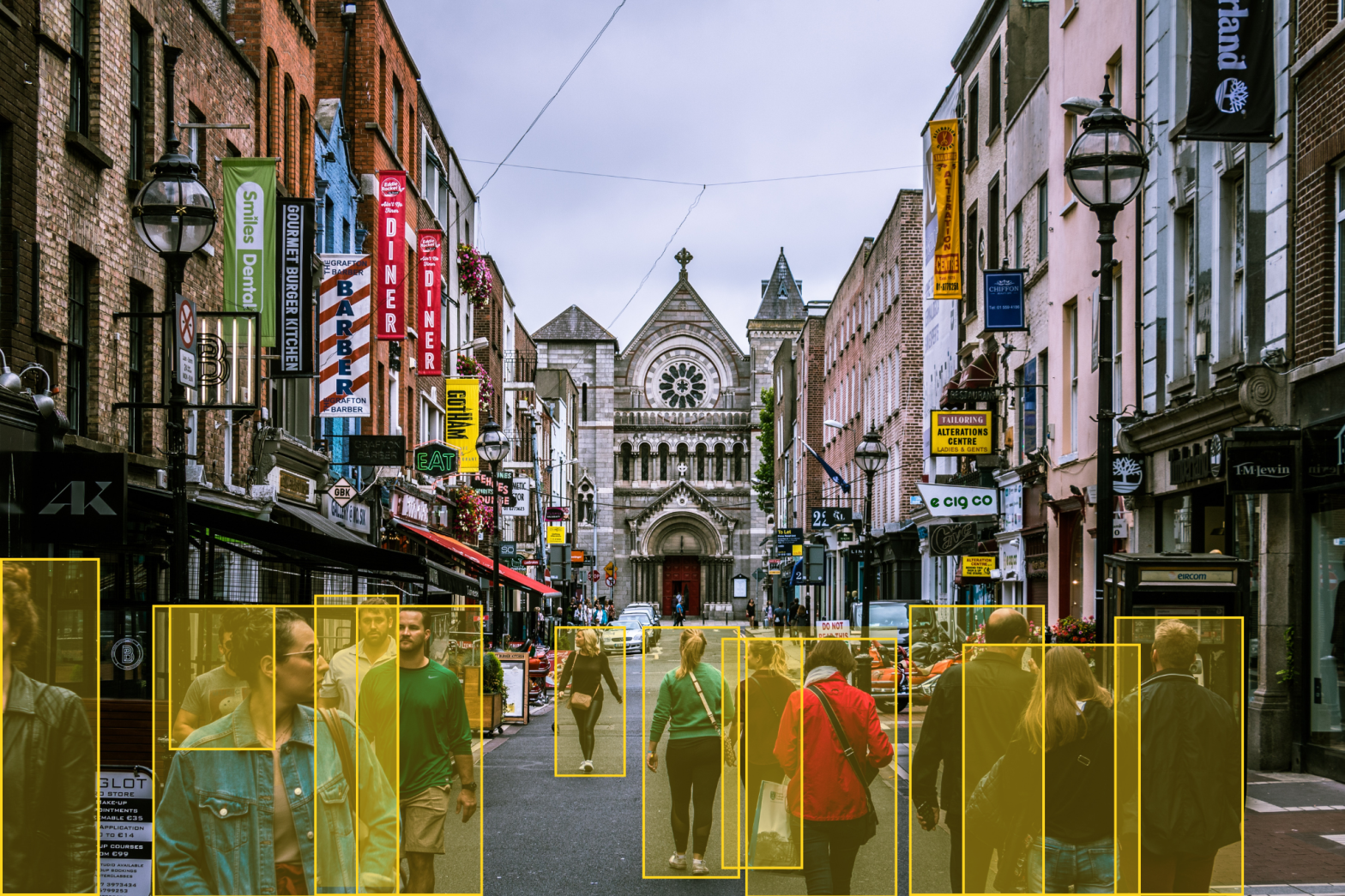
One of the most significant applications of computer vision and data annotation in security and surveillance is object detection. Object detection algorithms can be trained to identify and track specific objects, such as people, vehicles, and weapons, in real-time video streams. This can be used for applications such as security cameras, traffic monitoring, and crowd control. Data annotation plays a major part to train these algorithms where large amounts of labeled data are needed. By providing high-quality labeled data, the algorithms can be trained to detect objects with high accuracy.

Facial recognition

It is one of the advanced forms of biometric authentication capable of identifying and verifying a person using facial features in an image or video from a database. Based on face traits, facial recognition algorithms can be trained to recognize and match certain people. Applications for this include criminal identification, time and attendance tracking, and access control. Large numbers of labeled facial photos are required to train these algorithms. By giving highly accurate labeled facial images, the algorithms may be trained to detect faces.

Anomaly detection

Surveillance videos are able to capture a variety of realistic anomalies. Computer vision can be used for applications such as anomaly detection and behavior analysis. Anomaly detection algorithms can be trained to identify unusual or suspicious behavior in a video stream, such as a person loitering in a restricted area or a vehicle parked in an unauthorized area. Behavior analysis algorithms can be trained to identify specific actions or activities, such as a person falling or a vehicle speeding. We need to annotate a large number of videos by assigning video-level labels and marking anomaly scores for each video segment such that an anomaly can be detected. With the use of high-quality labeled video data, the algorithms are trained to accurately detect anomalies and behavior.

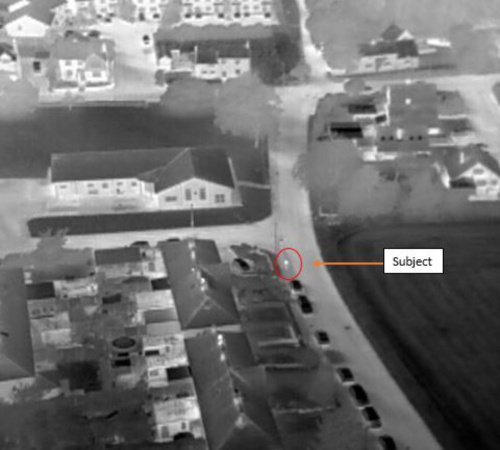
Drone Monitoring

Drones can provide a lot of possibilities as a physical security technology tool. Drone images and videos can be analyzed using computer vision and data annotation, enabling security and monitoring in difficult-to-reach areas. Real-time analysis of the drone-captured photos and videos enables security staff to immediately identify and address potential threats. They can be configured to initiate specific actions in real-time if dangerous objects, weapons, perimeter intrusion, or anomalous behavior are detected.  To train these algorithms, a lot of labeled drone data is required. Data annotation is used for AI video analytics enabling to make faster decisions for incident response and carrying out remote security operations.

Real-World Use cases for Computer Vision in Security

Computer vision-based security and surveillance systems can be used in a wide range of locations, including:

  1. Retail stores: Computer vision can be used to monitor store traffic, detect shoplifting, and improve inventory management.
  1. Residential areas: Computer vision can be used for home security, and for monitoring the activity of people, cars, and other objects in the neighborhood.
  1. Public spaces: Computer vision can be used to monitor public spaces such as airports, train stations, and shopping centers for suspicious activity.
  1. Banks and financial institutions: Computer vision can be used for facial recognition and identification, checking deposits, and detecting suspicious behavior.
  1. Transportation hubs: Computer vision can be used to monitor traffic and identify potential hazards on roads, highways, and bridges.
  1. Hospitals and healthcare facilities: Computer vision can be used for patient monitoring, fall detection, and identifying patients in hospitals.
  1. Manufacturing facilities: Computer vision can be used for quality control, process optimization, and identifying defects in products.
  1. Construction sites: Computer vision can be used to monitor construction sites, detect safety hazards, and track workers.
  1. Smart cities: Computer vision can be used for traffic monitoring, crowd control, and identifying suspicious behavior.

Computer vision-based security and surveillance systems are extremely versatile and can be used in many other locations as well, depending on the specific use case and the requirements of the application.

Advantages of Smart Security

Computer vision is a rapidly growing field of artificial intelligence that is revolutionizing the way we think about security and surveillance. It offers several advantages over traditional security and surveillance methods, including:

  1. Real-time analysis: Computer vision enables computers to analyze visual information in real time, which allows security personnel to quickly identify and respond to potential threats.
  1. Improved accuracy: Computer vision algorithms can be trained to identify specific objects, individuals, or behavior with high accuracy. This can reduce false alarms and improve the overall effectiveness of security and surveillance systems.
  1. Automation: Computer vision enables the automation of many security and surveillance tasks, such as object detection, facial recognition, and anomaly detection, which can reduce the need for human intervention.
  1. Scalability: Computer vision can be used to analyze large amounts of visual data, such as video streams from multiple cameras, which makes it possible to scale security and surveillance systems to large areas or multiple locations.
  1. Cost-effective: Computer vision technology can be a cost-effective solution for security and surveillance, as it can reduce the need for human personnel, it can be integrated with existing systems, and can be used for various use cases.
  1. Flexibility: Computer vision can be used in a wide range of security and surveillance applications, including object detection, facial recognition, anomaly detection, and behavior analysis, making it a highly versatile technology for security and surveillance.

Conclusion

Computer vision and data annotation are two essential components that are driving the development of cutting-edge security and surveillance technology. Together, they are enabling organizations to improve their security and surveillance capabilities, by automating processes, making more accurate decisions, and identifying potential threats faster.

Security cameras are becoming “smart security cameras.” Businesses that want to safeguard their interests are taking advantage of this merger. Labeling datasets and using AI & ML models for reliable findings, however, is a challenging task. It takes a lot of time and money. Therefore, outsourcing Data annotation to an experienced company is thought to be a good move. At TagX, we provide precise dataset tagging and computer vision model training at a competitive price.

The Ultimate Guide to Data Ops for AI

Data is the fuel that powers AI and ML models. Without enough high-quality, relevant data, it is impossible to train and develop accurate and effective models.

DataOps (Data Operations) in Artificial Intelligence (AI) is a set of practices and processes that aim to optimize the management and flow of data throughout the entire AI development lifecycle. The goal of DataOps is to improve the speed, quality, and reliability of data in AI systems. It is an extension of the DevOps (Development Operations) methodology, which is focused on improving the speed and reliability of software development.

What is DataOps?

DataOps (Data Operations) is an automated and process-oriented data management practice. It tracks the lifecycle of data end-to-end, providing business users with predictable data flows. DataOps accelerate the data analytics cycle by automating data management tasks. 

Let’s take the example of a self-driving car. To develop a self-driving car, an AI model needs to be trained on a large amount of data that includes various scenarios, such as different weather conditions, traffic patterns, and road layouts. This data is used to teach the model how to navigate the roads, make decisions, and respond to different situations. Without enough data, the model would not have been exposed to enough diverse scenarios and would not be able to perform well in real-world situations.DataOps needs high-performance and scalable data lakes, which can handle mixed workloads, and different data types audio, video, text, and data from sensors and that have the performance capabilities needed to keep the compute layer fully utilized.

What is the data lifecycle?

  1. Data Generation: There are various ways in which data can be generated within a business, be it through customer interactions, internal operations, or external sources. Data generation can occur through three main methods:
  • Data Entry: The manual input of new information into a system, often through the use of forms or other input interfaces.
  • Data Capture: The process of collecting information from various sources, such as documents, and converting it into a digital format that can be understood by computers.
  • Data Acquisition: The process of obtaining data from external sources, such as through partnerships or external data providers like Tagx.
  1. Data Processing: Once data is collected, it must be cleaned, prepared, and transformed into a more usable format. This process is crucial to ensure the data’s accuracy, completeness, and consistency.
  1. Data Storage: After data is processed, it must be protected and stored for future use. This includes ensuring data security and compliance with regulations.
  1. Data Management: The ongoing process of organizing, storing, and maintaining data, from the moment it is generated until it is no longer needed. This includes data governance, data quality assurance, and data archiving. Effective data management is crucial to ensure the data’s accessibility, integrity, and security.

Advantages of Data Ops

DataOps enables organizations to effectively manage and optimize their data throughout the entire AI development lifecycle. This includes:

  • Identifying and Collecting Data from All Sources: DataOps is widely used to identify and collect data from a wide range of sources, including internal data, external data, and public data sets. This is helpful for organizations to have access to the data they need to train and test their AI models.
  • Automatically Integrating New Data: DataOps enables organizations to automatically integrate new data into their data pipelines. This ensures that data is consistently updated and that the latest information is always available to users.
  • Centralizing Data and Eliminating Data Silos: Companies focus on Dataops to centralize their data and eliminate data silos. This improves data accessibility and helps to ensure that data is used consistently across the organization.
  • Automating Changes to the Data Pipeline: DataOps implementation helps to automate changes to their data pipeline. This increases the speed and efficiency of data management and helps to ensure that data is used consistently across the organization.

By implementing DataOps, organizations can improve the speed, quality, and reliability of their data and AI models, and reduce the time and cost of developing and deploying AI systems. Additionally, by having proper data management and governance in place, the AI models developed can be explainable and trustworthy, which can be beneficial for regulatory and ethical considerations.

TagX Data as a Service

Data as a service (DaaS) refers to the provision of data by a company to other companies. TagX provides DaaS to AI companies by collecting, preparing, and annotating data that can be used to train and test AI models.

Here’s a more detailed explanation of how TagX provides DaaS to AI companies:

  1. Data Collection: TagX collects a wide range of data from various sources such as public data sets, proprietary data, and third-party providers. This data includes image, video, text, and audio data that can be used to train AI models for various use cases.
  1. Data Preparation: Once the data is collected, TagX prepares the data for use in AI models by cleaning, normalizing, and formatting the data. This ensures that the data is in a format that can be easily used by AI models.
  1. Data Annotation: TagX uses a team of annotators to label and tag the data, identifying specific attributes and features that will be used by the AI models. This includes image annotation, video annotation, text annotation, and audio annotation. This step is crucial for the training of AI models, as the models learn from the labeled data.
  1. Data Governance: TagX ensures that the data is properly managed and governed, including data privacy and security. We follow data governance best practices and regulations to ensure that the data provided is trustworthy and compliant with regulations.
  1. Data Monitoring: TagX continuously monitors the data and updates it as needed to ensure that it is relevant and up-to-date. This helps to ensure that the AI models trained using our data are accurate and reliable.

By providing data as a service, TagX makes it easy for AI companies to access high-quality, relevant data that can be used to train and test AI models. This helps AI companies to improve the speed, quality, and reliability of their models, and reduce the time and cost of developing AI systems. Additionally, by providing data that is properly annotated and managed, the AI models developed can be explainable and trustworthy, which can be beneficial for regulatory and ethical considerations.
Conclusion

Gaining the agility to boost the speed of data processing and increasing the quality of data to derive actionable insights is the focus of many businesses. This focus creates a need for an agile data management approach such as DataOps.

In addition to applying DataOps technologies, processes and people also need to be considered for better data operations. For example, it is important to set up new data governance practices that are compatible with DataOps. The human factor is also crucial. TagX can assist if you need help developing DataOps for your business and deciding which technologies to use.

Data Collection and Annotation for Real Estate AI

AI is revolutionizing the everyday processes in several industries, and it is no different in the real estate industry. AI is helping businesses to outsource and automate the heavy lifting and time-consuming tasks to reduce the stresses of daily business operations.Using AI in real estate can assist in developing projections for rental prices and determining house prices.

Artificial Intelligence (AI) is a rapidly growing technology that has the potential to revolutionize the real estate industry. By leveraging the power of AI, companies in the real estate industry can improve efficiency, reduce costs, and make better decisions. AI can be used in a variety of ways in the real estate industry, such as in property valuations, market analysis, lead generation, virtual tours, smart home integration, and risk management. In addition, AI can be used to improve the customer experience, by providing personalized recommendations and virtual tours. The use of AI in real estate can help companies to gain a competitive advantage and stay ahead of the curve in an increasingly digital world.

Artificial Intelligence for Real Estate

The real estate industry is benefiting from the use of artificial intelligence (AI) and computer vision. Some examples of how AI and computer vision are being used in real estate include:

  1. Property valuations: AI algorithms can analyze data on past sales, property features, and market trends to provide more accurate property valuations. Computer vision can be used to extract data from images, such as counting the number of rooms in a property.
  1. Virtual tours: AI-powered virtual tours can provide customers with a realistic and interactive view of properties without the need for physical visits. Computer vision can be used to create 3D models of properties for virtual tours, or to recognize and tag objects in images.
  1. Lead generation: AI-powered tools can analyze consumer data and browsing history to generate leads and provide personalized recommendations for properties. Computer vision can be used to analyze consumer’s browsing habits, such as which properties they’ve viewed, and make recommendations accordingly.
  1. Property management: AI can be used to analyze data on property occupancy, rental prices and maintenance schedules. Computer vision can be used for security purposes, for example, recognizing a face of a person on a CCTV footage and to monitor the condition of properties, such as detecting leaks or cracks.
  1. Advertising: AI-powered tools can help to identify the best performing marketing campaigns, and target specific demographics based on consumer data. Computer vision can be used to analyze images in advertising campaigns and optimize them for performance.
  1. Chatbots: AI-powered chatbots can assist customers in finding properties, answering questions and providing guidance.
  1. Smart home integration: AI-powered smart home integration can improve energy efficiency and security, and provide additional features such as voice-controlled lighting and temperature control.

Data Collection and Annotation for Real Estate AI

Data collection and annotation are crucial for various use cases of AI in the real estate industry because they provide the training data for AI algorithms. The quality and quantity of the data will directly impact the performance and accuracy of the AI system.

  1. Property valuations: To prepare model for property valuations, data on past sales, property features, and market trends must be collected and annotated. For example, property data such as square footage, number of bedrooms and bathrooms, location, and age must be collected and labeled.
  1. Market analysis: Implementation of market analysis requires large volume of data on property listings, sales, and rental prices must be collected and annotated. This data can be used to provide insights on market trends and predict future prices.
  1. Lead generation: To train an AI algorithm for lead generation, data on consumer behavior, demographics, and browsing history must be collected and annotated. This data can be used to generate leads and provide personalized recommendations for properties.
  1. Virtual tours: For companies to seamlessly design virtual tours, data on 3D models of properties and images of properties must be collected and require annotation on each specification of the house. This data can be used to create realistic and interactive virtual tours.
  1. Chatbots: Data on consumer interactions, inquiries, and recommendations must be gathered and annotated in order to train an AI system for chatbots. Customers can search properties and receive answers using this information.
  1. Smart home integration: Data on energy use, security, and other factors must be gathered and annotated in order to train an AI algorithm for smart home integration. This information can be utilised to increase security and energy efficiency and to give extra features like voice-activated lighting and temperature control.
  1. Risk Management: It is necessary to gather and annotate data on property damage, natural disasters, and other dangers in order to train an AI algorithm for risk management. This information can be utilised to pinpoint potential dangers, calculate probable effects, and lessen their severity.

TagX Data Services for Real Estate AI

There are several ways, TagX can help in data preparation for real estate AI:

  1. Custom Data Collection:TagX  can develop custom methods for data collection. These methods can be designed to collect data from various sources such as property listings, sales records, and market trends. This can involve collecting public data such as property records, land registry records and census data.
  1. Data scraping:TagX  can use web scraping techniques to collect large amounts of data from various online sources such as property listings websites, real estate portals, and social media platforms.
  1. Data annotation:TagX can provide data annotation services to manually label and classify data for use in AI algorithms. This can include tasks such as tagging images, labeling property features, and annotating customer interactions.
  1. Data validation and quality control: TagX can provide data validation and quality control services to ensure that the data collected and annotated is accurate and reliable.
  1. Data integration: TagX can integrate the data collected and annotated from various sources into a single, centralized database, making it easy for the AI algorithms to access and use.
  1. Data visualization and reporting: TagX can provide data visualization and reporting services, which can help real estate companies understand and make sense of the data collected and annotated.
  1. Data privacy and security: TagX can also provide data privacy and security services to ensure that the data collected and annotated is protected and comply with data privacy regulations.

By providing data collection, annotation, and related services, TagX can help real estate companies to use AI effectively by providing them with accurate and high-quality training data.

Conclusion

Using artificial intelligence in real estate can have many benefits, such as improving the efficiency and accuracy of tasks such as property valuations and market analysis. AI can also be used to improve the customer experience by providing personalized recommendations and virtual tours. However, it is important to consider the potential ethical and privacy implications of using AI in this industry. Additionally, it is important to ensure that the AI system is properly implemented, trained and maintained to avoid bias and errors.

How Data Annotation is used for AI-based Recruitment

The ability of AI to assess huge data and swiftly estimate available possibilities makes process automation possible. AI technologies are increasingly being employed in marketing and development in addition to IT. It’s not surprising that some businesses have begun to adopt (or are learning to use) AI solutions in hiring, seeking to automate the hiring process and find novel ways to hire people. You’ll definitely kick yourself for not learning about and utilizing AI as one of the most crucial recruitment technology solutions.

Artificial intelligence has the potential to revolutionize the recruitment process by automating many of the time-consuming tasks associated with recruiting, such as resume screening, scheduling interviews, and sending follow-up emails. This can save recruiters a significant amount of time and allow them to focus on more high-level tasks, such as building relationships with candidates and assessing their fit for the company.

AI-powered recruitment tools use natural language processing (NLP) and machine learning (ML) to better match candidates with job openings. This can be done by analyzing resumes and job descriptions to identify the skills and qualifications that are most important for the position and then matching those with the skills and qualifications of the candidates. AI also facilitates more efficient scheduling, by taking into account the availabilities of the candidates and interviewers and suggesting the best times for an interview.

Applications of Recruitment AI

There are several use cases of AI in the recruitment process, including:

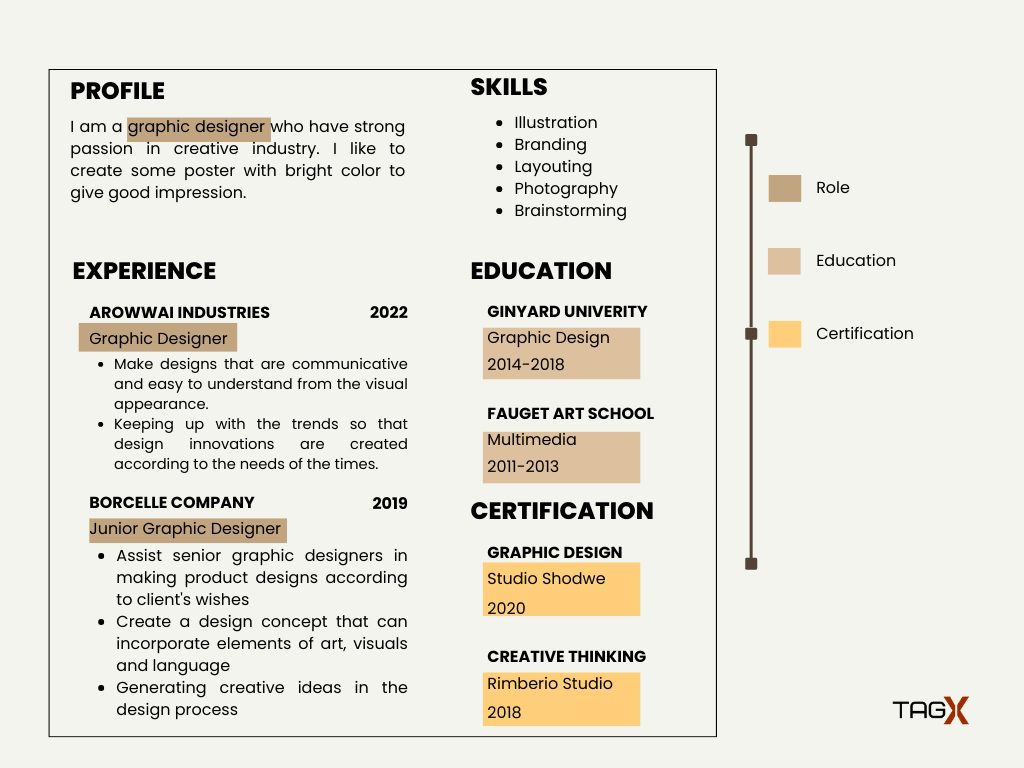
  1. Resume screening: Resume screening is the first step in the recruitment and staffing process. It involves the identification of relevant resumes or CVs for a certain job role based on their qualifications and experience. AI can be used to scan resumes and identify the most qualified candidates based on certain criteria, such as specific skills or qualifications. This can save recruiters a significant amount of time that would otherwise be spent manually reviewing resumes.
  1. Interview scheduling: AI can be used to schedule interviews by taking into account the availability of both the candidates and the interviewers, and suggesting the best times for the interviews.
  1. Pre-interview screening: AI can be used to conduct pre-interview screening by conducting initial screening calls or virtual interviews to shortlist suitable candidates before passing it to the human interviewer.AI can be used to check the references of potential candidates by conducting automated reference checks over the phone or email.
  1. Chatbots for recruitment: AI-powered chatbots can be used to answer candidates’ queries, schedule an interview and help them navigate the hiring process, which can improve the candidate’s experience. The use of bots to conduct interviews is beneficial to recruiters, as they guarantee consistency in the interview process since the same interview experience is meant to provide equal experiences to all candidates.
  1. Interview evaluation: AI-powered video interview evaluation tools can analyze a candidate’s facial expressions, tone of voice, and other nonverbal cues during a video interview to help recruiters evaluate their soft skills and potential cultural fit within the organization. NLP-based reading tools can be used to analyze the speech patterns and written responses of candidates during the interview process. In addition, NLP algorithms can conduct an in-depth sentiment analysis of a candidate’s speech and expressions.
  1. Job & Candidate matching: AI can be used to match candidates with job openings by analyzing resumes, job descriptions, and other data to identify the most qualified candidates for the position. This facet of AI in recruiting focuses on a customized candidate experience. It means the machine understands what jobs and type of content the potential candidates are interested in, monitors their behavior, then automatically sends them content and messages based on their interests.
  1. Predictive hiring: AI can be used to predict which candidates are most likely to be successful in a given role by analyzing data on past hires, such as performance reviews and tenure data.

These are some of the most common ways AI is currently being used in the recruitment process, but as the technology continues to evolve, there will likely be new use cases for AI in the future.

Data Annotation for Recruitment AI

Data annotation is an important step in the process of training AI systems, and it plays a critical role in several cases of AI-based recruitment processes. Here are a few examples of how data annotation is used in AI-based recruitment:

  1. Resume screening: For the implementation of the resume screening model to identify the most qualified candidates based on certain criteria, such as specific skills or qualifications, it is necessary to annotate a large dataset of resumes with relevant information, such as the candidate’s name, education, and work experience. Large volumes of resumes with diverse roles and skills are annotated to specify how much work experience the candidate has for a particular field, what skills, certifications, and education the candidate is qualified and much more.
  1. Job matching: To train an AI system to match candidates with job openings, it is required to annotate large volumes of job descriptions with relevant information, such as the roles and responsibilities of a particular job and the requirements of the job opening.
  1. Interview evaluation: For interview evaluation, different NLP models are trained like sentiment analysis and speech pattern evaluation. To analyze a candidate’s facial expressions, tone of voice, and other nonverbal cues during a video interview, it is necessary to annotate a large dataset of video interviews with labels that indicate the candidate’s level of engagement, energy, and enthusiasm.
  1. Predictive hiring: Based on the job requirement details, the AI model can predict the most relevant candidates from a large pool of resumes. For training of such a model to predict which candidates are most likely to be successful in a given role, it is necessary to first annotate a large dataset of past hires with labels that indicate the candidate’s performance and tenure.
  1. Chatbot Training: A chatbot can mimic a human’s conversational abilities in the sense that it’s programmed to understand written and spoken language and respond correctly. The dataset of questions and answers needs to be annotated appropriately in order to train the AI chatbot to comprehend the candidate’s inquiries and respond appropriately.

The process of data annotation is time-consuming but it is essential to ensure that the AI system is able to learn from the data and make accurate predictions or classifications. It’s also worth mentioning that as a part of data annotation quality assurance is also very crucial, as the model is only as good as the data it’s been trained on. Thus, quality annotation and quality assurance checks on the data are very important to ensure the model’s performance.

Advantages of Recruitment AI

There are several advantages to using AI in the recruitment process, including:

  1. Efficiency: AI can automate many of the time-consuming tasks associated with recruiting, such as resume screening and scheduling interviews. This can save recruiters a significant amount of time, allowing them to focus on more high-level tasks, such as building relationships with candidates and assessing their fit for the company.
  1. Objectivity: AI can help to reduce bias in the recruitment process by removing subjective elements such as personal prejudices. The algorithms are not influenced by personal biases, this can make the selection process more objective and fair, which can lead to better candidate selection.
  1. Increased speed: AI can process resumes and conduct initial screening and job matching much faster than a human can. This can speed up the recruitment process and reduce the time it takes to fill a job opening.
  1. Improved candidate matching: AI can use natural language processing and machine learning to better match candidates with job openings by analyzing resumes and job descriptions to identify the skills and qualifications that are most important for the position.
  1. Increased scalability: AI can handle a high volume of resumes and job openings, which can be challenging for human recruiters. This can allow the companies to expand and increase their recruitment efforts.
  1. Better candidate experience: AI-powered chatbots can be used to answer candidates’ queries, schedule an interview, and help them navigate the hiring process, which can improve the candidate’s experience and helps the company with candidate retention.

However, it’s important to note that AI is not a replacement for human recruiters, instead, it should be viewed as a tool to assist them. It is necessary to keep in mind that AI, despite its advantages, is not able to fully understand the nuances of a job or company culture and that the human touch is still necessary for the recruitment process.

Conclusion

Artificial intelligence in recruitment will grow because it is prominently beneficial for the company, recruiters, and candidates. With the right tools, software and programs, you can develop an automated process that improves the quality of your candidates and their experience.  High-quality data annotation is required to train AI systems to effectively automate tasks such as resume screening, job matching, and predictive hiring.

TagX a data annotation company plays a vital role in helping organizations to implement AI-powered recruitment automation by providing them with high-quality annotated data that they can use to train their AI systems. With TagX, organizations can leverage the benefits of AI while still maintaining a high level of human oversight and judgment, leading to an overall more efficient, effective, and objective recruitment process.

AI and Data Annotation for Manufacturing and Industrial Automation

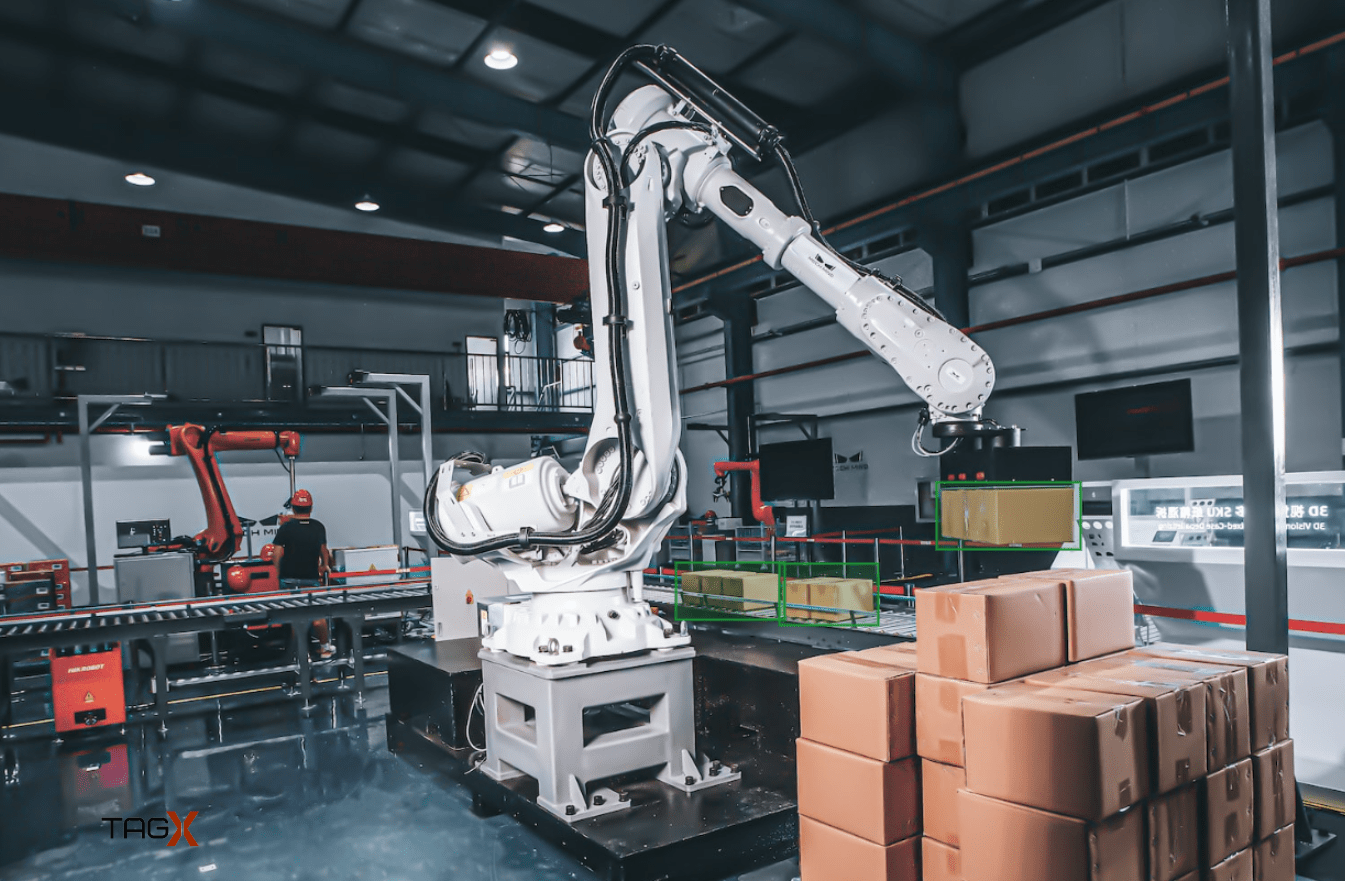
Industrial automation refers to the use of technology to control and optimize industrial processes, such as manufacturing, transportation, and logistics. This can involve the use of automation equipment, such as robots and conveyor belts, as well as computer systems and software to monitor and control the operation of these machines. The goal of industrial automation is to increase the efficiency, accuracy, and speed of industrial processes while reducing the need for manual labor and minimizing the risk of errors or accidents. 

Every manufacturer aims to find fresh ways to save and make money, reduce risks, and improve overall production efficiency. This is crucial for their survival and to ensure a thriving, sustainable future. The key lies in AI-based and ML-powered innovations. AI tools can process and interpret vast volumes of data from the production floor to spot patterns, analyze and predict consumer behavior, detect anomalies in production processes in real time, and more. These tools help manufacturers gain end-to-end visibility of all manufacturing operations in facilities across all geographies. Thanks to machine learning algorithms, AI-powered systems can also learn, adapt, and improve continuously.

Why use AI for the Manufacturing industry

There are several reasons why AI (artificial intelligence) can be helpful in industrial automation:

  1. Improved accuracy: AI algorithms can analyze large amounts of data and make decisions based on that analysis with a high degree of accuracy. This can help to improve the precision and reliability of industrial processes.
  1. Enhanced efficiency: AI-powered systems can work continuously without needing breaks, which can help to increase the overall efficiency of industrial operations.
  1. Reduced costs: By automating tasks that would otherwise need to be performed manually, AI can help to reduce labor costs and increase profitability.
  1. Improved safety: AI can be used to monitor industrial processes and alert operators to potential hazards or problems, which can help to improve safety in the workplace.
  1. Increased speed: AI-powered systems can often process and analyze data much faster than humans, which can help to speed up industrial processes

Use cases of Manufacturing AI

There are many potential use cases for AI in manufacturing and industry, including:

  1. Quality control: AI can be used to inspect products and identify defects or errors, improving the overall quality of the finished product.
  2. Supply chain optimization: AI can be used to optimize the flow of materials and components through the supply chain, reducing waste and increasing efficiency.
  3. Predictive maintenance: AI can be used to predict when equipment is likely to fail, allowing maintenance to be scheduled before problems occur.
  4. Process optimization: AI can be used to optimize manufacturing processes, such as by identifying bottlenecks, improving efficiency, and reducing waste.
  5. Personalized product customization: AI can be used to customize products to individual customer specifications, increasing the value of the finished product.
  6. Energy management: AI can be used to optimize the use of energy in industrial processes, reducing costs and improving sustainability.

Data Annotation to implement Manufacturing AI

Data annotation plays a key role in many applications of AI in manufacturing. In order for AI algorithms to be able to accurately analyze and make decisions based on data, the data must be properly labeled and organized. This is where data annotation comes in. By categorizing and labeling data, it becomes easier for AI algorithms to understand and make sense of the data, improving their accuracy and effectiveness.

Data annotation is an essential part of many AI applications in manufacturing, as it allows AI algorithms to effectively analyze and make decisions based on data, leading to improved efficiency, accuracy, and effectiveness.

  1. Quality control: Data annotation can be used to label images of products according to their defects or errors. This allows an AI algorithm to learn what constitutes a defect, and to identify defects in new images with a high degree of accuracy.
  1. Supply chain optimization: Data annotation can be used to label data points according to their position in the supply chain and their characteristics, such as their location, type, and quantity. This allows an AI algorithm to learn the patterns that are associated with efficient supply chain management, and to suggest ways to optimize the flow of materials and components.
  1. Predictive maintenance: Data annotation can be used to label data points according to the type of equipment, the maintenance history of the equipment, and other relevant factors. This allows an AI algorithm to learn the patterns that are associated with equipment failures, and to predict when maintenance will be needed in the future.
  1. Process optimization: Data annotation can be used to label data points according to the characteristics of the manufacturing process, such as the type of equipment being used, the materials being processed, and the output of the process. This allows an AI algorithm to learn the patterns that are associated with efficient manufacturing, and to suggest ways to optimize the process.
  1. Personalized product customization: Data annotation can be used to label data according to the specific characteristics and preferences of individual customers. This allows an AI algorithm to learn the patterns that are associated with customer preferences, and to suggest ways to customize products to meet the specific needs of individual customers.
  1. Energy management: Data annotation can be used to label data points according to the energy usage of different equipment and processes, as well as the factors that influence energy consumption. This allows an AI algorithm to learn the patterns that are associated with efficient energy management, and to suggest ways to optimize energy usage in industrial processes.

Final thoughts

AI will impact manufacturing in ways we have not yet anticipated. As the need for automation in factories continues to grow, factories will increasingly turn to AI-powered machines to improve the efficiency of day-to-day processes. This opens the door to introducing even smarter applications into today’s factories, from smart anomaly detection systems to autonomous robots and beyond. In conclusion, AI and data annotation are increasingly being used in the manufacturing industry to improve efficiency, reduce costs, improve quality, and increase the value of products. As AI and data annotation technologies continue to advance, it is likely that we will see even greater adoption of these technologies in the manufacturing industry in the coming years.

How Data Annotation is used for Speech Recognition

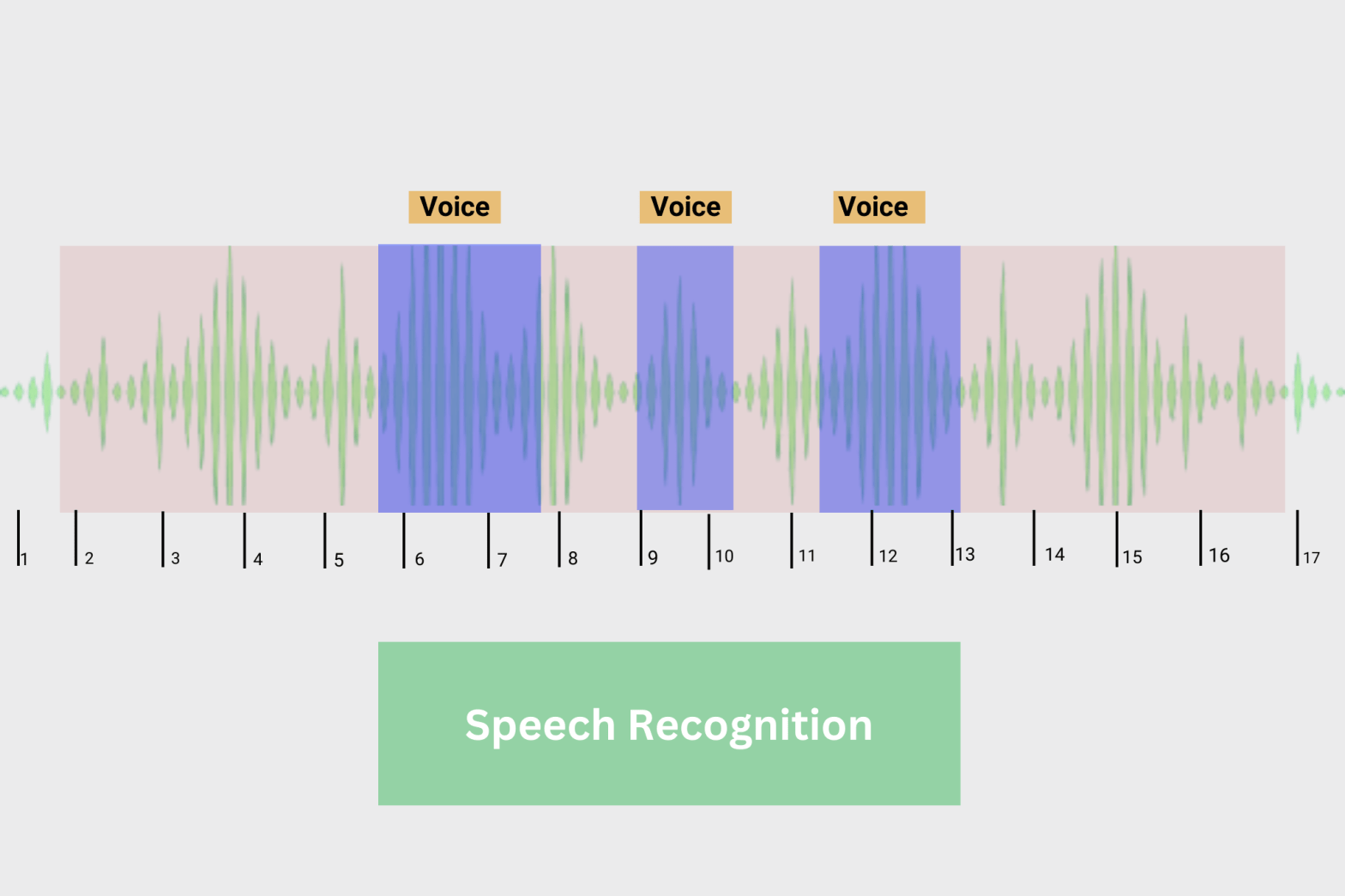
Speech recognition refers to a computer interpreting the words spoken by a person and converting them to a format that is understandable by a machine. Depending on the end goal, it is then converted to text or voice, or another required format. For instance, Apple’s Siri and Google’s Alexa use AI-powered speech recognition to provide voice or text support whereas voice-to-text applications like Google Dictate transcribe your dictated words to text. 

Speech recognition AI applications have seen significant growth in numbers in recent times as businesses are increasingly adopting digital assistants and automated support to streamline their services. Voice assistants, smart home devices, search engines, etc are a few examples where speech recognition has seen prominence.

Data is required to train a speech recognition model because it allows the model to learn the relationship between the audio recordings and the transcriptions of the spoken words. By training on a large dataset of audio recordings and corresponding transcriptions, the model can learn to recognize patterns in the audio that correspond to different words and phonemes (speech sounds).

For example, if the model is trained on a large dataset of audio recordings of people speaking English, it will learn to recognize common patterns in the audio that corresponds to English words and phonemes. These patterns might include the frequency spectrum of different phonemes, the duration of different vowel and consonant sounds, and the context in which different words are used. By learning these patterns, the model can then take as input a new audio recording and use what it has learned to transcribe the spoken words in the audio. Without a large and diverse dataset of audio recordings and transcriptions, the model would not have enough data to learn these patterns and would not be able to perform speech recognition accuracy.

What is speech recognition data?

Speech recognition data refers to audio recordings of human speech used to train a voice recognition system. This audio data is typically paired with a text transcription of the speech, and language service providers are well-positioned to help.

The audio and transcription are fed to a machine-learning algorithm as training data. That way, the system learns how to identify the acoustics of certain speech sounds and the meaning behind the words.

There are many readily available sources of speech data, including public speech corpora or pre-packaged datasets, but in most cases, you will need to work with a data services provider to collect your own speech data through the remote collection or in-person collection. You can customize your speech dataset by variables like language, speaker demographics, audio requirements, or collection size.

The data collected need to be annotated for further training of the speech recognition model.

What is Speech or Audio Annotation?

For any system to understand human speech or voice, it requires the use of artificial intelligence (AI) or machine learning. Machine learning models that are developed to react to human speech or voice commands need to be trained to recognize specific speech patterns. The large volume of audio or speech data required to train such systems needs to go through an annotation or labeling process first, rather than being ingested in a raw audio file.

Effectively, audio or speech annotation is the technique that enables machines to understand spoken words, human emotions, sentiments, and intentions. Just like other types of annotations for image and video, audio annotation requires manual human effort where data labeling experts can tag or label specific parts of audio or speech clips being used for machine learning. One common misconception is that audio annotations are simply audio transcriptions, which are the result of converting spoken words into written words. Audio annotation goes beyond audio transcription, adding labeling to each relevant element of the audio clips being transcribed.

Speech annotation is the process of adding metadata to spoken language data. This metadata can include a transcription of the spoken words, as well as information about the speaker’s gender, age, accent, and other characteristics. Speech annotation is often used to create training data for natural language processing and speech recognition systems.

There are several different types of speech or audio annotation, including:

  1. Transcription: The process of transcribing spoken words into written text.
  2. Part-of-speech tagging: The process of identifying and labeling the parts of speech in a sentence, such as nouns, verbs, and adjectives.
  3. Named entity recognition: The process of identifying and labeling proper nouns and other named entities in a sentence, such as people, organizations, and locations.
  4. Dialog act annotation: The process of labeling the types of actions that are being performed in a conversation, such as asking a question or making a request.
  5. Speaker identification: The process of identifying and labeling the speaker in an audio recording.
  6. Speech emotion recognition: The process of identifying and labeling emotions that are expressed through speech, such as happiness, sadness, or anger.
  7. Acoustic event detection: The process of identifying and labeling specific sounds or events in an audio recording, such as the sound of a car horn or the sound of a person speaking.

These are just a few examples of the types of speech or audio annotation that can be performed. The specific types of annotation that are used will depend on the needs and goals of the natural language processing or speech recognition system being developed. Speech annotation can be a time-consuming and labor-intensive process, but it is an important step in the development of many natural language processing and speech recognition systems.

How to Annotate Speech Data

To perform audio annotation, organizations can use software currently available in the market. Free and open-source annotation tools exist that can be customized for your business needs. Alternatively, you can opt for paid annotation tools that have a range of features to support different types of annotation. Such paid annotation tools are generally supported by a team of professionals, who can configure the tool for your purpose. Another option would be to develop your own customized annotation tool within your organization. However, this can be slow and expensive and requires you to have an in-house team of annotation experts.

Companies that do not want to spend their resources on in-house annotation, can opt to outsource their work to an external service provider specializing in the annotation. Outsourcing may be the best choice for your organization, because service providers:

  • have a team of available data experts who are skilled in the time-intensive tasks of data cleaning and preparation that are required prior to data annotation
  • can often start immediately executing the type of labeling that your business needs
  • deliver high-quality data for your machine learning models and requirements
  • accelerate the scaling (and ROI) of your resource-intensive annotation initiatives

Use Cases of Speech Recognition 

Speech recognition is a technology that allows computers to understand and interpret human speech. It has a wide range of applications, including:

  1. Voice assistants: Speech recognition is used in voice assistants, such as Apple’s Siri and Amazon’s Alexa, to allow users to interact with their devices using voice commands.
  2. Dictation software: Speech recognition can be used to transcribe spoken words into written text, making it easier for people to create documents and emails.
  3. Customer service: Speech recognition is used in customer service centers to allow customers to interact with automated systems using voice commands.
  4. Education: Speech recognition can be used to provide feedback to students on their pronunciation and speaking skills.
  5. Healthcare: Speech recognition is used in healthcare settings to transcribe doctors’ notes and to allow patients to interact with their electronic health records using voice commands.
  6. Transportation: Speech recognition is used in self-driving cars to allow passengers to give voice commands to the vehicle.
  7. Home automation: Speech recognition is used in smart home systems to allow users to control their appliances and devices using voice commands.

These are just a few examples of the many applications of speech recognition technology. It has the potential to revolutionize how we interact with computers and other devices, making it easier and more convenient for people to communicate with them.

Conclusion

With natural language processing (NLP) becoming more mainstream across business enterprises, the need for high-quality audio annotation services is being realized by organizations looking to build efficient machine-learning data models. Rather than developing in-house expertise, companies are finding that they are better served by outsourcing their annotation work to qualified third-party experts. TagX has extensive experience providing a variety of data annotation, cleansing, and enrichment services to its global clients. Want to know how data labeling could benefit your business? Please contact us anytime.

Design a site like this with WordPress.com
Get started