The most significant advantage of using machine learning (ML) in the insurance sector is that it simplifies data sets. Machine learning (ML) may be applied successfully to structured, semi-structured, and unstructured datasets. Through increased predictive accuracy, machine learning may be used to precisely identify risk, claims, and customer actions across the value chain. Machine learning has numerous potential applications in insurance, ranging from sensitive risk appetite and premium leakage to expenditure management, subrogation, processes, and fraud detection. Machine learning is not a new technology; it has been used for several decades. Learning is classified into three types: supervised learning, unsupervised learning, and reinforcement learning. Since the previous few decades, the majority of insurers have used Supervised Learning to assess risk by using known parameters in dissimilar combinations to achieve the desired output.
In today’s world, insurers are driven to engage in unsupervised learning, and their predetermined goals are obvious. If any changes are made to the variables, the method detects them and attempts to update them in accordance with the aims. For example, due to traffic, the GPS dynamically suggests alternate routes based on traffic circumstances. Learning is also used in the insurance business for usage-based insurance. Globally, the volume of insurance claims data is increasing at an exponential rate. The data contains a wide range of information in the form of continuous or discrete numbers, short texts, lengthy paragraphs, and, of course, images.
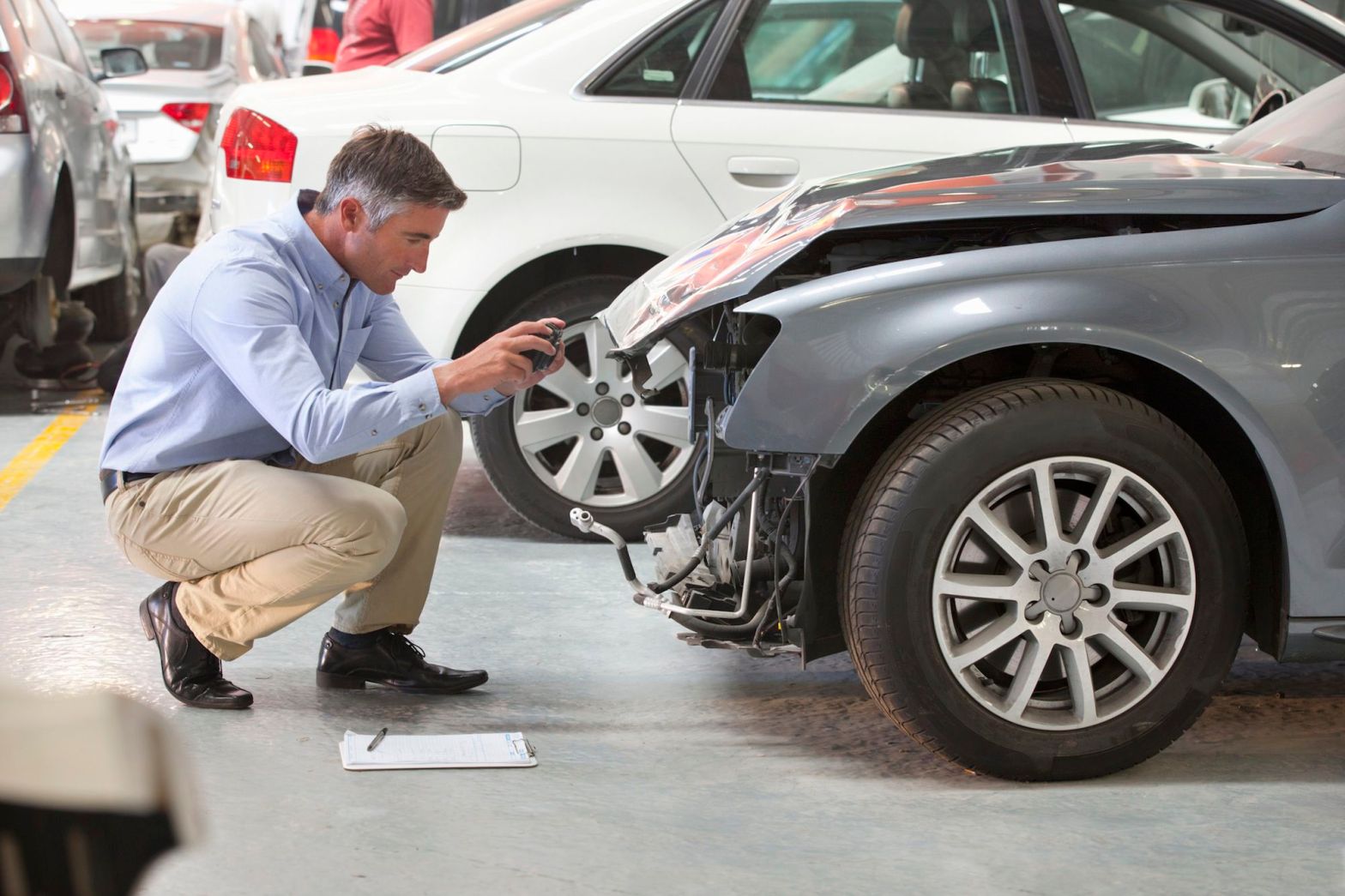
Consider the following scenario: a claimant was involved in an accident. An adjuster goes to the scene of the accident to collect the first notice of loss data, which includes basic information about the accident such as vehicle speed, vehicle type, and claim type in a structured format. The adjuster then photographs the accident scene and takes notes about the accident using shorthand and notations. This information is submitted to the insurance company, where it is combined with external data such as the cost of the parts, the current value of the vehicle, and the driver’s history, and the claim payout is calculated. If done manually, the entire process could take a few days to a few weeks, depending on adjuster allocation, the speed with which reports are filed, and the complexity of the insurance claim.
Most of the insurance industries have started using machine learning algorithms to get more insight from the first notice of loss data instantly when the adjuster collects them. Still, nearly 95% of them do not include the image data and process only the tabular and text data.
To gain accurate insights, it makes sense to include the entire range of data for analysis. However, it is seen that insurance companies initially focus on numbers while developing some logic or machine learning model. To give their models an edge, they need to include unstructured data and images along with the numbers.

The variety of issues that we may address in the insurance business
The gathering of datasets for insurance claims processing is primarily determined by the use case or problem that we are attempting to address. Some potential image data use cases in the insurance business include:
- Using satellite surveillance photographs to detect fraud in property insurance
- Using accident photographs to estimate vehicle damage
- Using satellite photos, assess potential dangers to homes such as spotting trees near roofs or broken roofs.
- Creating a 3D model of any property based on photographs for deep analysis.
- Medical image analysis in the area of health insurance.
- Using the accident images to validate the claim description.
- Using OCR to convert paper-based application documents to digital.
- Crop field assessment using satellite or drone images for crop insurance.
Some of the most frequent application scenarios are listed above. Computer vision can also be used for a variety of other applications, depending on the requirements and dataset.
Once a specific use case or group of use cases has been determined and the necessary dataset has been collected, the focus should shift to selecting appropriate computer vision algorithms. The obtained dataset can be used to apply computer vision techniques to specific application cases.
Why Claims Processing Automation?
Why are insurance businesses having such a hard time with digitization and automation in the first place? Aside from the usual reasons such as employee opposition to change or a lack of budget and technological resources, there is one important reason: insurance operations are often too variable and unstructured to be effectively incorporated into the digital workflow.
Claims data, for example, comes in a variety of formats (photos, handwritten papers, voice memos) and is exchanged through a variety of channels (email, document attachments, phone calls, chats), making it extremely difficult to obtain and evaluate accurately without the assistance of an investigator. Decision-making is frequently more complex than an off-the-shelf system can handle, necessitating a grasp of the context of each situation.
So, does this imply that the insurance sector will never be totally automated and that human participants will be required at every stage of the process? Clearly not. To imitate human perception and judgment, more advanced technologies such as AI, Machine Learning, and ML-based robotic process automation would be required.
Role of RPA, Artificial Intelligence, and Machine Learning in Automating Claims
Creating a hassle-free and innovative claims journey for customers requires a blend of AI and integration of other digital technologies. A clear understanding of these elements and the digital operating model can help the claims personnel in taking the right decisions. However, there are various steps involved in settling a claim and each one of them accounts for preventing fraud, taking data-driven decisions, optimizing cost, reducing the settlement time, and much more. Here is a brief description of the ultimate claims journey:

FNOL – Using AI-powered RPA to automate the FNOL process dramatically enhances the claims experience for customers. Intelligent software bots can readily extract appropriate details from uncategorized documents pouring in from various sources and feed the data into suitable systems as a claim is being submitted.
Assessment Coverage Check – These days, insurers rely significantly on artificial intelligence (AI) algorithms to forecast exact outcomes. Organizations are empowering claims professionals to increase their productivity by facilitating damage assessment, finding billing anomalies, enhancing fraud detection, and recognizing lapsed policies with the use of ML or AI-driven models.
Investigation – At this stage, machine learning (ML) is used to provide systems with the ability to learn and grow from experience without the need for additional programming. Key loss or incident information is automatically matched with trained conditions such as the source of loss, state law, damage kind, and so on. This phase entails the examination of huge, labeled data sets.
Evaluation – With all of the necessary data gathered in the preceding stages, AI-driven evaluation aids in the creation of an end-to-end digital customer journey. All activities, including cost predictions, legal expenditure calculations, vendor selection, medical management, and adjuster charges, are calculated and considered during the claims estimation journey. As a result, the handlers will have the next best step in making sensible, error-free decisions.
Settlement – Finally, AI triages claims based on the outcome and delivers the claim request to the task inbox for processing. Following that, the claims request is passed around for underwriting work, which is dependent on its complexity. The customer is informed of the decision in the end.
What role does image data analysis play in the insurance industry?
Before getting to the use cases where computer vision algorithms impact insurance Industries and insurance claims, let us first get to know all possible types of image datasets which can be used. Machine learning models are useless unless you train them with valid data, so the first step before planning to build any analytical algorithms is to check the available dataset.
Previously, the world was reliant on image data from digital cameras or smartphones, but now there are other media that offer a different perspective:
- Drone images: Aerial view images captured by camera drones.
- CCTV cameras: Feed recorded from surveillance cameras.
- Satellite Images: Images from several satellites available through both government and a third-party platform like DigitalGlobe, NASA, or Planet.
The following are some useful techniques:
- Image recognition/classification
- Object localization
- Image generation
- Image reconstruction
- 3D model generation
- Caption generation
There are several fundamental methods that are used in image preprocessing and model building:
Tagging: Tagging is the process of finding out a particular object in the images. We match this object to a particular class that we want the model to find. This process is different for each and every technique. For a classification problem, images have to be separated based on the classes, whereas for a localization problem, objects in the image have to be annotated.
Image normalization: Changing the pixel intensity for making the pixel distribution for low deviations.
Channel selection: This won’t be needed in a normal image with RGB band channels. However, images taken from satellites and at times, by drones would have more channels like alpha or depth intensities.
Image augmentation: Most of the time, the dataset collected by the adjuster may not be enough for the model to be accurate. In those cases, it is best to augment the images by transforming them based on several instantiations like the angle of rotation, depth, texture, and other aspects.
Conclusion
Insurers need to reimagine their systems, operations, and partnerships to successfully adopt Automation and artificial intelligence. It will involve collecting and processing vast amounts of data. Carriers must have the right systems to capture inspections data in the form of pictures, videos, and annotations, and the security in place to safely store, access, and share data among key stakeholders.
The use of AI in insurance claims is only possible if the model is well-trained with annotated images and videos with a huge amount and variety of training data sets. This is to detect the level of damage for accurate claims. TagX provides training data for AI in insurance with precisely annotated Data that help Computer Vision to train the machine learning algorithms. By working with partners to access AI, data engineering, and other digital tools, insurers can take advantage of these new technologies as they come to market without waiting for them to become fully plug-and-play. They need to ensure that their claims processes augment new technologies and decide who is going to execute the outcomes.
 Latest Updates